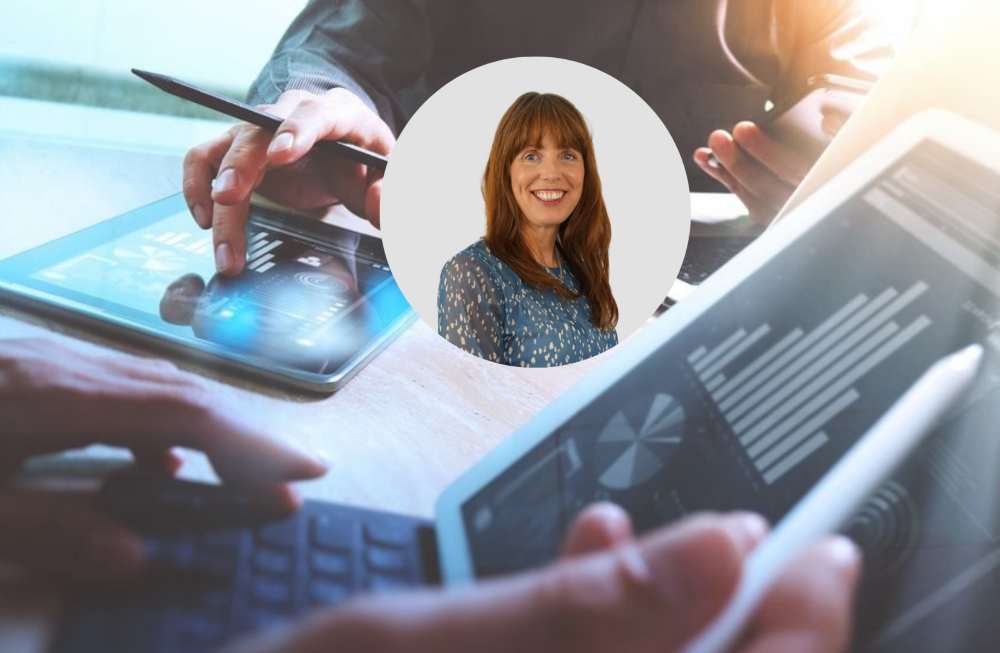
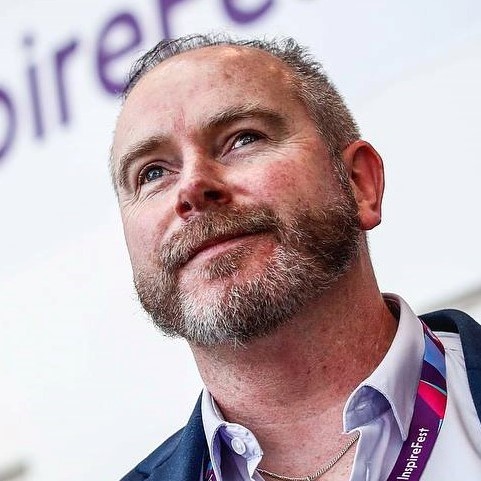
Mairead Malone, Ireland country leader at Logicalis, shares her life and her business lessons.
For more than 30 years, Logicalis has specialised in delivering next-generation digital managed services in Ireland.
As country leader, Mairead’s expertise and knowledge is critical in guiding the organisation’s long-term business and innovation strategies, in addition to overseeing business growth, and the continued growth and development of the team in Ireland.
“The pace of change is so rapid, especially around AI, so one of the most important things is understanding what is outside of the noise. People are saying they want AI, but what is the true value it is bringing?”
Mairead joined Logicalis in July 2022 as the Ireland Sales Director, bringing more than 25 years of experience in the IT sector – working in all parts of the channel, from resellers to managed services providers – Mairead has a proven track record as a leader in both traditional and service-based sales.
She joined Logicalis from Sungard Availability Services, where she worked across various markets including Ireland, the UK and Europe, the Middle East and Africa (EMEA). Prior to that, she managed the sales, technical and marketing teams in Commtech (Arrow) as Commercial Officer. This followed a 10-year stint in Dell EMC.
What journey did you take to arrive at where you are today?
My background was originally in finance, which is what I studied in college, but I moved quite quickly into technology. I started off my tech career with PFH in Cork, before moving to EMC, where I stayed for ten years. After that I moved to CommTech, now known as Arrow, where I got a lot of experience within the partner space from the reseller, vendor and distribution perspective.
“My role is really about helping people understand that there is a lot more available to them in terms of skills, ideas and opportunity”
Following my time with Arrow, I moved to SunGard Availability Services, which gave me more exposure to the services side – managed services and recovery – and from there I joined Logicalis. Along the way, I held roles ranging from individual contributor and partner manager to COO and Head of Marketing. The roles I have held across my career were all intentional, as each role gave me a different perspective. This breadth of experience is invaluable because it has given me the skills to holistically understand the different requirements of our stakeholders, as well as how technology can solve real problems.
Why are you doing what you’re doing and what need are you meeting? What’s your USP?
I had a strong background in IT and in running teams, but I was really interested in moving into something more customer-facing and building teams in a changing market. My role is really about helping people understand that there is a lot more available to them in terms of skills, ideas and opportunity. My USP, is delivering that execution element – bringing people together, building trust, encouraging collaboration and removing that siloed mindset.
What are your growth plans?
Our plans are to continue building sustainable growth to ultimately double the size of the business in Ireland. As part of this we’re focused on consistency, service excellence and ensuring our customers understand the full breadth of what Logicalis can offer.
A big part of that is anticipating and delivering on our customers’ needs – identifying what their problems are, what they need from a partner and how we bring that back into the business and respond in a holistic manner.
What are your key skills and qualities that you feel set you apart?
I believe it’s down to my experience in collaboration, execution and service delivery. I have seen the world through different eyes – as a reseller, as a partner, from a managed services perspective and now in a much more customer-facing role. That allows me to look at things from different angles.
“In leadership roles, you can be pulled into twenty different directions, so you have to put the customer at the front of what you are trying to achieve”
As part of a global business and, the broader leadership team, I can also see what’s working well in other markets – it helps give you a much bigger perspective.
The pace of change is so rapid, especially around AI, so one of the most important things is understanding what is outside of the noise. People are saying they want AI, but what is the true value it is bringing? What have they considered in terms of security? What is the ultimate goal?
I think being able to bring those perspectives together is a real strength as it helps cut through the noise and focus on what will truly deliver value.
What or whom has helped you most along the way and who was your greatest mentor or inspiration?
I’ve been very fortunate in my career, where I’ve had the opportunity to learn from a number of people along the way. One of the earliest lessons I learned, when I was at EMC, was that before bringing ideas to the table, you must first understand what your client is trying to achieve. I can come in with all the great ideas in the world, but if they are not interlocking, we’re never going to connect properly.
“For change to be a success, you have to give people time, and they have to trust you.”
So that stayed with me – understand the other person first, rather than just having your own agenda. My very first boss, Mary Hopkins of Hopkins Communications, was also a huge influence. She was a brilliant woman and really ahead of her time in how she pushed women forward. She gave you faith and the confidence to just go for it. Over the years I have also met some really good mentors, both male and female, and that has reinforced for me how important it is to build your network, understand people and give back as well.
What was the greatest piece of business advice you ever received?
I think it is to prioritise what you do, which sounds simple, but it is really important. In leadership roles, you can be pulled into twenty different directions, so you have to put the customer at the front of what you are trying to achieve.
“Resilience is so important – you learn way more from your failures than you do from your successes. It will be tough and it will hurt, but you learn”
It is very easy to become internally focused, but you have to be constantly looking externally as well. You have to delegate, and you have to give yourself thinking time to continue bringing fresh ideas to the table. Go and spend time with vendors, go to events, keep looking outside your organisation, because if you stay too much in your own world you lose perspective.
What circumstances, qualities or events can mark the difference between success or failure in life or business?
Resilience is so important – you learn way more from your failures than you do from your successes. It will be tough and it will hurt, but you learn. You also have to allow people to fail around you. That’s not to say you should set people up to fail, but it does mean allowing them to take measured risks and feel comfortable doing that. So resilience, trust and giving people room to learn really matter.
What was the most challenging aspect of growing the business?
I believe the most challenge aspect is encouraging people to move beyond their comfort zones. Through my career, I became very used to change and you have to learn to become agile and adapt to business needs. One of the big learnings for me when I joined Logicalis was that not everybody is comfortable to change, and that change can cause uncertainty.
For change to be a success, you have to give people time, and they have to trust you. It’s about understanding people, recognising the small wins, doubling down on those and helping people get comfortable trying new things.
How did you navigate the business through the pandemic and what lessons did you learn?
At the time of the pandemic, I was leading a team at SunGard Availability Services, while all of my team based in the UK and I was based in Ireland. One of the key parts of that business was workplace recovery, yet suddenly we couldn’t do that anymore because people were unable to attend the office. It was a real challenge.
A big part of that time was trying to keep people motivated and making sure they were still getting up and connecting. We introduced a daily morning call where we did everything but talk about work. We all had an interest in music, so each week somebody would pick the song of the week or the band of the week and we would chat about that. It sounds simple, but it really helped. It reminded me how important the soft skills are and how important it is to check in on people mentally because everyone’s personal circumstances are different.
How has digital transformation been a factor in your scaling journey and do you believe Irish firms are utilising digital tech sufficiently?
Digital transformation is central to what we do at Logicalis, but no two organisations are the same, and everyone is on a different journey. Some customers know that in the future people are not going to come into an office in the same way, so they know they need to get online and transform.
But at the same time, they are conscious of dealing with secure data, legacy systems and internal skills challenges. The question is how do you manage all of that together? In terms of whether Irish firms are utilising digital technology sufficiently, it is a difficult one because it really depends on the individual business.
Amongst Irish firms, the appetite for digital transformation is definitely there, but different organisations are at very different stages, and growth can also bring added complexity when businesses are trying to bring multiple systems or companies together. Transformation is never just about the technology itself – it is about thinking through the impact on people, processes, governance and risk.
If you were to do it all over again, what would you do differently in terms of your corporate career and your journey?
I would tell my younger self to speak up sooner, give things a go and trust that I’d be fine. It takes time to reach a point where you’re comfortable speaking up, especially when you are one of the only women in the room.
“I always say there is no such thing as a stupid question and there is no such thing as a stupid idea. I want my team to bring forward problems, opportunities and new ways of thinking”
Over time, I learned that perfection is not the goal – progress is. Nothing is perfect, even when you think it is perfect. So, in order to move quickly, you have to ask, is this good enough, and then back yourself and get out there and do it.
Who inspires you in business today?
For me, I have been inspired at different times by people who are good at empowering others, who understand the bigger picture and who create confidence in the people around them. I admire leaders who are able to bring people with them, especially through change, and who stay open to different perspectives.
What advice or guidance do you give new hires and how do you nurture talent in your organisation?
I always say there is no such thing as a stupid question and there is no such thing as a stupid idea. I want my team to bring forward problems, opportunities and new ways of thinking. We can all learn from each other. I’m also lucky to work with some very good managers who are really good at nurturing talent. For me, it starts with understanding that every person is built differently.
“When it is the weekend, be away at the weekend. That downtime matters. I believe staying on track is as much about boundaries and prioritisation as it is about technology”
A new business salesperson, for example, needs a huge amount of resilience because they are getting knocked back all the time. An account manager may have a different skill set and a different approach. You have to treat everybody as individuals and support them accordingly. Good leadership is not a one-size-fits-all approach – it is about meeting people where they are and helping them grow from there.
What business books do you read or would you recommend?
One book that really stood out to me was 21 Lessons for the 21st Century by Yuval Noah Harari. I liked it because it looked to the future, but not just technology and AI, through various lenses including psychology, migration, society and how people respond to change. A lot of what I listen to or read tends to have a psychology element, not just a pure business element. I think that is important, because leadership and decision-making are never just about business in isolation – they are about people too.
What technologies or tools do you use personally to keep you on track?
I’m very interested in how we can use AI internally in practical ways. It is about giving people more time back – whether that is taking notes, sharing information more efficiently or simply getting better at prompts when using tools like Copilot or ChatGPT. But beyond technology, I believe managing your inbox is an incredibly important discipline to master.
“I don’t believe AI will necessarily take away jobs, but rather the people using AI will make a real difference”
Do not live by your inbox. In times of stress, that is especially important, because if you react to every buzz and every ping, your adrenaline and cortisol are constantly high. At that point it becomes even more important to step back and think about what you are doing, because not everything can be a priority. And when you are on holidays, be on holidays.
When it is the weekend, be away at the weekend. That downtime matters. I believe staying on track is as much about boundaries and prioritisation as it is about technology.
What social media platforms do you prefer and why?
LinkedIn is the main social media platform I use, but more so as a source of insight than as a regular poster. I get great value out of following big tech companies, influential people and thought leadership pieces that help me understand what is happening in the market. It is really beneficial to find and consider various perspectives. I also get a lot from audiobooks and podcasts, which are a big part of how I learn and stay up to date.
What are your thoughts on where technology overall is heading and how would it apply to business generally and in particular your business?
It is impossible to talk about the future of technology without talking about AI. The real question we need to consider is how we can we harness the technology properly. AI in itself is not the outcome, but rather the value it brings to the business and to your team. There are a number of implications that must be considered, such as security, use cases, training, mentoring and the cost involved. It’s similar in some ways like the move to the cloud.
I also know there’s a lot of conversation around AI replacing certain roles, however I don’t believe AI will necessarily take away jobs, but rather the people using AI will make a real difference.
The opportunity with this technology is how it will support employees, assist with arduous tasks, giving people back more time and helping them work better. For our clients and for businesses more broadly, the implementation of AI has to be approached thoughtfully. There is huge opportunity, but it must be embraced wisely and not just as a box-ticking exercise.
And then of course you have things like quantum emerging as well, which brings both opportunity and security questions.
What advice would you give to others starting out or building their careers?
Try things, ask questions, go for it, build your network and don’t be afraid to fail. But if you fail, fail fast and take the learnings from the experience. You learn by doing, by putting yourself forward and by being open to what comes back.
Confidence grows with experience and careers are built over time. A lot of growth comes from being willing to get involved rather than waiting until you’re completely ready.
-
Bank of Ireland is welcoming new customers every day – funding investments, working capital and expansions across multiple sectors. To learn more, click here
-
For support in challenging times, click here
-
Listen to the ThinkBusiness Podcast for business insights and inspiration. All episodes are here. You can also listen to the Podcast on:
-
Spotify
-
SoundCloud
-
Apple