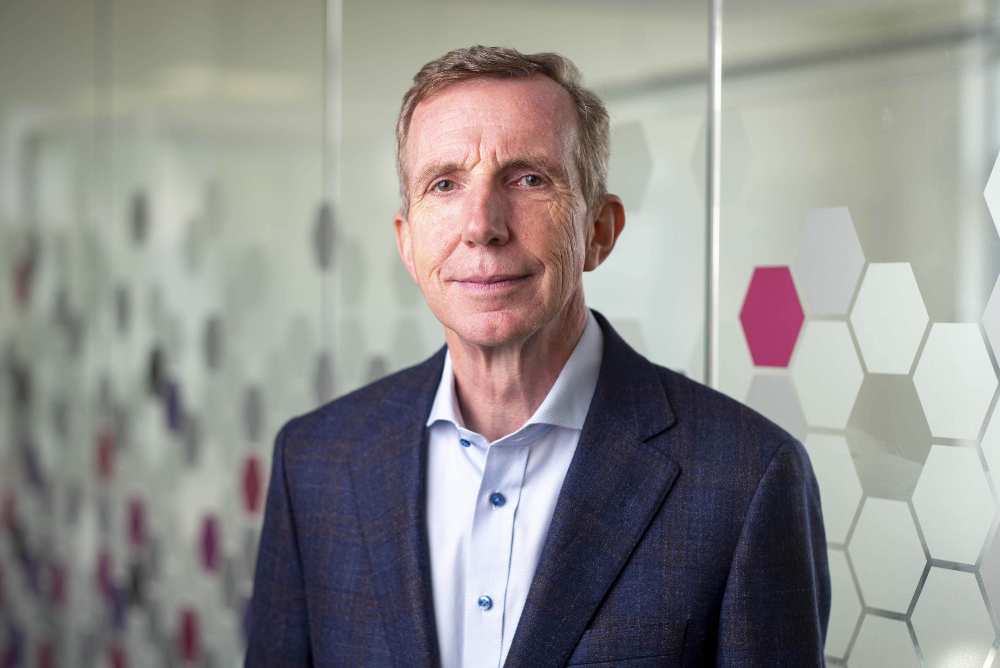
Karen Murphy, founder of Kamu Consulting, shares her life and business lessons.
Karen Murphy is the founder of Kamu Consulting, the AI advisory practice she launched on a simple principle: AI Made Clear.
Karen helps business leaders and their teams cut through the noise on AI and answer three practical questions: if, where, and how it can help them grow, reduce cost, improve margin and run more efficiently.
“What I have come to understand from first-hand experience with business leaders and teams is that they were hearing a lot about AI but getting very little that was actually useful, practical, or tailored to the reality of running a business”
She brings real authority to that work. Across more than 20 years in senior marketing, commercial and innovation roles, she has carried global, regional and Irish responsibilities at blue-chip organisations in FMCG, alcohol, pharmaceutical and telecoms, and now advises a tech startup at board level.
Tell us about your background – what journey did you take to arrive at where you are?
My last marketing role was at Sazerac, a global spirits company, where I was European Marketing Director for their whiskey portfolio. Running brands at that scale, across very different markets, with very real P&L pressure, taught me how strategy actually has to work in practice, rather than how it looks on a deck.
“My USP is that I am not a technologist who has learned a bit of business. I am a commercial operator with over twenty years at the top table who has gone deep on AI”
About two years ago, I started to become more curious about the growth in AI capability and what it could do for the work I was already doing. I decided to go back to college part-time to study it properly – a Professional Diploma in AI for Business at UCD Professional Academy.
What I have come to understand from first-hand experience with business leaders and teams is that they were hearing a lot about AI but getting very little that was actually useful, practical, or tailored to the reality of running a business. So I founded Kamu Consulting – an AI advisory practice built around a simple idea: AI Made Clear.
Why are you doing what you are doing? What need are you meeting? What’s your USP?
There is a real gap in the market between the big-scale enterprise AI conversation, which is largely owned by big consultancies and tech vendors, and what a mid-sized Irish business or a growth-stage brand actually needs.
Most of the clients I meet are not short on ambition, the challenge more so being that they are short on a trusted translator. Someone who has sat in their chair, carried a number, and can tell them what is useful versus what is not.
My USP is that I am not a technologist who has learned a bit of business. I am a commercial operator with over twenty years at the top table who has gone deep on AI.
How did you fund and start the business, and what are your growth plans?
Kamu is bootstrapped. The growth plan has three legs. First of all, I want to deepen the advisory practice with a small number of senior clients where I can make a material difference at leadership level.
Second, continue building the thought-leadership platform — my LinkedIn newsletter AI for Leaders is a big part of that and has become a real front door to the business.
Third, productise some of the most repeatable work into training and toolkits that can scale beyond my own hours.
What are your key skills and qualities that set you apart?
Two things. First, translation: I can take something genuinely technical and explain it in a way that a board or team will act on. That is a skill I have honed over twenty-two years of briefing agencies, selling strategy up, and working across markets where English was not the first language in the room.
“The people and businesses that thrive over a long arc are the ones who can read a changing landscape and move with it”
Second, commercial instinct. Because I have carried a P&L, I don’t get distracted by the shiny stuff. I always ask what problem we are actually solving, what it is worth, and whether AI is the right tool for it, or indeed whether the answer is a better process or a clearer brief.
What (or whom) has helped you most along the way? Who was your greatest mentor/inspiration?
I have been lucky with mentors rather than having a single defining one. A handful of leaders I worked with over my career have taught me how to think about a brand as a long-term asset rather than a quarterly campaign, and that perspective shapes everything I do now.
And more prosaically: the rugby touchline. I coach Minis at our rugby club in Leinster, and spending a few hours a week with nine-year-olds reminds you that clarity, patience, and a sense of humour get you further than any framework!
What was the greatest piece of business advice you ever received?
“Be useful.” Be useful in the meeting. Be useful in the follow-up. Be useful when nobody is expecting or asking. If you build a career around being genuinely useful to the people you work with, the rest, i.e., reputation, referrals, opportunity, tends to take care of itself.
What qualities can mark the difference between success or failure in life or business?
Adaptability. The people and businesses that thrive over a long arc are the ones who can read a changing landscape and move with it, and more importantly, who are willing to make a change proactively when they see an opportunity, rather than waiting until circumstance forces their hand. The world rarely gives you a clean signal that it is time to pivot.
What was the most challenging aspect of either starting or growing the business?
The psychological shift from being an executive inside a large organisation to being the whole organisation. When you have had global teams, agency partners, and a marketing budget behind you, it takes real mental recalibration to sit at your own desk and be simultaneously the strategist, the salesperson, the finance function, and the person who fixes the printer.
“The opportunity for Ireland is significant if we approach it with clear eyes: we have a well-educated workforce, a strong tech ecosystem, and a genuine chance to be a leading adopter rather than a follower”
The second challenge is category education. AI advisory is still a new category in Ireland, and a lot of the early conversations are about helping a potential client articulate what they actually need before we can talk about whether I am the right partner for it.
How has digital transformation been a factor in your scaling journey, and do you believe Irish firms are utilising digital technologies sufficiently?
My honest view is that Irish firms are at very different stages, and the headline averages can be misleading. Large multinationals with Irish operations are often at the frontier. Indigenous SMEs are more mixed.
Many are excellent at the digital basics but are still cautious about AI specifically, often because the early conversations they have had have been with vendors rather than advisors. The opportunity for Ireland is significant if we approach it with clear eyes: we have a well-educated workforce, a strong tech ecosystem, and a genuine chance to be a leading adopter rather than a follower.
Who inspires you in business today?
I am drawn to founders and operators who combine genuine substance with plain speaking. In the AI space, I have a lot of time for people who are willing to say “we don’t know yet” in public, because the reality is that the field is moving too quickly for anyone to have all the answers.
Closer to home, I am inspired by the generation of Irish founders building serious businesses in food, drink, tech, and consumer brands, the ones who understand that a premium brand is a long game and that authenticity cannot be retrofitted.
What business books do you read or would recommend?
One I would genuinely recommend to any leader right now is Leading in the Age of AI by Dr Brigette Hyacinth. It captures something I think is missing in a lot of AI chat right now, that that as the technology gets more capable, the differentiating leadership qualities become more human, not less.
Empathy, judgement, the ability to create psychological safety, the instinct to put people first – these are the qualities that will define good leadership in this next chapter. I have gifted this book to several people already.
What technologies/tools do you use personally to keep you on track?
I run a deliberately small stack. Claude is my daily thinking partner for drafting, analysis, and working through strategic problems, and it has genuinely changed how I work. Notion for structured notes and project workspaces. But despite the area I work in I am also a big fan of a paper notebook, and that is the go-to for the first version of any big idea.
What social media platforms do you prefer and why?
LinkedIn, without a close second. My AI for Leaders newsletter lives there, and it has been the most effective business development channel I run.
What are your thoughts on where technology overall is heading and how it will apply to business generally and your business particularly?
AI is fast becoming a capability embedded in the products, processes, and decisions around us all. For business generally, that means competitive advantage will increasingly belong to those organisations and business leaders that are good at judgement, by asking the right questions, setting the right context, and verifying the right outputs.
For Kamu Consulting specifically, it means the advisory work only gets more interesting, and I see the value I add being mostly where businesses need a trusted translator, where the stakes are high and the change management is real.
Finally, if you had advice for your 21-year-old self – knowing what you know now – what would it be?
Give yourself permission to pivot. At 21, I believed that a good career travelled in a straight line, and that changing direction was a sign of indecision. But I now realise that it is not.
Moving from global spirits into AI advisory is the best decision I have made, and I made it because I chose to, not because I had to. So be open, be curious, and take the pivots seriously when they appear!
-
Bank of Ireland is welcoming new customers every day – funding investments, working capital and expansions across multiple sectors. To learn more, click here
-
For support in challenging times, click here
-
Listen to the ThinkBusiness Podcast for business insights and inspiration. Latest episodes are here. You can also listen to the Podcast on:
-
Spotify
-
SoundCloud
-
Apple