Glanua CEO Karl Zimmerer explains the engineering group’s US expansion, plans for 200 new jobs and ambition to grow revenues to €400m by 2028.
Glanua CEO and EY Entrepreneur of the Year finalist Karl Zimmerer built a water quality business through a recession and the water charges saga. Now he wants to bring his engineering business model to the US.
In recent weeks Glanua revealed plans to open its first US office near Philadelphia with plans to create 200 new jobs there. It is the latest chapter in the irresistible rise of a Galway-born business that has had international success in its sights from the get-go.
“I’m willing to put my neck on the block because I’ll operate it. That’s what sets me apart from a lot of my competitors”
When Karl Zimmerer established Glanua in 2007, Ireland’s water treatment plants were commissioned county by county and some local authorities were actually all but closed to newcomers.
“I couldn’t get work in Cork. The Cork County Council Water and Waste Water Services Team only used one or two contractors, and no matter what you bid or what you tendered or how you bid it, you were never going to get work in there.”
But Zimmerer didn’t see obstacles, he saw opportunities.
Zoom forward to 2026 and the Loughrea, Co Galway company reported revenue of €155m in 2025, expects to pass €200m this year and is targeting €400m by 2028. It employs more than 750 people in Ireland, the UK, Portugal and the US. The US expansion is the biggest test so far of a model built largely in Irish public water infrastructure. For example, the sustainability arguments that help win business in Europe carry less weight in Texas.
KEY NUMBERS: Glanua’s growth
- €400m revenue target by 2028
- €200m+ expected revenue in 2026
- €155m revenue reported for 2025
- 750+ employees across Ireland, UK, Portugal and US
- 200 new jobs planned near Philadelphia
- 90% of turnover once concentrated with a single client
- $8.3bn US programme targeted with Glanua’s wastewater expertise
- $100m potential value of proposed Texas project
Editorial takeaway: Glanua is aiming to more than double 2025 revenue by 2028, with US expansion central to its next phase of growth.
A one-stop-shop for clean water
But Zimmerer has form when it comes to overcoming challenges. The turning point for Glanua came with the establishment of Irish Water, now Uisce Éireann, centralised infrastructure development and, in his words, those barriers “were bulldozed down to a large extent. And now I’ve delivered more infrastructure in the last 10 years than nearly every other contractor put together.”
He sees US multinationals’ success in Ireland as a calling card. “What I’m seeing significantly now is these US companies or HQs. They’re looking to Ireland and say, ‘Well, we built a pharmaceutical plant there in two years, and it’s up and running and commissioned and working brilliantly. We don’t have that engineering services industry in the US.’“
The people running those American projects, he says, “they’re typically Irish guys, and they’re now saying, well, I need the supply chain that delivered this very successfully for me in Ireland. I need these people to help me out back in the US.”
How a national utility opened the market
Zimmerer, a structural engineer, was building treatment plants in the 1990s when each part of a project went to a different firm. “It was very, very, very fractured delivery model, and it used to drive me mad because I was building these things and I’d have to wait for this specialist company to come in or that specialist company to come in.”
He set out to build “a one-stop shop, multidisciplinary engineering business, who could deliver everything in-house”. I decided to set this company up in 2007,” he says. “I was going to call it Glan Uisce, which is Clean Water, and little did I know what was coming around the corner in a matter of weeks in terms of the economic crisis.”
With “no balance sheet”, he partnered with an international contractor and Irish colleagues, which “diluted my shareholding probably very early on”. Growth was also limited by county-level procurement.
The creation of Irish Water changed that. “So I went all in. I basically threw the kitchen sink,” he says. “I signed three contracts New Year’s Eve before Irish Water came into existence. With one with Cavan, one with Roscommon, and one with Tipperary.” And after delivering them “overnight I became a main delivery partner”.
The same success created a concentration risk. Within a few years “90% of my turnover was now with one client”, one that was “a political football”. Zimmerer brought forward his plan to enter the UK.
Taking on the giants
In the UK, Glanua was up against infrastructure and construction giants Balfour Beatty and Galliford Try. “These were multi-billion euro turnover companies. We were turning over €90 million to €100 million,” Zimmerer says, and “I rarely was the cheapest price in terms of the solutions that I was providing.”
His pitch centred on outcomes. On a Hertfordshire contract, a chalk aquifer was in the path of a tunnel boring machine for the HS2 rail line. “So their aquifer was going to turn to soup when the dirty tunnel boring machine was going to go through it.” Glanua drew on plants it had built in the karst limestone of South Galway and North Clare, where groundwater quality swings sharply after heavy rain. “When the tunnel boring machine came drilling by the abstraction facilities, yes, the water turned to soup, but our treatment plant worked.”
He says the willingness to operate what it builds is the differentiator. “I’m willing to put my neck on the block because I’ll operate it. That’s what sets me apart from a lot of my competitors. I’m the one who’s willing to take a chance on my profitability, my company stability, and everything else like that.”
The US strategy shifts Glanua’s focus towards private industrial clients. It is finalising a wastewater plant in Ireland for a pharmaceutical company producing oral weight-loss drugs and engineering a version for a European project. Zimmerer wants to take the design to the same company’s US programme, which he puts at $8.3 billion.
“I have now an engineered solution for Project X in Ireland and Project Y in Europe that I can replicate for every single one of your facilities in the US,” he says. “Some of them may be bigger, some of them may be smaller, but I’m going to give you that standard design.”
His argument to manufacturers is that water is outside their competence. “You’re absolutely phenomenal at making pharmaceuticals and oral weight loss drugs. You’re really, really bad at treating your wastewater, and you’re really bad at managing your water sustainability journey.”
Winning over Texas
The US political climate cuts against part of that offer. “Sustainability is maybe not that important in Trump’s world, it’s not a narrative that he’s pushing in terms of that green agenda or whatever,” Zimmerer says.
An early prospect illustrates both the opportunity and the friction. A meat processor in a water-stressed part of Texas, which Zimmerer says kills “2,700 cattle a day”, approached Glanua indirectly for a wastewater plant that could recycle treated effluent. Glanua proposed adding a large anaerobic digestion plant to turn the site’s waste into biogas. The chief financial officer’s response, as Zimmerer recalls it: “Not interested. Too much money.”
About two weeks later the company’s finance team called back. It was borrowing “$800 million to $900 million” at four to five percentage points over the Fed rate, and its lender’s sustainability fund offered 3% over. The digestion plant would make the borrowing eligible.
The energy case was weaker. “Now biogas in Texas is too cheap. It’s very cheap anyway. So we were pushing against a closed door in that scenario. While in Europe we were pushing against an open door.” The project remains at concept stage. Zimmerer says it “could be $100 million contract alone”, and also that “it might be a bit too big for us as a first project to go into the US.”
Glanua plans to grow by acquisition as well as organically. Zimmerer says it is looking at a target in the UK and has “a long list prepared already” for the US. He describes “culture dilution” as “a major risk” and says alignment is now part of due diligence.
He spends a large share of his time on it, using local results to show staff why the work matters. At Courtmacsherry in west Cork, where Glanua operates a plant it built, “nobody in Courtmacsherry had seen aquatic life in that part of the estuary for a generation” until an operator spotted a dolphin near the outfall.
The company was approached to be bought in 2022, and Zimmerer now works with a board chaired by Denis Brosnan, formerly CEO of Kerry Group.
The business plan he presented to the board drew the response that “they said brilliant, but make it happen. We’re on track.” He acknowledges pressure on costs, citing “challenges with the Iran War and the inflationary pressures”, and says the plan will change: “We will retweak it now with accelerating the US expansion.”
He expects regulation to keep generating work on both sides of the Atlantic. “The goalposts keep moving because regulation keeps changing. Like you’ve microplastics, you’ve emerging pharmaceutical pollutants now in wastewater, and there’s always something new coming around the corner that’s going to have to be fixed.”
Zimmerer, a finalist in this year’s EY Entrepreneur of the Year awards, says the opportunity to enter “came quite from left field”. He regards it “not in any way as a personal accolade, for want of a better term, but very much a reflection of a group of people that have been on that journey with me, some of which, you know, I recruited as graduates when I started the business and are now industry leading executives in the organisation.”
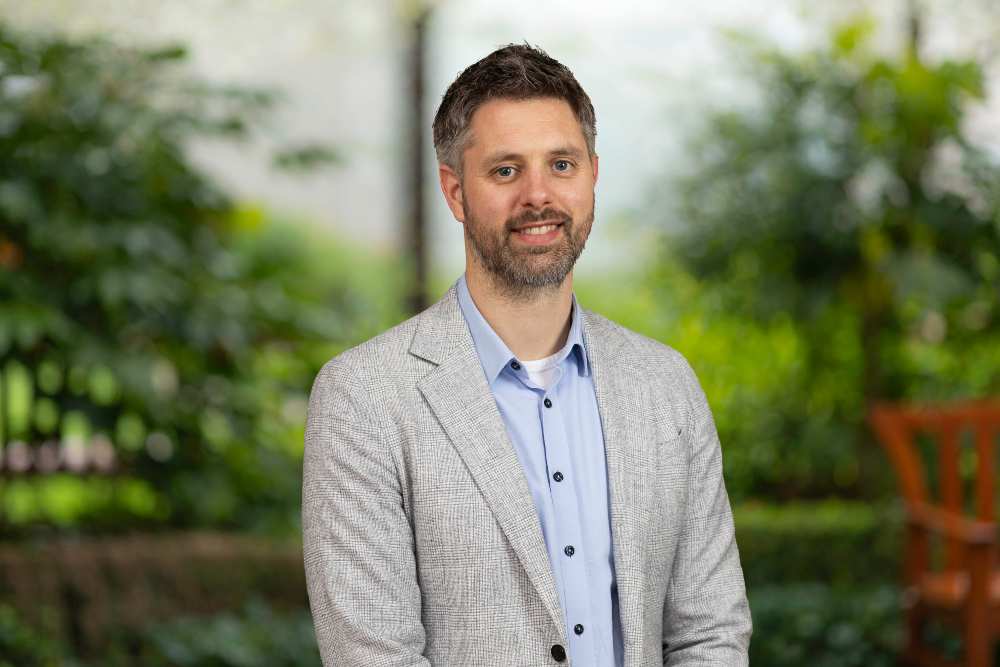
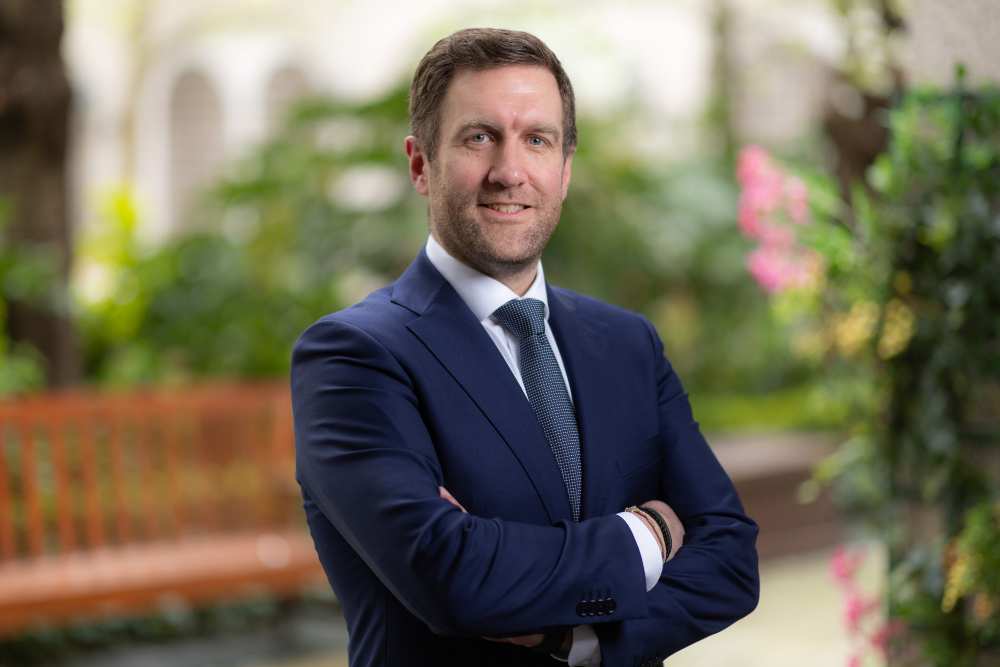
Top image: Karl Zimmerer, founder and CEO of Glanua
Frequently Asked Questions
What is Glanua planning in the US?
Glanua plans to open its first US office near Philadelphia and create 200 new jobs. The expansion will focus increasingly on private industrial clients and applying its water and wastewater engineering expertise to US projects.
How fast is Glanua growing?
Glanua reported revenue of €155m in 2025, expects to exceed €200m in 2026 and is targeting €400m by 2028. It employs more than 750 people across Ireland, the UK, Portugal and the US.
Why does Karl Zimmerer see an opportunity for Glanua in America?
Karl Zimmerer says US companies are looking to the Irish engineering supply chain after seeing projects successfully delivered in Ireland. He believes Glanua can bring its multidisciplinary engineering and water infrastructure model to US projects.
What sets Glanua apart from its competitors?
Karl Zimmerer says Glanua differentiates itself by operating the infrastructure it builds. The company was established as a “one-stop shop, multidisciplinary engineering business” capable of delivering projects in-house.
How does Glanua plan to expand?
Glanua plans to grow both organically and through acquisitions. It is examining a potential acquisition in the UK and has prepared a “long list” of potential targets in the US, while Karl Zimmerer says the company will accelerate its US expansion.
👉 No tech background needed to bring your business into the AI age! Secure your Google AI Professional Certificate to complete the certification at no cost. Apply now and get started!
-
Bank of Ireland is welcoming new customers every day – funding investments, working capital and expansions across multiple sectors. To learn more, click here
-
For support in challenging times, click here
-
Listen to the ThinkBusiness Podcast for business insights and inspiration. All episodes are here. You can also listen to the Podcast on:
-
Spotify
-
SoundCloud
-
Apple