Neurent Medical founder Brian Shields targets a $1bn medtech opportunity as the Galway firm expands in the US, advances migraine trials and grows Irish manufacturing.
Brian Shields left a busy management consulting career 14 years ago to scratch an entrepreneurial itch. The Meath-born business owner is focusing his energies on growth opportunities in North America where demand for Neurent’s medical device that currently helps treat rhinitis is strong and clinical trials for using the same device to treat migraine are well underway.
The company’s Neuromark device employs proprietary Impedance Controlled Radiofrequency to target the overactive posterior nasal nerves that causes chronic rhinitis, a condition that affects millions of people globally.
“We can be a billion-dollar company in the next few years without leaving the US”
Earlier this year the business closed a €62.5 million Series C round that was oversubscribed. This was followed in recent weeks by an additional $25 million venture debt facility.
Last year the business revealed it plans to create 125 new jobs in Galway by the end of 2028.
Shields, a finalist for the 2026 EY Entrepreneur of the Year Award, did not initially set out to build a medical device firm. Armed with a PhD in applied computing, he joined Accenture’s management consulting practice in London, working across FMCG and financial services.
The turning point came after he finished working on a project that involved offshoring a Swiss investment bank’s back office.
“I was walking down the street with one of the guys, having a pint after we finished, and I said, what are we doing? What have we done for the last year? Have we moved the needle in the world? The answer is a rhetorical question, clearly hadn’t.”
Shields wanted to do more with his career and joined Dublin tech firm S3’s healthcare division. There his fascination with medical devices and the opportunity to help people took hold. This led him to joining the BioInnovate Ireland fellowship programme in Galway in 2014.
KEY NUMBERS: Neurent Medical Growth
• $1bn long-term revenue ambition
• €62.5m oversubscribed Series C funding round
• $25m venture debt facility secured
• 1 in 4 people affected by chronic rhinitis
• 20,000 patients treated to date
• 9 clinical studies completed
• 300 customer accounts across the US
• Nearly 100 employees in Oranmore
• 9 consecutive quarters beating sales targets
• 70% of migraine patients cut headache days by half
Editorial takeaway: Neurent has combined strong clinical evidence, rapid US commercial traction and significant funding to position itself as one of Ireland’s most ambitious medtech scale-ups.
A device for the condition nobody talks about
It was while shadowing surgeons who were dissecting cadavers to map a specific nerve group at the back of the nose that Shields had an idea.
“I went in naive as hell, just asking questions,” he says. Enterprise Ireland funded the research through a €495,000 grant, routed through the University of Galway, and when Neurent spun out it skipped the seed round entirely and raised €1 million straight away. “At the time we were the largest medtech spinout in Europe ever,” Shields says.
Chronic rhinitis is a condition that Shields says affects one in four people. The treatment is administered in a surgeon’s office using a wand that is inserted into the back of the nasal passage that delivers radio frequency energy to disable the nerve driving the inflammation.
There are roughly 10 million rhinitis patients in the US already seeing an ENT surgeon and Neurent has now run nine clinical studies and has treated 20,000 patients.
“We manufacture everything now ourselves here in Oranmore, and we ship everything from here to the States”
Shields tells the stories behind those numbers readily. One early patient, an 18 year-old freshman athlete in Detroit, vomited most mornings from swallowing the mucus her condition produced overnight in her sleep. Treatment stopped it. Another came from an 82 year-old man in Alexandria, Virginia, who had withdrawn from social life because, in his words, his nose would turn on “like a tap” whenever he ate. He wrote to Shields on a notepad and posted the letter to Ireland. “It’s not about the runny nose. It’s about what it causes in your life.”
Bringing manufacturing home
For years Neurent used contract manufacturers to build its device before shipping it to the US. Shields ended that arrangement, building the company’s own clean room and hiring its own product builders in Oranmore, where Neurent now employs almost 100 people. “It wasn’t working for me because we lacked control over our supply chain, lacked control over the product,” he says. Shareholders questioned the cost at the time, he recalls, and the plant has since paid for itself through improved gross margin.
The company has also brought artificial intelligence (AI) into the production line, using an image recognition tool named Harvey to inspect incoming printed circuit boards for defects invisible to the human eye. “By us removing that bit of material off the line, our yield has gone up,” Shields says. He argues that keeping manufacturing in Ireland, rather than moving it closer to the US market or to a lower cost location such as Costa Rica, remains the right call because the labour cost of the device is small relative to its materials. Visiting surgeons who tour the clean room, he says, are consistently surprised by how much of the process is done by hand.
To sell the device effectively in the US, Neurent built its own commercial team from scratch. Shields models that sales approach directly on his own consulting background. “Our sales team in the field have got to be like management consultants,” he says. “We build ours by building theirs.” The company now counts around 300 customer accounts, and Shields spends 15 to 20 days a year in the field with the sales team, “with my pen and paper, understanding what their problem is.”
Neurent has beaten its own quarterly sales target for nine consecutive quarters.
The company launched in the US in 2022 after running clinical studies there since 2019. It prioritised cash conservation and commercial validation over speed and does not plan to launch in Europe or the US until the US business reaches scale. Japan and China are also on his radar.
Double, double, double
Running alongside the rhinitis business is a newer clinical programme targeting migraine, using the same device to treat the same nerve, which Shields explains sits on a reflex arc connected to both conditions.
The idea came from a surgeon who noticed migraine symptoms easing in patients treated for rhinitis. Neurent is now in its second migraine clinical study, working with neurosurgeons and neurologists to understand the mechanism. “We were taking their headache days from 18 to one,” Shields says of some patients. “I think it’s 70% of our patients have more than a 50% reduction in their headache days.”
He is careful to describe it as an improvement in quality of life rather than a cure, and notes that because the same ENT surgeons already use the device, no new sales team is required to pursue the opportunity.
Shields and his wife have four children under the age of 10 and he describes fitting a demanding travel schedule around family life as “a big lift.”
14 years on from that fateful conversation over a beer in London, Shield says he fosters ambitions for Neurent to reach $1 billion in revenue.
“We can be a billion-dollar company in the next few years without leaving the US from a commercial sense, because we’ll grow our sales. ‘Double, double, double’ is our mantra, and we’ll be at $100 million in the next few years. And now you’re into real IPO territory.
“We’re being courted by the investment banks because they see the same. It’s only then I think you’re given the right to go wide, in rugby parlance, and now we can look at Asia. Japan societally really do not like runny nose, so that is a captive market immediately. China will be bigger than the States in time.”
Being nominated for the EY Entrepreneur of the Year Award this year, he says, is a huge honour. In particular, he credits the programme with sharpening his ambitions even further through proximity to other founders and members of the alumni.
“We have a judging panel that includes people like Denis O’Brien, and we’re up on five or six hundred people in the alumni, which includes the Collisons. You become the company you keep. So by hanging around with these people, you become inspired to do even more, and try and get even faster, and work harder, and make it bigger. There are 24 of us [finalists] this year.”
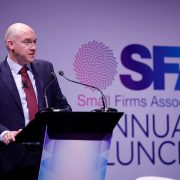
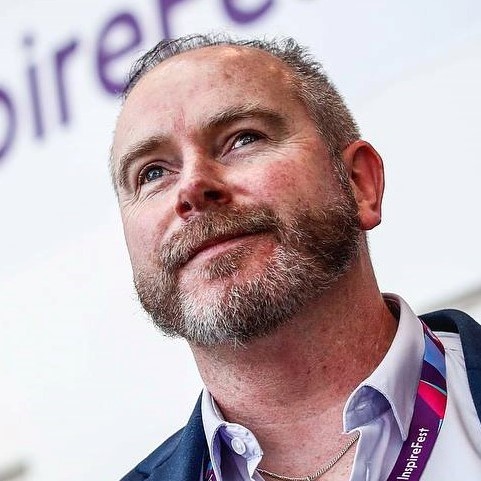
Image at top: Neurent CEO and founder Brian Shields
Frequently Asked Questions: Neurent Medical and Brian Shields
What does Neurent Medical do?
Neurent Medical develops minimally invasive medical devices that treat chronic rhinitis, a condition caused by overactive nasal nerves that affects millions of people worldwide.
What is chronic rhinitis?
Chronic rhinitis is a long-term condition that causes symptoms such as a runny nose, nasal congestion, post-nasal drip and sneezing. According to Neurent founder Brian Shields, it affects around one in four people globally.
How does Neurent’s Neuroark device work?
The Neuroark device uses Impedance Controlled Radiofrequency (IC-RF) technology to target and disable overactive posterior nasal nerves that drive chronic rhinitis symptoms.
How many patients has Neurent treated?
Neurent has treated more than 20,000 patients and completed nine clinical studies evaluating its technology.
Why is the US market so important to Neurent?
The company estimates there are around 10 million rhinitis patients in the US already being seen by ENT specialists, making it a significant commercial opportunity for Neurent’s technology.
What funding has Neurent Medical raised?
Neurent recently secured a €62.5 million oversubscribed Series C funding round and subsequently added a $25 million venture debt facility to support growth.
Is Neurent developing a migraine treatment?
Yes. The company is running clinical studies investigating whether the same technology used to treat chronic rhinitis can also reduce migraine symptoms by targeting the same nerve pathway.
What migraine trial results has Neurent reported?
Neurent says some patients experienced a reduction in headache days from 18 to one per month, while around 70% of patients recorded more than a 50% reduction in headache days.
Where does Neurent manufacture its products?
Neurent manufactures its devices in Oranmore, Co Galway, where it has built its own clean-room production facility and employs nearly 100 people.
What are Brian Shields’ ambitions for Neurent?
Shields believes Neurent has the potential to become a $1 billion revenue medtech company, driven initially by growth in the US market before expanding into regions such as Japan and China.
👉 No tech background needed to bring your business into the AI age! Secure your Google AI Professional Certificate to complete the certification at no cost. Apply now and get started!
-
Bank of Ireland is welcoming new customers every day – funding investments, working capital and expansions across multiple sectors. To learn more, click here
-
For support in challenging times, click here
-
Listen to the ThinkBusiness Podcast for business insights and inspiration. All episodes are here. You can also listen to the Podcast on:
-
Spotify
-
SoundCloud
-
Apple