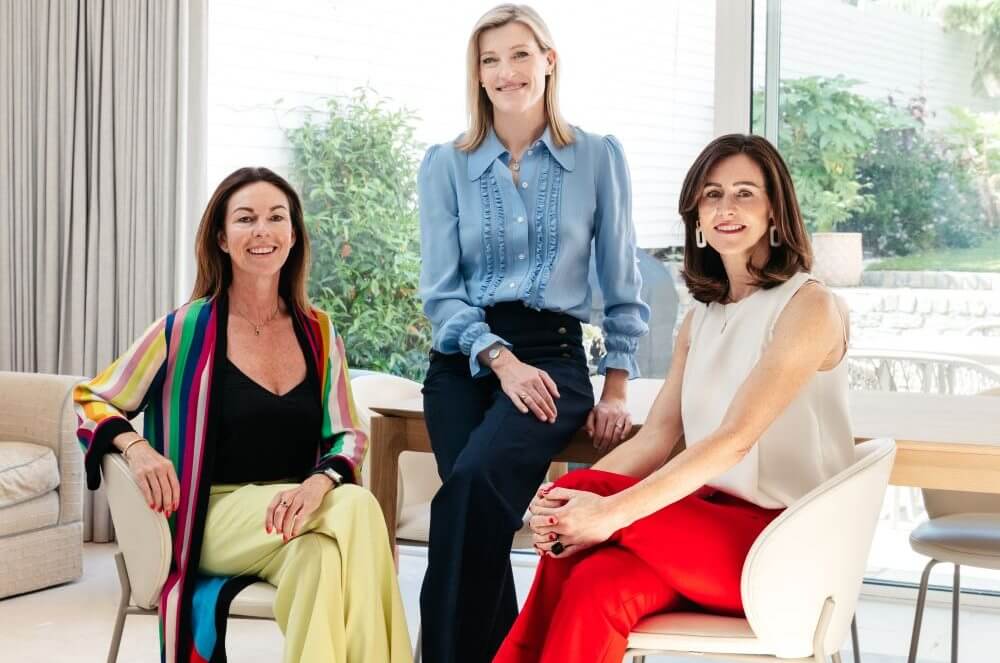
SISTERLY founders and EY Entrepreneur of the Year finalists Aoife Matthews, Jennifer O’Connell and Louise O’Riordan are building a women’s health brand now stocked in Harrods and Brown Thomas.
A barrister, a banker and a brand consultant at the peak of their careers decided to step into the start-up world. Now Aoife Matthews, Jennifer O’Connell and Louise O’Riordan’s trans-Atlantic start-up SISTERLY has its products stocked in Harrods and are shortlisted for the 2026 EY Entrepreneur of the Year award.
When you’re at the height of career success, going into the start-up world for the very first time would daunt anyone. Yet for the three friends, there was a larger reason propelling them – helping their sisters around the world cope with women’s health issues at a pivotal point int heir lives, one sachet at a time.
“Less than 5% of all aggregate medical research investment into healthcare is into female-specific issues, and if you strip out oncology, that falls to 1%”
Aoife Matthews spent twelve years in London with J.P. Morgan and Morgan Stanley before moving home to Ireland and into ESB International. Jennifer O’Connell built a career as a barrister and became a senior counsel, after starting out as an attorney in New York. Louise O’Riordan spent two decades building consumer brands in New York and London before becoming chief brand officer of a women’s membership club in Los Angeles.
None of this diverse career history can simply explain why the three friends – who joke heymay as well be sisters – now run a company that sells a single sachet of vitamins and minerals. What is it that connects a courtroom, a trading floor and a Los Angeles wellness club? Well, it’s a shared experience of midlife, and a shared frustration with an industry that the three describe as confusing at best and untrustworthy at worst.
Their business SISTERLY is shortlisted for the 2026 EY Entrepreneur of the Year award. It is stocked in Brown Thomas in Ireland, in Harrods in London and in John Bell & Croyden, the pharmacy that supplies the British royal family. SISTERLY counts 86% of its customers as subscribers.
It began, the founders say, with each of them independently reaching the same conclusion in their 40s: that women’s health is underfunded, under-researched and overwhelmed by noise.
KEY NUMBERS: SISTERLY by the Numbers
• 86% of customers on recurring subscriptions
• 72 community events hosted last year
• Less than 5% of medical research funding for female-specific issues
• Just 1% excluding oncology research
• Three founders from banking, law and branding backgrounds
• Three years of R&D before launch
• UK sales doubled over the past year
• Products stocked in Brown Thomas, Harrods and Bell & Croyden
Editorial takeaway: SISTERLY has built a fast-growing, subscription-led women’s health brand by combining rigorous product development, community engagement and premium retail distribution.
A sandwich generation seeking answers
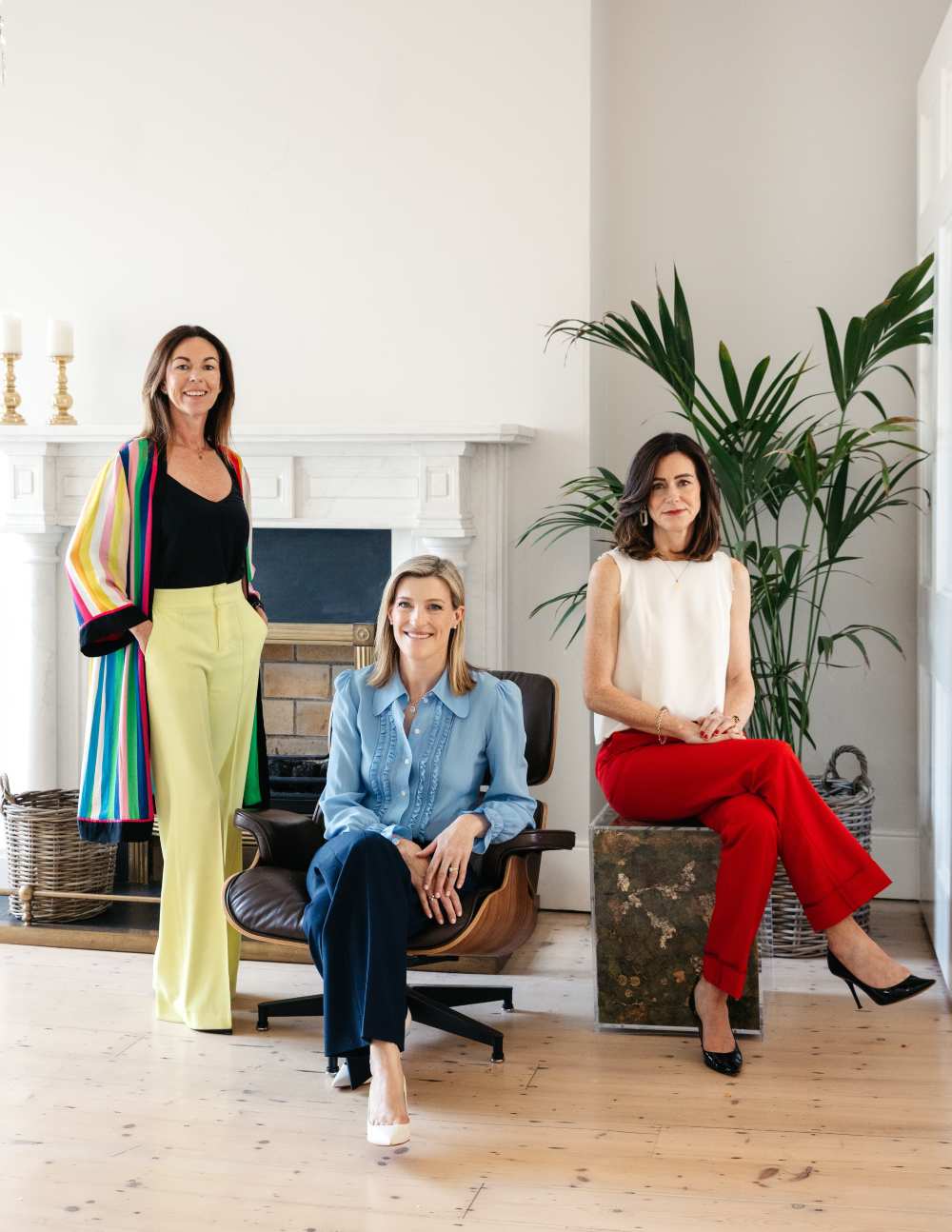
O’Connell traces her own starting point to the toll of combining a legal career with motherhood.
“I had a very poor immune system, and ended up during COVID with three rounds of COVID and a dose of shingles,” she said. “It was very much trying to support my own body. It’s a unique thing really for this sandwich generation. Our mothers had the marriage bar, so we’re this generation of women who really leant into careers, but we’ve got an awful lot of life admin to manage at the same time.”
Matthews reached a similar point albeit through a different route; arriving at perimenopause in her mid-40s after three children and a health and wellness coaching qualification taken alongside her banking career. “I left that with more questions than answers,” she explained. “How do I actually support my health, how do I get rid of the brain fog, the lack of sleep, all the issues you have in perimenopause. I was that person buying lots of supplements and trying to figure out what I should be taking.”
👉 No tech background needed to bring your business into the AI age! Secure your Google AI Professional Certificate to complete the certification at no cost. Apply now and get started!
The scale of the underlying problem, Matthews argues, is structural. “Less than 5 per cent of all aggregate medical research investment into healthcare is into female-specific issues, and if you strip out oncology, that falls to 1 per cent,” she said. “The lack of research is incredible, and that stems from women not being included in clinical trials before, because of pregnancy and hormones disrupting the clinical data. Women’s bodies haven’t been understood.”
O’Riordan says her own supplement habit had collapsed under its own complexity. After a blood test and consultation at a Los Angeles longevity clinic, she found herself buying up a kitchen counter’s worth of vitamins that she could not keep track of.
“After two weeks of enthusiastically following the protocol, they got quickly banished to where supplements go to die,” she said. She recalls a member of the wellness club she ran on a rooftop hooked up to an intravenous longevity drip, a martini in his other hand. “LA is a fantastic place to witness a lot of innovation, but there are also very extreme cases in people’s morning routines,” she said. “That’s paired with the fact that there’s very loose regulation around what you can say marketing wise and what claims you can make. It’s still the wild west.”
Built with care
Where many supplement brands appear to be build around a single founder’s protocol or a celebrity endorsement, SISTERLY’s founders describe a more thoughtful and procedural approach.
“We set out from the very beginning that we didn’t want to be another brand that comes out with 25 SKUs and adds to that overwhelm and confusion”
“We didn’t have a white coat between us,” O’Connell said. “The first challenge was definitely getting expert input. We weren’t going anywhere unless we knew we had people with decades of experience guiding us, and not all experts are made equally.”
This conviction brought them to Dr Mandy Leonhardt, a UK-based GP, menopause specialist and nutritionist who now sists on SISTERLY’s expert panel.
“When I first spoke to her, she said, oh no, I would never work with a supplement company, that’s a whole other industry out there,” Matthews said. “We stayed in touch, kept her updated on our plan, what we wanted to see in the formulation, the quality, all the detail back and forth. Finally, at the end of the process, she was so impressed that she said she hadn’t seen an approach like the one we’d taken.”
O’Connell says that this endorsement and the medical discipline behind it underpins the brand’s credibility.
“We’ve never put anything in our product that’s questionable, or that’s only shown benefits in animal studies,” she said. “We’ve kept it rigorously to things that are clinically proven to derive a benefit at a particular dose and in a particular form. AI is our friend, we show up very favourably in AI because we don’t have anything in there that shouldn’t be in there.”
The SISTERLY product took three years of R&D to reach the market, arriving in the form of a single daily sachet rather than the sprawling product ranges that are somewhat common elsewhere in the category.
“We set out from the very beginning that we didn’t want to be another brand that comes out with 25 SKUs and adds to that overwhelm and confusion,” O’Riordan said. “It took us three years, with a consensus view from a panel of experts, to come up with this one and done for your essential vitamins and minerals.”
A sachet, a subscription and a community
The SISTERLY founders describe the business as less a supplement company than as a health platform that has been built around a subscription relationship.
The subscription model now accounts for 86% of customers, a figure that O’Connell said shapes how the company operates daily.
“They’re the people we have a very close relationship with,” she said. “We can invite them to our events, introduce them to our community, give them extra support through our nutritionist and health tips. We really mind our subscribers, because they’ve supported us and we want to support them as best we can.”
This vibrant community extends into a busy calendar of in-person events, from sea swims to education talks.
“We had 72 events last year,” O’Connell said. “This isn’t just every now and then, we’ve really invested in it.” The company’s third birthday in October will bring subscribers together for a walk in Merrion Square and brunch at the Merrion hotel. “It’s all about reinvesting back into our subscribers and thanking them,” O’Connell said, “because we see the pillars of wellness as not just nutrition and supplementation, but also connection, movement, and finding ways to manage your stress.”
Retail revolution
SISTERLY’s retail expansion has been deliberately selective. The brand self-funded its launch with a small friends-and-family raise, before Enterprise Ireland backed it as a High Potential Start-up.
It has since doubled its UK sales in the past year and secured presences in Brown Thomas, Harrods and Bell & Croyden.
Landing a place among Harrods’ beauty counters rather than in the pharmacy aisle was a deliberate and strategic positioning choice.
“It’s a category they know, beauty from within is a huge part of what supplements can do,” O’Connell said. “Every cell of your skin is formed by the nutrients available to it, so the foundation of good skincare is a great supplement. It’s on the fifth floor, outside the hairdresser’s, alongside really premium face creams and hair products.”
Keeping it simple
The founders describe their long-term model in terms borrowed from consumer tech rather than the supplements aisle.
“It’s funny you mention Apple, because Apple is our inspiration, we see ourselves as making supplements effortless for women,” O’Connell said. “We’re not keen on having your shelf cluttered with 12 different supplements you need to take every day, but we’re doing detailed research into what’s been shown through clinical trials to bring about an effect.”
Expansion into a men’s product remains on hold for now, she said when asked. “For the moment, the men have to wait,” O’Connell said, “there’s a huge gender health gap.”
For a company that is just three years into a market that took decades to acknowledge the scale of its underling problem, being nominated for the EY Entrepreneur of the Year award carries its own weight.
“It’s such an honour, honestly,” Matthews said. “We’re very early in our journey, three years on the market, and we’re there alongside really established businesses, so for us it was fantastic recognition.”
Frequently Asked Questions: SISTERLY and Women’s Health
What is SISTERLY?
Sisterly is an Irish-founded women’s health company that provides a daily sachet of essential vitamins and minerals designed to support women through midlife, perimenopause and menopause.
Who founded SISTERLY?
Sisterly was founded by Aoife Matthews, Jennifer O’Connell and Louise O’Riordan, who previously worked in banking, law and consumer branding.
Why did the founders start the business?
The founders were motivated by their own experiences navigating midlife health challenges and the lack of clear, evidence-based support available to women.
What makes SISTERLY different from other supplement brands?
Rather than offering dozens of products, Sisterly focuses on a single daily sachet developed over three years with input from medical and nutrition experts.
How does SISTERLY ensure product quality?
The company says its formulations are based on clinically proven ingredients, evidence-based dosages and guidance from a panel of health experts.
Is SISTERLY only a supplement company?
No. The founders describe Sisterly as a health platform built around education, community and subscriber support, alongside its nutritional products.
Where are SISTERLY products sold?
Sisterly products are available through the company’s subscription service and are stocked by retailers including Brown Thomas, Harrods and John Bell & Croyden.
How important is the subscription model to the business?
Subscriptions account for 86% of customers, allowing Sisterly to build long-term relationships through events, expert content and wellness support.
Why is women’s health such a growing business opportunity?
The founders argue that women’s health remains under-researched and underserved despite growing demand for trusted products and information on issues such as perimenopause and menopause.
What are SISTERLY’s future ambitions?
The company is focused on expanding its women’s health offering internationally while continuing to grow its community-led, subscription-based model.
👉 No tech background needed to bring your business into the AI age! Secure your Google AI Professional Certificate to complete the certification at no cost. Apply now and get started!
-
Bank of Ireland is welcoming new customers every day – funding investments, working capital and expansions across multiple sectors. To learn more, click here
-
For support in challenging times, click here
-
Listen to the ThinkBusiness Podcast for business insights and inspiration. All episodes are here. You can also listen to the Podcast on:
-
Spotify
-
SoundCloud
-
Apple