StormHarvester CEO Brian Moloney says the Belfast AI firm is targeting unicorn status as it helps utilities prevent flooding and modernise networks.
About a month ago, a sewer in Auckland, Australia, started to back up. Before floods started to occur, technology developed by a Belfast business called StormHarvester flagged an unexpected rise in levels and measured it against what was normal for that time of day. A crew was sent to the site and found that something had fallen into the sewer and blocked one leg of it. A big storm was forecast for that evening.
“They reckoned that day, if they didn’t have our system in place, they would have had sewerage flowing down the main street in Auckland that afternoon, that evening, through rush hour traffic,” says Brian Moloney, StormHarvester’s founder and chief executive. The estimate is the utility’s, as relayed by Moloney, who says Watercare is putting “a big write-up in their annual report on that.”
“I have to almost reinvent or change who I am to the business every six to 12 months because of the speed of growth”
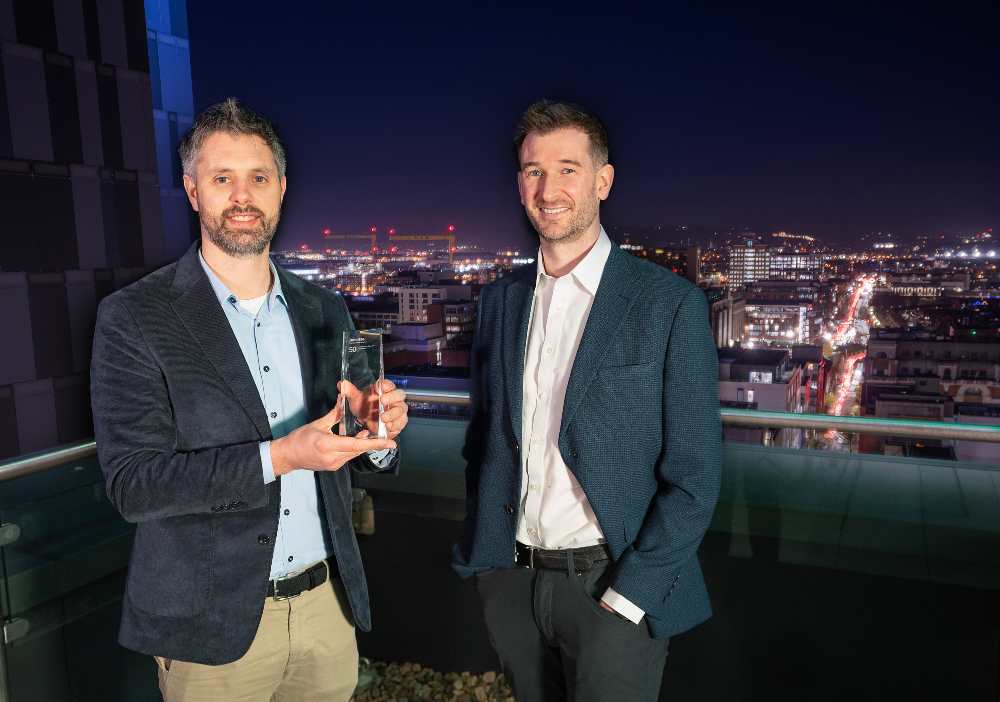
Incidents like this one are the core of the case Moloney makes for the Belfast company, which topped Deloitte’s Technology Fast 50 late last year and has made him a finalist in the EY Entrepreneur of the Year awards. His stated ambition goes further. “Northern Ireland has only ever had two unicorns, and the water industry has had the same number, and I think it’s about time there was at least one more added to both of those lists”, he says.
The difficulty sits in his own description of his customers. StormHarvester calls itself an AI company. The utilities that buy from it, by Moloney’s account, move slowly, are not built to run data systems and will reach AI some way behind other industries. Whether a company can grow to the scale he describes on the back of such a cautious buyer is the question the next few years will answer.
KEY NUMBERS: StormHarvester reaps whirlwind
• 130 employees globally
• 105-110 staff based in Belfast
• 50 utility customers worldwide
• £8.4m Series A funding round
• 2017 first venture capital investment
• One-third of New Zealand’s population covered
• Five staff across Australia and New Zealand
• First US utility contract secured in 2025
• 24-hour support via Belfast-Auckland operations
• Two years of current growth needed for unicorn target
Editorial takeaway: StormHarvester has evolved from a Belfast startup into a globally deployed AI water-tech company, using strong international growth, venture backing and utility adoption to pursue unicorn status.
A control room stuck in the DOS era
The idea came out of Queensland. Moloney, who grew up in Limerick and studied engineering in Dublin, took a job on the water and wastewater team of a local municipality a few hours inland from Brisbane.
Major floods came through the region while he was there. “I couldn’t believe that we had all this really expensive infrastructure underground. These big pipes and pumps that were protecting the city, and the system that ran them was like Microsoft DOS,” he says.
He had just bought his first iPhone, and the comparison stayed with him: “such a jarring contrast to have this piece of technology that just works seamlessly,” set against an archaic interface for infrastructure that protected a whole city. Site visits to other councils and utilities showed the problem was general. He saw that “everybody was using pretty much similar versions of that old school technology, and decided that there had to be a better way.”
👉 No tech background needed to bring your business into the AI age! Secure your Google AI Professional Certificate to complete the certification at no cost. Apply now and get started!
Moloney began building prototypes that helped staff visualise and analyse their water and wastewater systems. On his return, Queen’s University Belfast offered free testing and trials over a couple of years, followed by funding from Techstart in Northern Ireland. The first hire was a software engineer who later became chief technology officer. Moloney describes the move to Belfast plainly: “effectively it was an accident, but sort of unintentional, but has turned out really well.”
How AI can actually benefit people
StormHarvester sells no hardware. Utilities already collect data from pump, level sensor, flow meter and water quality suppliers, along with their SCADA control systems. The company pulls these feeds into one place with pipe network and location data, and sends alerts when parts of the network behave abnormally.
Moloney is clear that it does not replace SCADA. “the SCADA system is really good at transferring pieces of data from one place to another. What we allow you to do is to analyse that using AI and visualise it in a more modern way”, he says.
Its first module, blockage detection, targets rag, fat, oil and grease that clog wastewater pipes and push sewage into rivers, the sea or onto the street. In the Auckland case, he says, “That was all stopped by our machine learning system understanding that there was a variance in the pattern that it was seeing.”
The commercial argument rests on scale. Utilities’ expertise is in pipes, pumps, drainage and customers. “They’re not IT teams. They’re not data teams.” StormHarvester says it has about 50 customers worldwide, and Moloney uses Irish Water (Uisce Éireann) to illustrate the economics. “So what Irish Water are getting is a system that’s been paid for essentially by 49 other customers around the world”. If the utility tried to employ its own team of 50 software engineers, he says, “that’s probably not going to be feasible from a budgetary point of view for them.”
A rising digital tide
Moloney says machine learning has been in the product from the start, and that “we were an AI first company before that was a sexy thing to be”.
He does not claim his market will move quickly. In his words, “wastewater utilities are very conservative organisations,” with a mandate to treat wastewater safely and return it to the environment.
Asked whether AI will transform the sector, he places it mid-table. If you look at the wastewater industry, he says, “that’s not going to be the first adopter of AI. That’s going to be somewhere in the middle.” “I don’t think AI is going to completely change the way they operate, but I think there’s huge opportunities for efficiencies.”
That makes the sales pitch one about capital spending. Moloney points to ageing infrastructure, climate change and changing demographics as sources of strain, and says that when budgets are limited “we will allow their budgets to go much, much farther because they’ll be deploying capital into the right ways.”
The claim depends on utilities trusting the software enough to direct investment by it, which his own account of their caution suggests will be gradual.
Growth started on the other side of the world
The company’s first international market outside the UK was New Zealand, a choice Moloney calls an extreme version of scaling. “So we couldn’t go much further outside of time zone or support”.
It now has five staff across Australia and New Zealand, three in Australia and two in Auckland, who work one day a week from Watercare’s office. Software and R&D stay in Belfast, with support handed between the two cities to give 24-hour cover. Moloney says the contract covers about a third of New Zealand’s population.
StormHarvester won its first US contract at the end of last year, with the main utility in Milwaukee.
At home the position is less developed. The company works with Northern Ireland Water and is running a pilot with Uisce Éireann, and Moloney says “we’re early days with both”. He explains the order of expansion this way: “we found more success in England to start with, and then we’ve kind of scaled. We’ve gone over and come back rather than started here and got over. But that’s just where the need was greatest, I guess.”
StormHarvester has been venture-backed since its first investment from Techstart Ventures in December 2017. Moloney says the money has been a good decision because “it’s allowed us to move and evolve our technology really quickly, which in turn has allowed us to grow rapidly throughout the UK and other international markets.”
Its £8.4 million Series A was led by Emerald Technology Ventures and YFM Equity Partners in January 2025.
The company employs 130 people, around 105 to 110 of them in the Belfast office. Moloney says the roles are “primarily office first roles, so we kind of bucked the trend a little bit there”, which he links to the speed of product development. Every employee holds shares. He is candid about the demands: “It is hard work. It is long hours.” The growth has changed his own job too. “I have to almost reinvent or change who I am to the business every six to 12 months because of the speed of growth,” he says.
Moloney names Kainos and First Derivatives as Northern Ireland’s two unicorns and wants StormHarvester to be the third. He does not present that as close. Reaching it, he says, depends on sustaining the current rate of growth, against a customer base he himself describes as conservative and a home market where the company is still at pilot stage.
His answer on timing is conditional. “We need to keep up this pace for a couple of years. But if we kept up this pace for a couple of years, we’ll get there.”
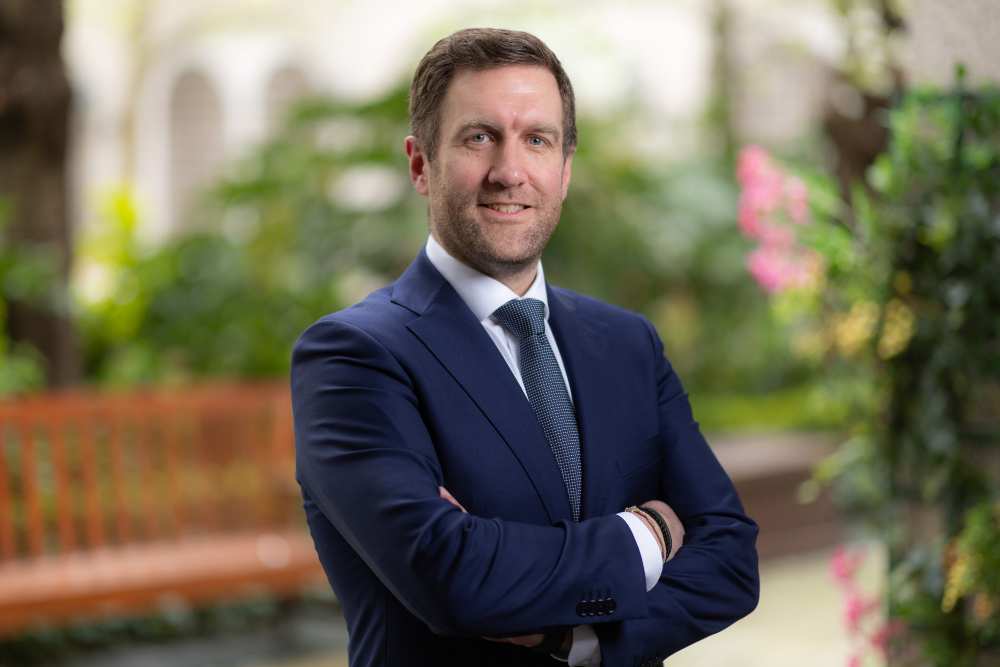
Top image: Brian Moloney, founder and CEO of StormHarvester
FAQ: StormHarvester, AI and the Future of Water Utilities
What is StormHarvester?
StormHarvester is a Belfast-based software company that uses artificial intelligence and machine learning to help water and wastewater utilities detect problems, manage infrastructure and prevent flooding or pollution incidents.
Who founded StormHarvester?
StormHarvester was founded by Brian Moloney, an engineer from Limerick who developed the business after working in the water sector in Queensland, Australia.
How does StormHarvester’s technology work?
The platform combines data from sensors, pumps, flow meters, water quality systems and SCADA networks. It then uses AI to identify unusual patterns and alert operators to potential issues before they become serious problems.
What problem does StormHarvester solve?
The company helps utilities detect sewer blockages, reduce pollution risks, prevent flooding and make better use of infrastructure investment budgets.
Does StormHarvester replace existing utility control systems?
No. StormHarvester works alongside existing SCADA systems. It adds analytics, machine learning and modern visualisation tools to help utilities better understand and manage their networks.
How is artificial intelligence used by StormHarvester?
The company’s AI analyses historical and real-time operational data to identify patterns and detect anomalies that may indicate blockages, equipment failures or emerging network issues.
Where does StormHarvester operate?
The company serves around 50 utility customers worldwide and has operations across the UK, Ireland, Australia, New Zealand and the United States.
What was StormHarvester’s first major international market?
New Zealand was the company’s first international market outside the UK. Its Watercare contract covers approximately one-third of New Zealand’s population.
How large is StormHarvester today?
StormHarvester employs about 130 people, with more than 100 based at its Belfast headquarters.
What funding has StormHarvester raised?
The company has been venture-backed since 2017 and secured an £8.4 million Series A funding round in January 2025 led by Emerald Technology Ventures and YFM Equity Partners.
What is Brian Moloney’s long-term ambition for StormHarvester?
Moloney wants StormHarvester to become Northern Ireland’s third unicorn, reaching a valuation of more than $1 billion by maintaining its current growth trajectory and expanding internationally.
Why is AI becoming important for water utilities?
Water utilities face growing pressures from ageing infrastructure, climate change and population growth. AI can help operators identify problems earlier, improve efficiency and direct investment towards the highest-priority assets.
👉 No tech background needed to bring your business into the AI age! Secure your Google AI Professional Certificate to complete the certification at no cost. Apply now and get started!
-
Bank of Ireland is welcoming new customers every day – funding investments, working capital and expansions across multiple sectors. To learn more, click here
-
For support in challenging times, click here
-
Listen to the ThinkBusiness Podcast for business insights and inspiration. All episodes are here. You can also listen to the Podcast on:
-
Spotify
-
SoundCloud
-
Apple