Together Academy is helping adults with Down syndrome build fulfilling careers through accredited training and supported employment pathways in Dublin.
Together Academy started in a rugby club kit room five years ago. It now runs training cafes across Dublin, places graduates in top hotels and corporate offices, and has just moved part of its operation into the headquarters of SMBC Aviation Capital.
Theresa Coveney did not set out to build a training organisation. She set out to answer a single question about her own daughter. “The background is that I have a daughter with Down syndrome, April, and she’s now 15,” Coveney said.
“I think when people see it, they believe it. They see the authenticity of it. It is sustainable”
April had been attending the Down Syndrome Centre in Sandyford and Swords since birth, a service built around children and their families rather than adults. “It was not offering adult services at the time, so I went onto the board of that, and I met Madeline, who was working with the Down Syndrome Centre at the time.”
Coveney and Madeline Regan, now Together Academy’s therapeutic services lead, began asking what happened to young people once school and children’s services ended. “We had been raising April, saying she was the same as her brothers, she just needed a bit of extra support, and then we’re going, well, why is she?” Coveney said. “It was really four mums who came together, and we had Madeline there from the start.”
The problem they found was not a lack of care. It was a lack of a route into work. “What we realised very quickly was that the adults were not getting industry recognised training,” Coveney said. “A lot of people in the corporate sector, and a lot of friends worked in business, were saying, look, we’d be very open to supporting somebody with disability. We don’t meet them. We don’t know where to find them. We don’t know what they can do. We don’t have any guidelines around how to best work with them.”
KEY DETAILS: Together Academy
• Almost 100 young adults currently supported
• Accredited training focused on career preparation
• Employment pathways for young adults with Down syndrome
• Vocational learning linked to practical workplace development
• Dublin-based training and employment opportunities
• Supported transition from learning into the workplace
• Focus on skills, experience and sustainable career pathways
• Employer engagement supporting inclusive employment
Editorial takeaway: Together Academy is scaling a practical training-to-employment model aimed at creating fulfilling career opportunities for young adults with Down syndrome.
Training built for a job, not a certificate
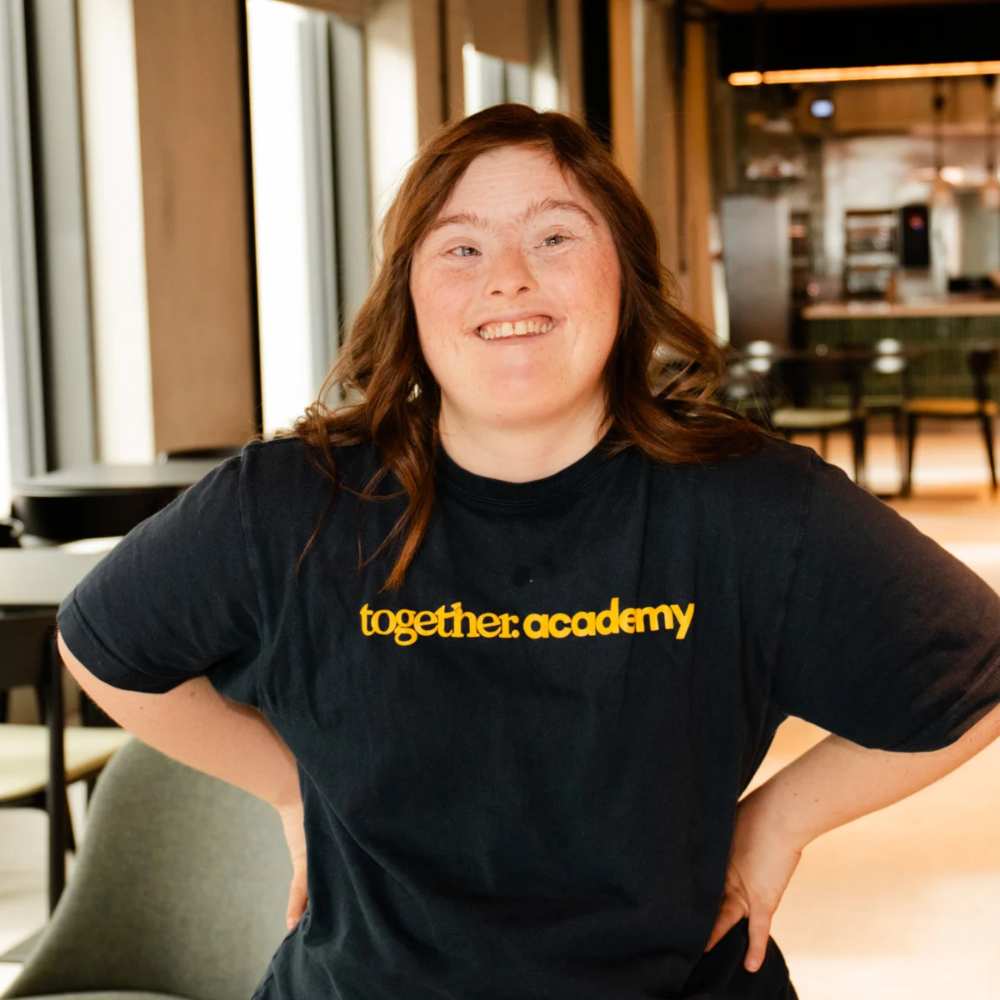
Together Academy now runs two courses side by side out of its base in Dublin: a two year, QQI (Quality and Qualifications Ireland) accredited culinary and hospitality programme, and a vocational skills course covering the practical side of holding down a job. Regan describes the second course as a direct response to demand. “This course came about because there were so many people looking for the training,” she said. “We just had to open a second course. The demand was so great.”
The course content is shaped by the students taking it. “This would have been a co-designed course,” Regan said. “If the students bring to us an example or an idea that they have, we then weave that into like maybe some of the modules and some of the learnings in this course.”
👉 No tech background needed to bring your business into the AI age! Secure your Google AI Professional Certificate to complete the certification at no cost. Apply now and get started!
Assessment has been adapted too. Where a written test would put a poor reader at a disadvantage, staff record students at work instead. Coveney said students “can be judged on the video of their work rather than” on paper.
The pitch to employers
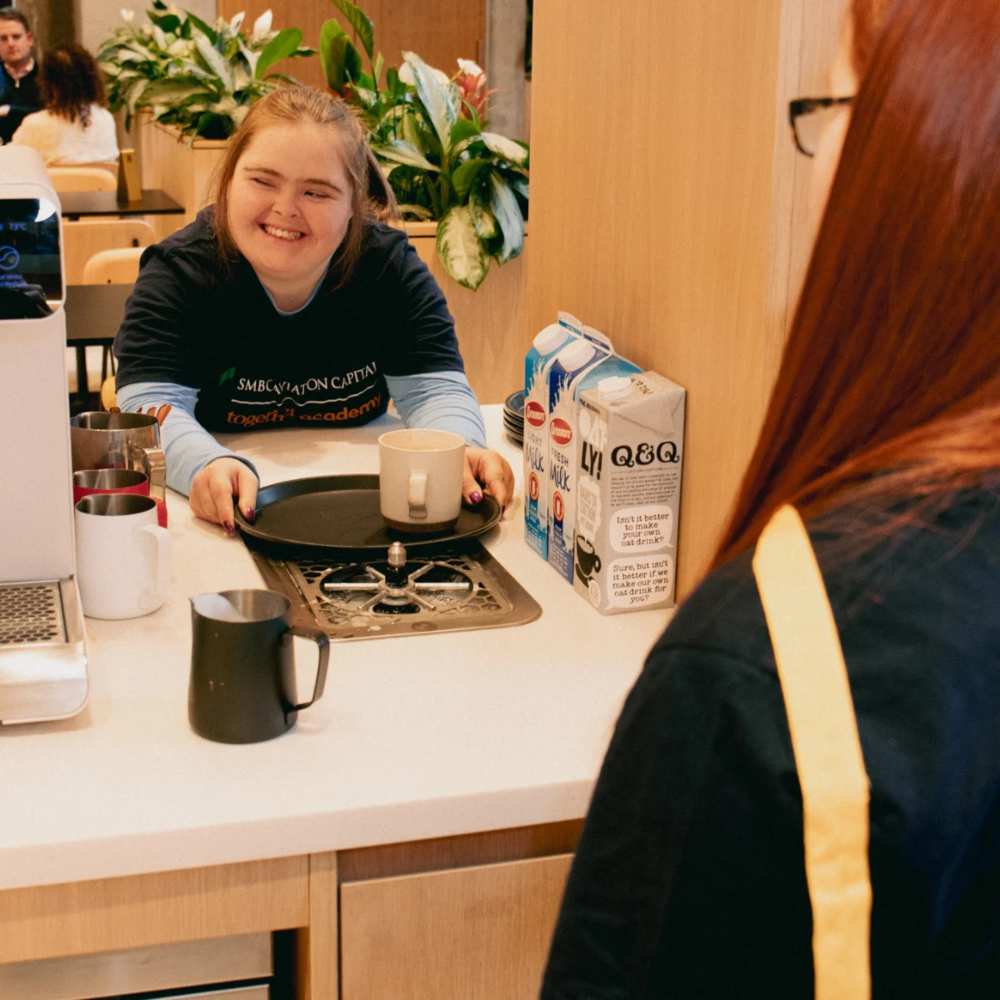
What Regan believes sets Together Academy apart is not the classroom. It is what happens after it. “I don’t think we’re unique in what we do,” Regan said. “I think maybe the thing that sets us apart is we have the training, the certified and the vocational training. We also have a really deep pathway into employment. I don’t actually think there’s anything like us that has the training with the pathway in that’s really supported.”
Before a student starts in a new workplace, Together Academy sends in a diversity and inclusion officer to brief staff. Coveney describes the aim plainly. “It’s that we actually support the person and the employer to say like, how could this work? What do we do to make this work for everybody?” Regan said.
The organisation reports high retention once a placement is made. “The staff retention is very high,” Coveney said. “You’ll know reasonably quickly if something is not working, and we’ll try and resolve it. If somebody just isn’t a fit, we will change things. You’d have very little illness, very little being late, that sort of stuff is just doesn’t tend to really happen.”
Coveney is careful to add that the work is not simple. Many students are travelling independently for the first time, supported by a Dublin Bus programme built for that purpose, and the organisation has learned as it has grown. “We’re dealing with a vulnerable population who have not been in the city centre before, have not been working at this level before, and there are challenges,” she said.
Building a case for corporate funding
Together Academy’s funding is stitched together from several sources, including the Education Training Board and the National Treasury Management Agency.
The organisation has been supported by the Bank of Ireland Community Fund, which backs future-facing initiatives that build capability, promote inclusion and help improve access to opportunities for underserved groups. The support reflects the programme’s focus on creating meaningful social impact and empowering people to reach their potential. it is also supported by the Bank’s life assurance subsidiary New Ireland.
“New Ireland are down just in Ballsbridge and they would come down to our training cafe a lot,” Coveney said. “They use it. We do corporate catering out of Wanderers, and we would often bring them down lunches. So they have been supporting us for a long time.”
Coveney sees that familiarity, rather than the strength of the written application alone, as decisive. “I think when people see it, they believe it,” she said. “They see the authenticity of it, and they see that behind every part of it, there needs to be money. It is sustainable.”
How a kit room in a rugby club led to a corporate lobby
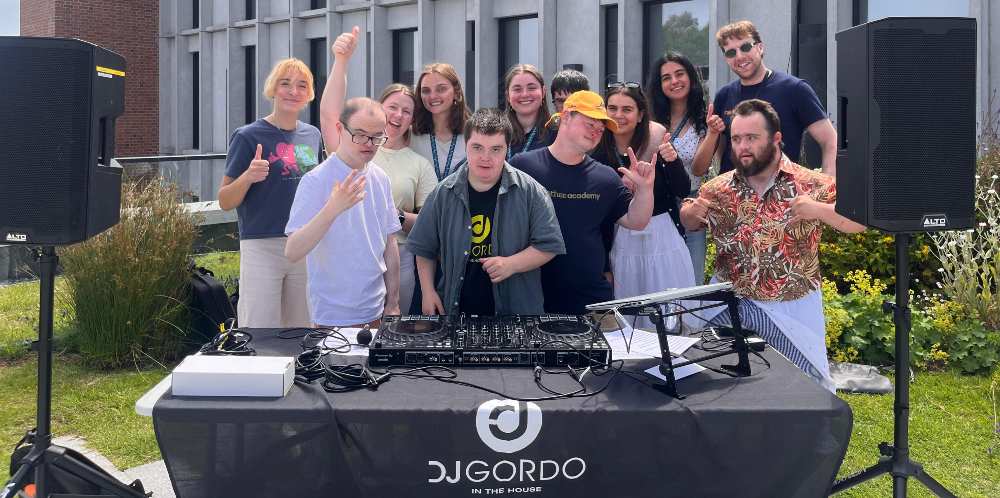
Together Academy’s first training cafe opened inside Wanderers Rugby Club on Merrion Road, using space the club was not putting to full use.
Its newest base, the community hub inside SMBC Aviation Capital’s offices, came from a similar conversation about a gap SMBC happened to be able to fill. “We told them that we had a very strong application in for to expand our courses, and that we had no space for it,” Coveney said. “Unbeknownst to us, they had this space, extra capacity space on the lower ground floor, and they clearly went away and said, why don’t we see, can we build a relationship with these guys.”
Regan frames the decision as a real commercial risk on SMBC’s part, and one built on an existing personal connection. “They did, in fairness, take a big risk. That’s like winning the lottery in a sense,” she said. “That was built off of the relationships that we made and the impact. One of our graduates was the point of contact. His father knew somebody. They used to come out to visit them.”
Together Academy now supports close to 100 young adults across its training programmes and job placements, up from a handful in its first years. “We could we couldn’t have expanded without their support,” Regan said. “We’re almost at the hundred mark.”
Growing the pathway, not the café count
Coveney is direct about where she does not want the organisation to go next. “I don’t see us doing a huge amount more expansion of coffee shops,” she said. “What we want is they’re good proof of concept, and they’re a great opportunity to showcase the skills and support in a hub model.”
The real goal, she said, is for a person with Down syndrome working a front desk or serving a coffee to stop registering as remarkable. “What we really want is that when you come into Dublin 2, Dublin 4 in the next few years, is that there’s a high chance that you’re going to meet a person with Down syndrome, as you said, on the bus, going in to buy their lunch in a coffee shop, at the front desk of a business, in a restaurant,” Coveney said. “We want to just increase the visibility of this.”
Both women describe the model as personal by design, and possible to repeat without being run centrally from Dublin. “There’s a very high touch. That’s how you describe it,” Coveney said. “Our young adult, we know their families. We know the business we’re working in. I think it would be very hard for us to run this in global scale. I think it’s very doable, the model, certainly the right energy and the people behind it.”
Regan points to the physical template that made the first cafe possible. “We started in a rugby club that was underutilised,” she said. “There are many of those around the country that you would think that would have the space for a cafe. There’s GAA clubs as well.”
Who the model is built for?
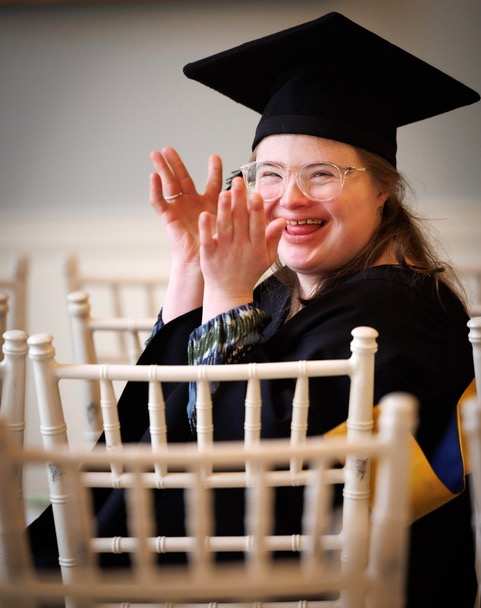
Together Academy takes students from the age of 21. “We work with adults only when they’re over 21, so we don’t work with teenagers or 20 year olds,” Coveney said.
Some arrive with years of prior support behind them. Others do not, and Regan sees that group as central to the organisation’s purpose. “We have a student in one of our classes who was 35, and wouldn’t have ever learned his colours or his numbers or his letters, and that would just be something that maybe wasn’t priority for him, or maybe his support network,” she said. “Now he’s coming to us, and he has a paid job through us, and really wants to learn. His sister went to college. He saw her graduate, and he said, I want that for myself.”
Regan calls his progress in the classroom “beautiful to watch.” It is, in effect, the case Together Academy has been making to funders and employers for five years: training built around them and a real job at the end of it. The organisation’s task now is convincing enough employers, and enough funders, to keep proving it.
Based strictly on the text already provided from How Together Academy is building fulfilling careers V2.docx, here is a concise AEO-friendly FAQ.
Frequently Asked Questions
What is Together Academy?
Together Academy is an organisation focused on helping young adults with Down syndrome develop skills and build pathways towards fulfilling careers.
What kind of training does Together Academy provide?
Together Academy provides accredited training designed to prepare young adults with Down syndrome for employment, including vocational learning and practical workplace development.
How does Together Academy help young adults into employment?
It supports participants through training and employment pathways, helping them develop the skills and experience needed to move into the workplace.
How many young adults does Together Academy support?
Together Academy has grown to support almost 100 young adults through its programmes and activities.
Where is Together Academy based?
Together Academy operates in Dublin, where it provides training and employment-focused opportunities for young adults with Down syndrome.
👉 No tech background needed to bring your business into the AI age! Secure your Google AI Professional Certificate to complete the certification at no cost. Apply now and get started!
-
Bank of Ireland is welcoming new customers every day – funding investments, working capital and expansions across multiple sectors. To learn more, click here
-
For support in challenging times, click here
-
Listen to the ThinkBusiness Podcast for business insights and inspiration. All episodes are here. You can also listen to the Podcast on:
-
Spotify
-
SoundCloud
-
Apple