Podcast Ep 369: Rising fuel, shipping and labour costs are squeezing Irish artisan food producers, as Blas na hÉireann firms seek growth and protect margins.
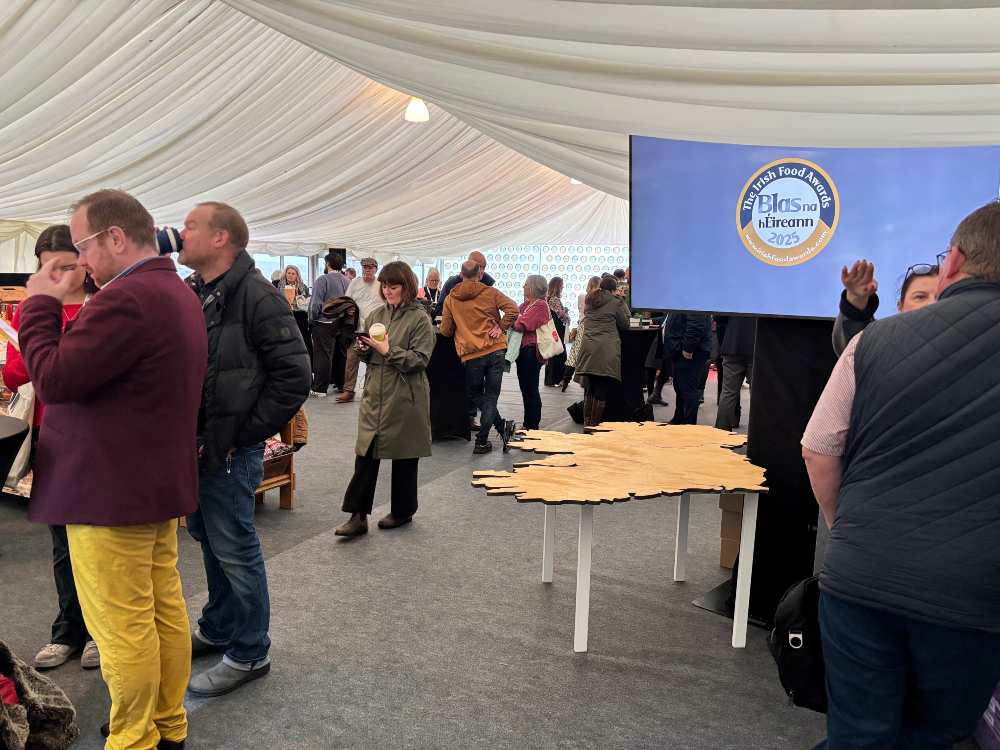
Blas na hÉireann in Dingle last week demonstrated the innovation and passion that drives Ireland’s artisan food producers.
Widely regarded as the largest blind tasting competition for produce in Ireland, the awards are judged using a system developed by Blas na hÉireann in partnership with the Food Science Department at University College Cork, a methodology that is now recognised internationally as an industry standard.
“There’s not big margins in food. You know, it’s about volume, and so I think a lot of suppliers or producers and processors are looking to the home markets or markets closer to their borders because there’s less risk”
Now in its 19th year, Blas na hÉireann continues to expand in both scale and participation. More than 3,000 entries were submitted from across the island of Ireland this year, with a record number of first-time producers taking part. The competition has also grown significantly, with the number of food and drink categories increasing from 170 to more than 200.
The drama that unfolded as hardworking producers walked away with their awards was something to behold, especially the whoop from Sunny Joy when he won Best Start-up at Blas, an award sponsored by Bank of Ireland. He subsequently won Best in County (Mayo) and Best in Connaught.
KEY INGREDIENTS: Blas na hÉireann 2026
• 3,000+ entries submitted to this year’s awards
• 200+ categories spanning Irish food and drink
• Strong overseas demand providing growth opportunities for artisan producers
• Fuel costs adding pressure across production and distribution
• Shipping costs squeezing margins on international sales
• Labour costs adding to producers’ operating burden
• Tighter margins increasing the appeal of markets closer to home
• Cost pressures shaping growth decisions among Irish food businesses
Editorial takeaway: Strong demand is supporting Irish food producers, but escalating costs are forcing sharper choices about margins and markets.
Challenges facing food producers
-
Listen to the ThinkBusiness Podcast for business insights and inspiration. All episodes are here. You can also listen to the Podcast on:
-
Spotify
-
SoundCloud
-
Apple
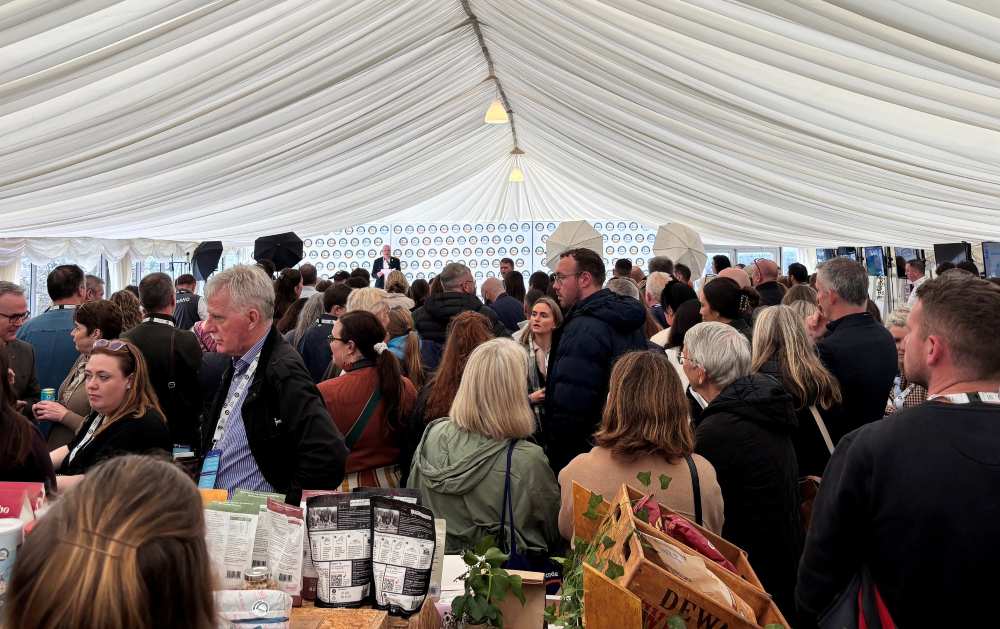
But amidst the euphoria, the was a poignancy. “My customer wants me to reduce the price even more. If I do that I will have to stop supplying them,” a food producer told a crowded Backyard @ Blas tent, eliciting nods of recognition from around the room.
The challenge boils down to margins. Customers want more for less, while producers are already down to skin and bone.
But where there is a will there is a way. We met with various food producers and industry experts to get a sense of how Irish food producers are managing in these difficult geopolitical times.

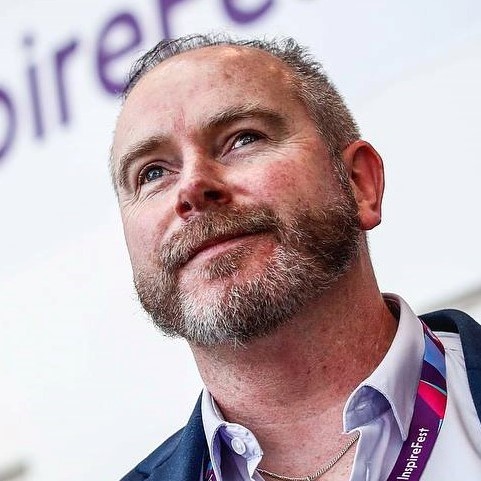
Matt McCabe
Irish beef and lamb are finding buyers in France, where they are wanted for sous vide cooking. In the Middle East, buyers are asking for Irish butter, cheese and milk powder. Matt McCabe, whose Subu Connect marketplace matches Irish food and drink producers with airline buyers, says the platform has more than 250 Irish producers on it and is seeing more demand for their products.
He also sees many of them turning towards markets nearer home.
“If we only think about what’s happening in the Middle East right now, you know, the risk of your stock sitting at a port in Europe or in the Middle East, you know, that can’t get through to port, it’s costly, and a lot of suppliers don’t have that. You can’t carry that risk,” he said, speaking at this year’s Blas na hÉireann food awards, now in their 19th year.
👉 No tech background needed to bring your business into the AI age! Secure your Google AI Professional Certificate to complete the certification at no cost. Apply now and get started!
McCabe added diesel and petrol prices to the list of pressures on margins that, in his words, “are already tight”. “There’s not big margins in food. You know, it’s about volume, and so I think a lot of suppliers or producers and processors are looking to the home markets or markets closer to their borders because there’s less risk, and you can always recover a position in your neighbouring market as opposed to something sitting on the other side of the world,” he said.
Margins become the measure of survival
Lucy Ryan
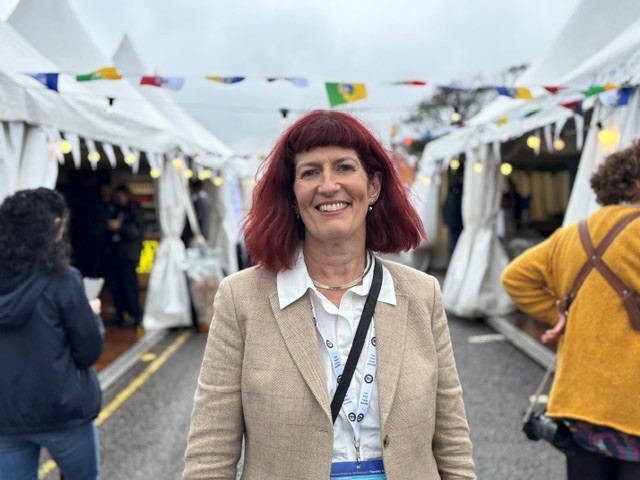
Lucy Ryan, head of Food and Beverage Sector at Bank of Ireland, dates the change to the pandemic. “Up to maybe six or so years ago, and before Covid, things were a little bit more stable,” she said. Supply chains and food production were predictable “in broad terms, and that has all changed hugely in the last number of years for all the geopolitical reasons that we know of.”
Her prescription is commercial. Producers, she said, need to decide what to bring in house and what to outsource, and go into retailer negotiations prepared to argue for price increases. “Fundamentally these operators need to actually be able to not just cover their costs but actually make some money. So the whole thing of protecting and ideally growing margins is of paramount importance.”
John Graham of Andrews Ingredients, a bakery ingredient wholesaler that began in Northern Ireland, has supplied the whole island since the mid-2000s and now also sells into the UK, traced the costs back up the supply chain. Fuel, he said, affects his own business “directly, but also our customers very directly”, through manufacturing, energy, and the vans that carry their goods. Ingredient manufacturers “are now needing to pass on costs from that”.
The war in Ukraine reaches Irish bakeries by an indirect route. “It’s not that much of that grain ever would come to Ireland or Western Europe, but it means that where that grain goes to, say North Africa and China and places, if they can’t get it from there, then they come to Europe.” Labour costs “have gone up quite a bit as well”, he said, and the bakery trade faces a skills shortage.
Some of the producers described the effect in personal terms.
Graham Herterich
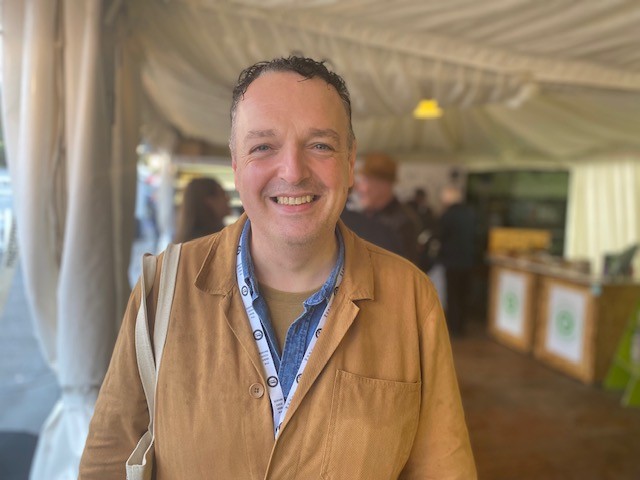
Graham Herterich, owner of The Cupcake Bloke and a chef who set up his bakery after being made redundant in 2012 and now runs two retail shops, said of his peers: “I think we’re all absolutely exhausted. Genuine, like I do mean that.” His own response to rising costs has been to lean on long-standing suppliers. “I’m working with one supplier. He’s moved company three times, and I’ve moved with him.” He uses a broker for energy who “gets me the best prices, and he tells me when to move.”
John Graham was more sanguine. “Business isn’t particularly easy,” he said, before adding that he was “always sort of very impressed and encouraged by the quality of the business people” able to cope with it.
New products as a defence for margin
Ryan argues that the squeeze is itself pushing producers to innovate. “In one way, I suppose the challenging environment is probably further driving innovation and creativity, because sometimes operators feel that they need to develop maybe a different product that’s going to maybe give them a little bit more margin.”
Ian Mernagh
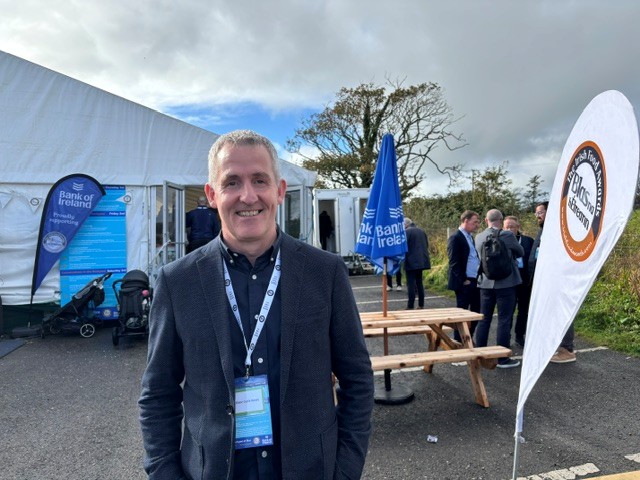
The evidence at Blas fits that pattern. Ian Mernagh began with two beehives in 2015 and now has about 140 colonies at home in Wexford, trading as All About Nectar. Calls for honey for medicinal use about four years ago led him to beeswax and then a skincare range made only from ingredients he can trace. “We don’t import almond oil or palm oil,” he said.
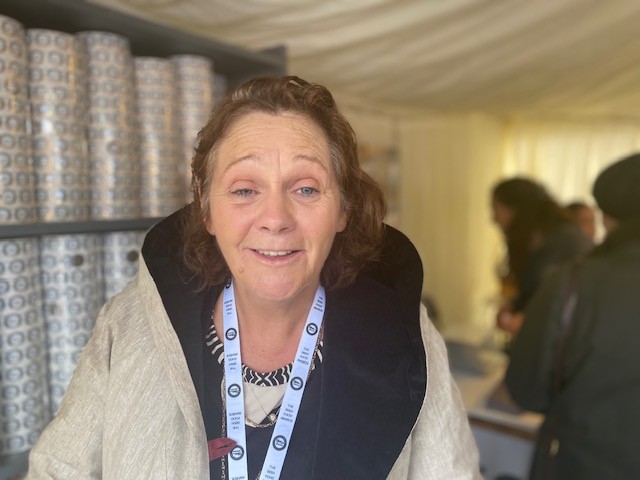
Florrie Purcell, who runs The Scullery and has been coming to Blas for 18 years, is launching seasoning sauces for air fryers, built around changes in how families eat. “It’s all about time, convenience. People still want that nutritional. It’s all about protein at the moment.”
John Graham sees demand splitting two ways. One side is indulgent, “very very high quality, very very well crafted” products, including patisserie and sourdough. The other is health, with “a lot of focus on fibre at the minute” and pressure for shorter ingredient lists, with “less ingredients, and for those ingredients to be more nutrient dense as well.”
Awards now carry weight with buyers and lenders
Florrie Purcell
For small producers the hardest commercial step is often the first one. “For a producer to actually get into any retailer, even just to get a meeting with a retailer, is quite tricky,” Ryan said. Blas, which Bank of Ireland sponsors, puts producers in front of buyers who might taste a product they would otherwise never see.
Florrie says the value of an award has changed over her time in the business. “Years and years and years ago when I’d go, do you know what I mean, into a buyer, into the bank? They never asked you about food awards. Now they do. Now it’s important.”
Mernagh is a finalist for the fifth year running and his soft set honey has taken bronze, silver and bronze over the past three years. “To have that though on your jar is huge for us,” he said of the Blas sticker.
For Gráinne Keneally of Elderberry Farm Produce, who won silver this year for her Aggie’s Raspberry Jam, said that winning an award in her first year of trading “made me realise that you can do this. You can do this. Like it gave me the belief.”
Own the brand, share the acclaim
Several producers described a sector that shares contacts and resources. Herterich was named Producers’ Champion this year, for the first time, said:“We’re like two degrees of separation from everybody in Ireland.”
Mernagh has turned that into product, and credits events like Blas for the introductions. A chocolate maker now produces a chocolate containing his soft set honey, and a soap maker in Wicklow uses his honey and rosehips. On the soap label, the choice was between a small credit for his partner on the back and billing it as a joint product. “A lot of advice was, no, no, you should own the brand. We’re like, you know, let’s do it together, and everybody gets a lift.”
He argues the sector once worked differently. “I think in the older days maybe, we competed against each other, and like there’s great room for collaborations.”
Growth on the producer’s own terms
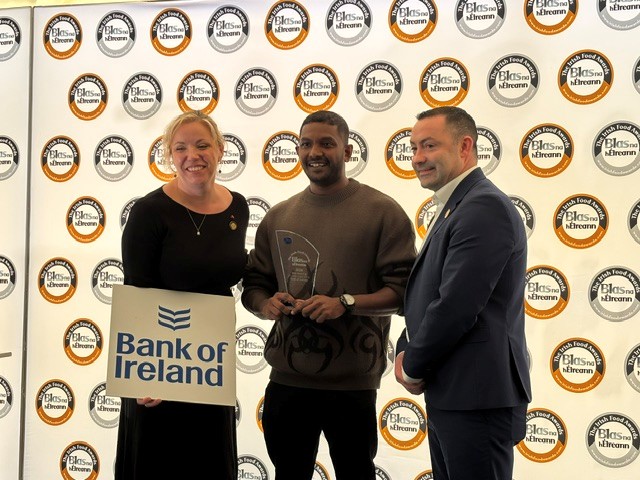
Sunny Joy from GoMeal winning Best Start-up at Blas na hEireann 2026.
The producers at Blas do not share a single view on how big they want to be. Keneally began in 2020 with elderflower cordial from trees in her garden and now trades at four markets a week across Wexford, Wicklow, Kilkenny and Dublin. She has ruled out mass production. “I really love the integrity of my product. I don’t want to turn it into a mass production where the authenticity of the product will suffer.”
Herterich went the other way on one part of his business, closing his wholesale arm to concentrate on his own shops and some corporate work. He is now working on a project to “scale my business in a way that, I suppose, protects me in the future.”
Sunni Joy, owner of GoMeal a chef originally from India who won this year’s Best Start-up award sponsored by Bank of Ireland, wants national and international reach. He launched with a chicken curry and a beef stroganoff in two SuperValu stores, selling 20 units. A year on, he said, “we are selling 1,500 pieces, nearly, per month.” Sales are still confined to Mayo. “We want to go to nationwide and international wide, if possible. That’s the dream.”
For producers who do look abroad, McCabe puts a typical lead-in time at 12 to 18 months, with the Arab Irish Chamber of Commerce and other chambers able to help with paperwork, regulation and commercial invoicing. He is now working on a faster case, Irish lamb and beef for France, on a timeline of four to six months. “We think we might have an opportunity, you know, for an Irish processor to be working in France,” he said. “So it can move really fast, but 12 to 18 months is an ideal scenario.”
Absolutely. Keeping this strictly to the article details already provided, here is a clean, AEO-friendly FAQ suitable for the end of the piece.
Frequently Asked Questions
What is Blas na hÉireann?
Blas na hÉireann is an Irish food and drink awards programme covering more than 200 categories.
How many entries were submitted to Blas na hÉireann?
More than 3,000 entries were submitted to this year’s awards.
What challenges are Irish artisan food producers facing?
Producers are dealing with rising fuel, shipping and labour costs, putting pressure on margins.
Are overseas markets important for Irish food producers?
Yes. The article highlights strong overseas demand as a growth opportunity for Irish artisan food producers.
How are rising costs affecting growth decisions?
Higher operating and shipping costs are increasing the appeal of markets closer to home.
👉 No tech background needed to bring your business into the AI age! Secure your Google AI Professional Certificate to complete the certification at no cost. Apply now and get started!
-
Bank of Ireland is welcoming new customers every day – funding investments, working capital and expansions across multiple sectors. To learn more, click here
-
For support in challenging times, click here
-
Listen to the ThinkBusiness Podcast for business insights and inspiration. All episodes are here. You can also listen to the Podcast on:
-
Spotify
-
SoundCloud
-
Apple