Podcast Ep 363: Alan Tyrrell of The Reputations Agency explains why reputation drives business performance, with research showing a 5% reputation shift can impact business outcomes.
There is a business in Ireland called The Reputations Agency that has amassed 17 years’ experience of tracking the reputation strength of Irish companies.
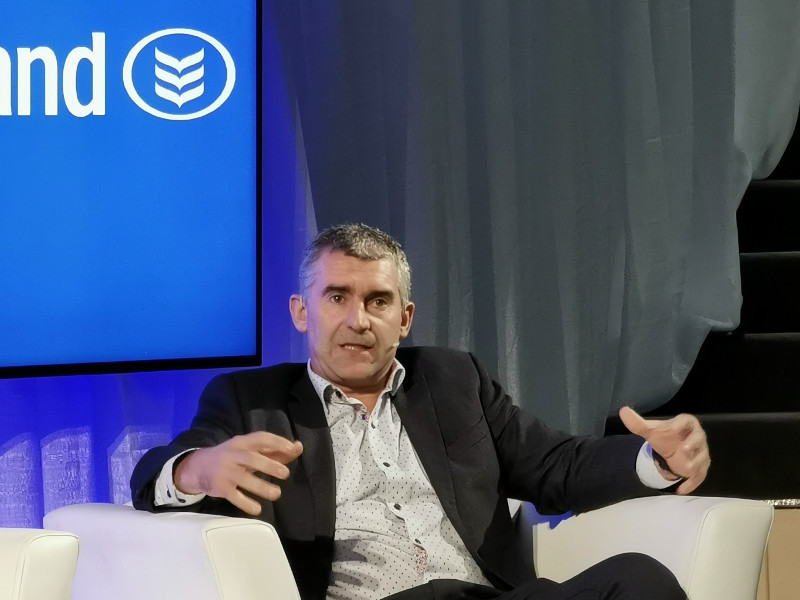
The firm’s chief executive Alan Tyrrell describes its work as “the longest running and largest study of reputation strength in Ireland.” Tyrrell joined the agency earlier this year in the latest chapter of a career in public relations, becoming CEO in April.
“For the CEOs and the CMOs that I talk to in large companies every day of the week, reputation is everything”
Measuring reputation is actually one of the challenges that business leaders face, says Tyrrell. So why does it matter? Tyrrell points to how a 5% swing in reputation strength, up or down, brings “an almost equivalent 4.5% swing in business outcomes.” These outcomes include a willingness to buy, willingness to be employed by the business and more.
The research forms part of a global business intelligence system that Tyrrell calls “the gold standard in reputation strength.”
KEY NUMBERS: Reputation and Business Performance
- 5% reputation shift linked to 4.6% business outcome change
• 17 years tracking Irish corporate reputation
• Annual study covers 100 leading Irish companies
• Reputation measured through esteem, admiration, trust and feeling
• Six key drivers assessed: products, leadership, workplace, innovation, citizenship, conduct
• Business outcomes include purchase intent and employer attractiveness
• Reputation now drawing board-level attention and C-suite ownership
• SMEs urged to build strategy from existing customer data
Editorial takeaway: Reputation is increasingly being treated as a measurable business asset, with even small shifts in public perception capable of influencing sales, talent attraction and long-term corporate value.
Reputation is an investment, not a cost
-
Listen to the ThinkBusiness Podcast for business insights and inspiration. All episodes are here. You can also listen to the Podcast on:
-
Spotify
-
SoundCloud
-
Apple
Tyrrell explains: “For the CEOs and the CMOs that I talk to in large companies every day of the week, reputation is everything. And one of the challenges that people have is, well, how do you measure reputation? How do you put a quantum on it? And what’s the benefit of reputation? So our study uses a business intelligence system that enables people to look at their reputation strength across a number of different factors. What’s driving that reputation strength? Where they’re at in it, both on an individual basis. So clients use our model to measure it themselves individually on an ongoing basis, and then we do this annual study, which is 100 companies in Ireland; the most important, impactful, and best-known companies in Ireland.”
Consumers supply the raw material for the research. They are asked to rate each business on esteem, feeling, admiration and trust.
👉 No tech background needed to bring your business into the AI age! Secure your Google AI Professional Certificate to complete the certification at no cost. Apply now and get started!
“Reputation is bigger than, say, news coverage, and that’s again one of the things where we’re different in terms of the Reputations Agency, we look at what we call intelligence, strategy, story, and impact.
“And intelligence is all that evidence around reputation, and the evidence is from our own system, but also other systems. So we would look at, for instance, what are your products and services? Where are you at on innovation? What do you like as a place to work? Is your governance good? Are you strong in the area of citizenship, and by which I mean corporate citizenship or your engagement in society?
“So consumers are asked to score and rate those businesses on a whole load of factors. The starting point is they’re asked to rate businesses in the areas of esteem, feeling, admiration, and trust. So, what level of esteem do I hold this organisation? How much admiration do I have for them? What level of trust do I have for them? And what’s my feeling towards them? So that’s the basis of the reputation score.”
The research looks at what moves these scores. The list runs through products and services, performance, leadership, citizenship, workplace and innovation, along with what Tyrrell calls conduct. That covers questions such as “are you ethical? Are you fair in the way you treat people.”
Tyrrell says that reputation strategy has to rest on evidence, expertise and experience. He says he has watched organisations focus their communications and reputation-building efforts on the wrong things. For example, every business needs to be a good corporate citizen. “It’s not a question. And you shouldn’t be communicating it for the wrong reasons.”
In other words firms need to dig deep and communicate the right things in an honest way.
“You don’t need to do more, but you just need to be authentic and keep doing what you’re doing. But people might think you’re a good corporate citizen, but think, gosh, I wouldn’t like to work there, though, right? And you might have a wonderful workplace experience, a wonderful workplace culture, but no one knows about it.
“And in the midst of a war for the best talent and trying to attract and retain the best talent, so trying to give, be it a chief people officer or a CEO or a chief marketing officer or a chief customer officer, the evidence at which to base where their strategy should focus is, to me, really important, because we’re dealing with scarce resources. And again, another reason why it’s really important is to look at where are we applying the work, and then it’s also in the outcome. And the outcome is, if you get your reputation right, you will get a better business outcome.”
Authenticity is your purpose
Tyrrell, a veteran PR executive who began his career at Murray Consultants and worked at businesses like Ryanair, says that strong businesses know how reputation impacts bottom line and align it with their purpose.
“Ryanair is an organisation with a focus on reputation, and people can argue and say, oh well, they’re this, that, the other, but they have an absolute focus and understanding of the power of reputation and the alignment of their purpose. So their business purpose to be the low cost or low fares airline with their communication, everything else. It’s genius the way they do it. And people can give out and grumble and all that, but service. That’s a different thing, right? So there’s a strategy there that they’re following.
“So I look at businesses that apply reputation thinking and reputation strategy, and they align it with their business purpose, and that delivers better business outcomes. And that is something that markets look at, and the companies that we work with are generally larger organisations, large companies, and they’re looking at reputation as an absolutely invaluable, but highly valuable piece of kit that they need in order to continue to have a license to operation. To me, it’s as simple as that. If you have no reputation, you have no license to operate.”
So how do businesses build their reputational strength. Tyrrell already pointed to authenticity but it is also about creating a feeling or spirit when people think of your brand.
He separates communications from reputation itself. “Communications is an output. A business can run wonderful advertising and wonderful public relations, but it is the product, the innovation and the workplace set the result. “If your product or your innovation or your workplace are not good, your reputation is going to suffer.”
In the boardroom, the question of reputation is getting the attention it deserves and chief reputation officers are appearing as part of the C-suite.
Asked how leaders would behave if reputation appeared on the balance sheet tomorrow, Tyrrel says that in many cases it already does. “The value of your business is the value of your reputation.”
But what about smaller SME businesses? Tyrrell says SME owners can begin with the data they have to hand such as the times of day that a retailer, for example, is at its busiest and when are the quiet times, how are they treating their customers during those hours, how are they being greeted.
He recalled his own experience of going to two different coffee shops and having two very different customer experiences. The first outlet was slovenly and made him feel invisible. The second outlet was friendly and engaging. You can guess where he decided he was going to continue to spend his money.
His advice to an SME is to collect every data point it can. “Get them into the hopper and from that start to distil what are the things that matter to consumers.” For the year ahead he suggests a programme with a starting point, a target and a plan for telling the story. He would also look at channels such as social media, the local radio station, local newspaper, relevant online publications and community groups.
“Spend the time to look at your most important asset – your reputation – and improve it.”
He concludes: “I think focusing on reputation is an investment. And the payback is handsome for those companies that do it.”
FAQ: Why Is Reputation an Investment?
What is corporate reputation?
Corporate reputation is the overall perception stakeholders have of a business based on trust, admiration, esteem and emotional connection.
Why does reputation matter to business performance?
A 5% change in reputation strength can lead to an almost equivalent 4.6% change in business outcomes.
What business outcomes are influenced by reputation?
A strong reputation can increase customers’ willingness to buy and improve a company’s ability to attract and retain employees.
How is reputation measured?
Consumers are asked to rate companies across four core dimensions: esteem, feeling, admiration and trust.
What factors have the biggest impact on reputation?
Key drivers include products and services, leadership, workplace culture, innovation, citizenship, performance and ethical conduct.
Is reputation the same as communications or PR?
No. Communications is an output. Reputation is shaped by what a business does, including its products, innovation, workplace and customer experience.
Why is authenticity important for reputation?
Organisations should communicate honestly about what they genuinely do well rather than pursuing reputation-building activity for appearance alone.
Can SMEs benefit from reputation management?
Yes. SMEs can start by collecting customer data, analysing customer experiences and building a clear plan to strengthen how people perceive the business.
How are boards and leadership teams approaching reputation today?
Reputation is increasingly discussed at board level, with some organisations creating senior leadership roles focused on reputation management.
What is the biggest takeaway for business leaders?
Reputation should be treated as a strategic asset because stronger reputation is linked to better commercial outcomes, stronger talent attraction and long-term business value.
👉 No tech background needed to bring your business into the AI age! Secure your Google AI Professional Certificate to complete the certification at no cost. Apply now and get started!
-
Bank of Ireland is welcoming new customers every day – funding investments, working capital and expansions across multiple sectors. To learn more, click here
-
For support in challenging times, click here
-
Listen to the ThinkBusiness Podcast for business insights and inspiration. All episodes are here. You can also listen to the Podcast on:
-
Spotify
-
SoundCloud
-
Apple