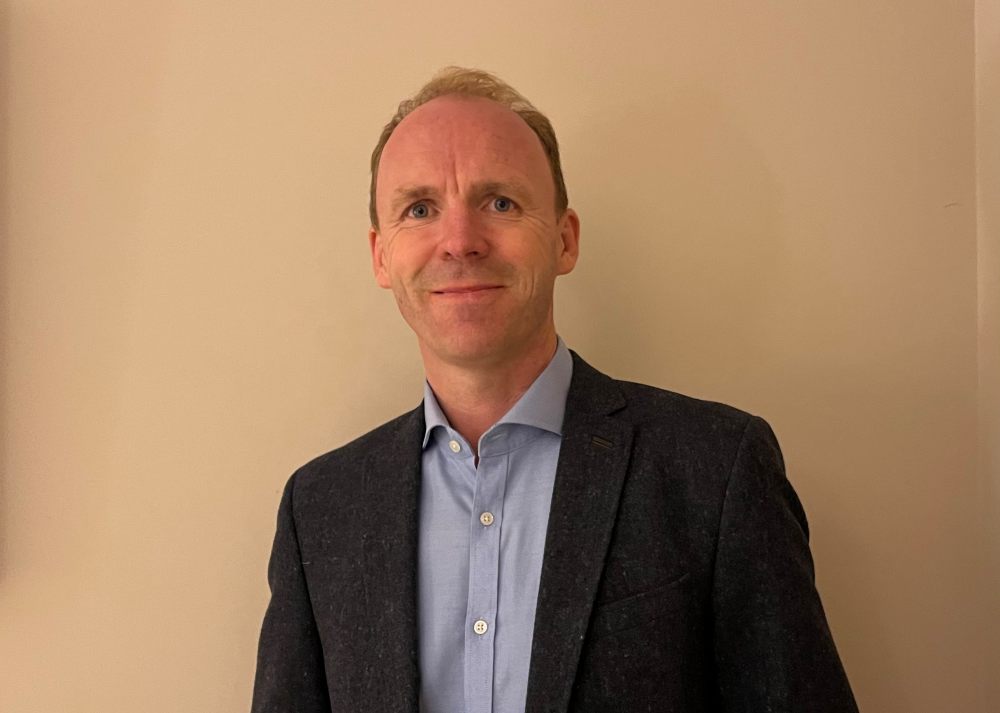
Podcast Ep 349: Paul Turley, senior director for Ireland at ServiceNow, says Irish consumers are losing 284 million hours a year to poor customer service, with nearly half saying they would switch brands after a single bad experience. He says bolting AI onto broken processes is making the problem worse.
Today we’re tackling a problem that every consumer and every business leader can relate to: why is customer service still so frustrating in an age of AI, automation and digital transformation?
Despite years of investment in technology, recent research from ServiceNow reveals that Irish consumers are losing an astonishing 284 million hours every year dealing with customer service issues. Even more striking, nearly half of consumers say they would switch brands after just one poor customer service experience.
“Trust is earned in drops and lost in buckets. You mess up once and you lose that trust, and once you lose that trust, it’s very hard to earn it back”
So what’s going wrong? Why are businesses still struggling to deliver seamless customer experiences? And with AI dominating boardroom conversations, are companies focusing on the right solutions – or simply adding more complexity to already broken processes?
To help us unpack these questions, the ThinkBusiness Podcast spoke with Paul Turley from ServiceNow, a company at the forefront of helping organisations modernise customer service and employee experiences through digital workflows and AI-powered solutions.
In our conversation, we explore why customer service remains one of the biggest pain points for consumers, the common mistakes organisations are making in their AI and customer experience strategies, and the practical steps businesses can take to improve service without committing to massive technology budgets.
ServiceNow is an enterprise software player that employs 28,000 people worldwide, including 650 people in Ireland spanning more than 30 nationalities. The business works with some of Ireland’s largest companies such as Kerry Group, Glanbia and ICON as well as service providers in the Irish market like Auxilion, Ergo and Kainos.
Empowered humans, not just automation
ServiceNow’s research that Irish consumers are losing 284 million hours a year to poor customer service is frightening, especially when nearly half say they would switch brands after a single bad experience.
For Paul Turley, senior director for Ireland at ServiceNow, that finding sits alongside two others from the research: customers want human connection, not just speed, and many executives are focused on efficiency in a way that puts loyalty at risk.
“Trust is earned in drops and lost in buckets. You mess up once and you lose that trust, and once you lose that trust, it’s very hard to earn it back.”
Turley’s argument is for empowering staff rather than replacing them. “Personally, I prefer to deal with an empowered robot than an unempowered human, if it meant I wasn’t sitting on the phone for half an hour when I could be on the phone for five minutes, or on an empowered chatbot,” he says.
Behind most customer interactions sits a tangle of systems that make an agent’s job harder than it needs to be. “The average in a large company is over 370 systems on a day-to-day basis,” Turley says. “That’s driving a massive amount of inefficiency.” He points to onboarding a new employee as an example: a process that touches HR, IT, finance and compliance systems all at once, none of them built to talk to each other.
Bolting AI onto broken processes
Turley recalls a conversation with a senior executive at a large Irish multinational who joked that “the only person who’s benefited from some of their rollouts of AI has been the dog, because it gets walked more often.”
The line captures a wider problem: companies bolting AI onto systems that grew up in silos, rather than redesigning the workflows underneath them.
ServiceNow’s research found that AI adoption has actually dropped 20% year on year, as organisations treated the technology as a solution looking for a problem instead of the other way around.
Guardrails, not chaos
Turley draws a parallel with the rogue trading scandals of the 1990s, citing Nick Leeson and John Rusnak. Banks were able to trace what went wrong and tighten their controls. Autonomous AI agents need the same discipline, he argues.
“How do we stop them doing what they’re doing? How do we audit what they’re doing? How do we roll back? Where’s the kill switch?”
The answer, he says, is embedding AI within existing, governed workflows rather than letting it run loose across the business.
Focus on the outcomes
Turley points to Kainos, where customer satisfaction scores rose from 80% to nearly 100% once agents were given the tools and access to serve customers properly, as proof that the approach works when it starts with the right problem rather than the technology itself.
His closing point is about where the value now sits.
“The models, whether it’s Anthropic or OpenAI or any of the others, are very good at advising,” he says. “But the next level, and where we’re focused, is on the doing. The knowledge is a commodity right now. The models are getting better and better every day. It’s how we leverage that knowledge to actually do things. In large companies, the doing of those tasks is where the real value is.”
Listen to the full conversation with Paul Turley on the ThinkBusiness Podcast.
👉 No tech background needed to bring your business into the AI age! Secure your scholarship to complete the certification at no cost. Apply now and get started!
-
Bank of Ireland is welcoming new customers every day – funding investments, working capital and expansions across multiple sectors. To learn more, click here
-
For support in challenging times, click here
-
Listen to the ThinkBusiness Podcast for business insights and inspiration. All episodes are here. You can also listen to the Podcast on:
-
Spotify
-
SoundCloud
-
Apple