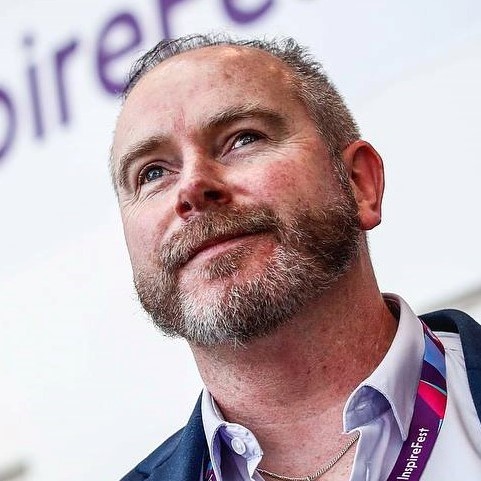
Performer and entrepreneur Bobby Mc (McQuaid) shares his life and business lessons.
From an early starring role in his school play to building a career as a creative entrepreneur, Bobby Mc has turned a lifelong love of performance into a business with his band Bobby Mc and The Dukes.
Here, he reflects on lessons from the music industry and why consistency, reinvestment and staying true to your sound matter as much as talent.
“I am always looking at how to keep building the brand, scale and create a long term structure around the business”
Tell us about your background and the journey that has led you to where you are today?
I first got into music after auditioning for a school show and ended up with the lead role as Ebenezer Scrooge when I was 10. I loved the stage straight away. I never felt nerves, just excitement!
From there, I joined stage school and later appeared on The Voice of Ireland at 18. That experience taught me a lot about the industry and opened a few doors for me professionally. Around the same time, I was also getting real live experience by singing at my parents’ gigs and learning how to handle an audience.
I started out as a solo performer in 2013 and then in 2017, I started my band. And that is really when I say I started the business properly.
Key insights
| Question | Answer |
|---|---|
| Who is Bobby Mc? | Bobby Mc (McQuaid) is an Irish entrepreneur, entertainer and lead performer with Bobby Mc and The Dukes, building a business around live music, branding and performance. |
| What is Bobby Mc’s business? | He operates a music and entertainment business centred on live performances with his band, Bobby Mc and The Dukes. |
| How did Bobby Mc start his career? | He began performing after securing the lead role of Ebenezer Scrooge in a school production at age 10 and later appeared on The Voice of Ireland. |
| When did he start his band? | He launched his band in 2017, which he considers the point when the business formally began. |
| How was the business funded? | The business was self-funded, using borrowed family equipment initially and reinvesting earnings back into growth. |
| What makes Bobby Mc different from competitors? | He cites his distinctive warm vocal tone, authenticity and ability to connect with audiences as his unique selling points. |
| What are his growth ambitions? | He aims to build the brand, scale the business and create a long-term structure around his music enterprise. |
| Who inspired Bobby Mc? | Key influences include his father, vocal coach Christine Scarry and Luke Thomas of The Swing Cats. |
| What is the best business advice he received? | A mentor advised that if a price feels completely comfortable, it is probably too low, highlighting the importance of valuing your work correctly. |
| What does he believe drives success? | He believes consistency and longevity are the strongest indicators of success. |
| What was his biggest business challenge? | Breaking into established industry networks and gaining access to key decision-makers proved difficult. |
| How did Covid-19 affect his business? | The pandemic caused all bookings and gigs to disappear, though he continued performing through nursing home engagements. |
| How has technology changed his industry? | Digital tools have enabled independent music production, marketing, audience engagement and global networking opportunities. |
| What would he do differently if starting again? | He would have formed the band earlier and invested sooner in branding and marketing. |
| What lessons does he have on branding? | Strong branding and marketing are essential for scaling a creative business beyond talent alone. |
| How does he support talent development? | He creates a supportive environment where musicians can meet professional standards while developing their own style and creativity. |
| Which business podcast does he recommend? | He recommends A Bit of Optimism by Simon Sinek for its leadership and culture insights. |
| What tools does he use to stay organised? | He relies on his Notes app for ideas and an invoicing and accounting system for financial management. |
| Which social platform does he favour? | Instagram is his preferred platform because of its branding and audience-building potential. |
| What advice would he give younger entrepreneurs? | He would encourage earlier reinvestment in the business to accelerate growth and asset creation. |
Why are you doing what you are doing? What need are you meeting and what is your USP?
Music is the thing that has made me feel the most joy since I was young. Once I felt that buzz on stage, I wanted more of it. I knew I wanted music to be my job.
“A business mentor said to me, if you are really comfortable with the price, it’s probably the wrong number”
In terms of USP, my tone is a big part of it. I have a rich, warm, low tone that is very much my own. Beyond that, I would say it is my honesty and presence as a performer. I connect deeply with the music and with the audience, and I stay very present in the moment.
How did you fund and start your business and what are your growth plans?
It was self-funded from the start. I was lucky that my family already had equipment, so I could borrow items and start working without major upfront costs. I then reinvested everything I earned.
In terms of growth, I am always looking at how to keep building the brand, scale and create a long term structure around the business. I’ve had some wonderful, big moments in my personal life over the last while, from getting married to my children being born to buying our first house. These have been very special, but the focus is now on my business and branding. I’ve been working on some exciting material so watch this space!
Who or what has helped you the most? Any mentor or inspiration?
My dad is the first person I would mention. For most of his life, he has been self-employed, so I grew up seeing the reality of running your own business. I admired his independence and that sense of your results coming from your own efforts.
My vocal coach, Christine Scarry, was also a big inspiration. She showed me that it was possible to build a creative business on your own terms.
And later, Luke Thomas from The Swing Cats was a major influence. He showed me that swing and jazz could be performed on big stages and in the mainstream, not just in small niche settings.
What is the best piece of business advice you have ever received?
The best advice I ever got was around pricing. A business mentor said to me, if you are really comfortable with the price, it’s probably the wrong number.
“Like a lot of musicians, I was very focused on the music and the work itself, but branding and marketing are hugely important when you want to scale”
He taught me that pricing should involve a certain amount of stretch and that you have to keep reassessing your value. He also told me not to dilute the product by doing discounted work. Either do it for free for the right reason or charge your full rate.
In your opinion, what marks the difference between success and failure?
I’d say consistency and longevity.
If I can keep doing this and sustain a career in music, that is success to me.
What has been the most challenging aspect of starting and growing your business?
One of the biggest challenges has been breaking through existing structures in the industry.
The relationships are already there, the decision makers already know each other. It can be very difficult to get a seat at the table as a newer entrant. I have been lucky to have people help open doors for me, but that challenge of breaking through and being considered at a higher level has definitely been one of the hardest parts.
How did you navigate Covid and what lessons did you learn?
Covid was extremely difficult for my industry. Overnight, every booking and every gig disappeared.
I was fortunate, though, that through a friend I got work performing in nursing homes during that period. I ended up doing three gigs a week as part of their staff support for residents, which gave me some stability at a time when there was none.
Covid also changed my band because some musicians moved abroad, so when things reopened I had to rebuild the lineup.
How has digital transformation influenced your business and do you think Irish firms are using tech to its full potential?
Digital transformation has completely changed music. Years ago, if you wanted to be a singer, you had to go out and perform live. Now people can record albums at home, shoot video on their phones and promote themselves independently.
For me, the biggest change has been the ability to create, market and connect far beyond your local area. I am a jazz singer in Dublin, but now I can connect with artists in London and elsewhere, see their work and learn from them. That kind of reach simply did not exist before.
If you were to do it all over again, what would you do differently?
I would start the band earlier. There were no limits with the band of where I could go. There was a natural transition that took time when I started to play with live musicians that could’ve been fast tracked in those earlier years.
I would also have focused on branding sooner. Like a lot of musicians, I was very focused on the music and the work itself, but branding and marketing are hugely important when you want to scale.
How do you nurture talent in your business?
I work with musicians at different stages of their careers, from seasoned professionals to younger talent starting out.
With younger musicians especially, I try to create an environment where they feel safe, supported and able to express themselves creatively. I want a high standard and a professional setup, but I also want there to be room for ideas, style and personality.
For me, it is about helping people meet the standard first, then giving them space to grow into themselves within that.
Is there a business book or podcast you would recommend?
I would recommend A Bit of Optimism by Simon Sinek.
What I like about it is the way he talks about leadership and culture. He makes the case that if you genuinely focus on people and build the right environment, the profits follow. That way of thinking really resonates with me.
What tools keep you on track?
My Notes app is a big one. Any ideas I have, I put them in there straight away. It is probably my version of a whiteboard.
The other big tool is my invoicing and accounting system. I need a really clear picture of credit control, cash flow and the financial side of the business.
What social platforms do you prefer and why?
Instagram all the way.
From a branding point of view, it is probably the strongest platform for what I do.
What advice would you give to your 21 year old self?
I would tell myself to start reinvesting in the business earlier.
If I had started doing that at 21, I would probably have more assets and more infrastructure built up by now.
👉 No tech background needed to bring your business into the AI age! Secure your Google AI Professional Certificate to complete the certification at no cost. Apply now and get started!
-
Bank of Ireland is welcoming new customers every day – funding investments, working capital and expansions across multiple sectors. To learn more, click here
-
For support in challenging times, click here
-
Listen to the ThinkBusiness Podcast for business insights and inspiration. All episodes are here. You can also listen to the Podcast on:
-
Spotify
-
SoundCloud
-
Apple