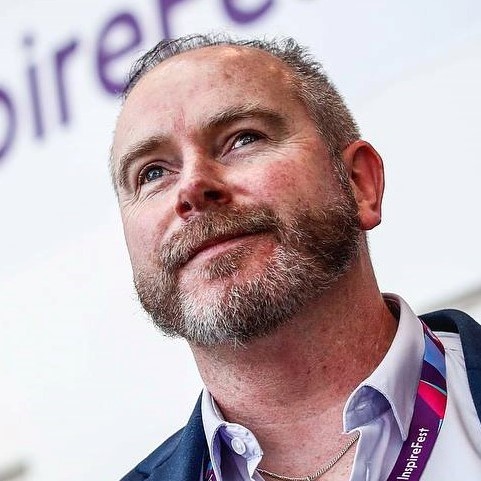
Podcast Ep 338: Paul Kearns, CEO of Irish financial software company Kefron on how the evolving role of the CFO as well as AI are driving the strategic future of accounts payable function and will drive his firms’ global fortunes.
In the latest episode of the ThinkBusiness Podcast, we’re diving into the evolving world of finance operations and the growing strategic importance of accounts payable (AP) in the Office of the CFO.
We’re joined by Paul Kearns, CEO of Irish software company Kefron, which has more than 30 years’ experience helping organisations manage and protect critical business information. Paul leads the development of Kefron AP, an accounts payable automation solution designed to bring greater accuracy, control and visibility to invoice processing – helping finance teams work smarter, not harder.
“We now have 300 customers globally, predominantly UK and Ireland, and we launched in the US about a year ago, with multiple customers already on the platform”
We explore how the role of Accounts Payable is shifting from a back-office function to a strategic enabler of business insight, and what that means for finance leaders today. Paul shares his perspective on the impact of AI – whether it will replace roles or redefine them – and how organisations can scale their AP operations without adding headcount.
Money makes the world go round
-
Listen to the ThinkBusiness Podcast for business insights and inspiration. Latest episodes are here. You can also listen to the Podcast on:
-
Spotify
-
SoundCloud
-
Apple
“Kefron is a 35-year-old Irish business. Our roots have always been in the document life cycle – managing, digitising, and providing logistics support for physical documentation across organisations, from the largest banks in the country to a solicitor over a country shop.
“But with paper declining and more processes being born digitally, we looked at how we could pivot. In 2020, out of our traditional business, we developed Kefron AP, which focuses on the office of the CFO and automating the accounts payable function within organisations – helping companies to streamline that process.”
The pivot to AI and automation has been integral to Kefron’s scaling journey.
“We now have 300 customers globally, predominantly UK and Ireland, and we launched in the US about a year ago, with multiple customers already on the platform. The technology team is based in Ireland, we have a sales and marketing office in London, and we recently opened in New York, where my brother James heads up our North American expansion.”
The strategic future of accounts payable
Kearns argues that the AP function has spent too long looking in the rear-view mirror, producing management accounts in arrears and measuring performance after the fact. The shift he is driving is something more anticipatory.
“Very much more of a forward-looking and strategic role,” he says. “Technology has helped with that, but it’s also complicated things. One of the major problems we see with organisations is legacy systems. Companies have these old, clunky ERP systems and they know they need to change, but it’s a big deal to change them.”
Privately held and bootstrapped Kefron’s answer is to sit alongside t Fhose systems rather than replace them. The platform integrates with Oracle, SAP and other large ERP providers, feeding reporting back to finance teams without requiring organisations to rip out their existing infrastructure. For companies that have not yet made the move to cloud-based ERP, that distinction matters.”
“Cloud has also become a big part of the conversation. A lot of larger organisations, particularly at mid-market and enterprise level, still have ERP solutions on-premise, not in the cloud. All the new technology coming down the track is cloud-based, but moving from on-premise to cloud is a huge undertaking. What we can do is bolt on a solution to an on-premise system and give the visibility and control they need within a specific function.”
The AI future for accountants
The question of AI and jobs is one that Kearns approaches with care. He is clear the technology will redefine accounts payable roles rather than eliminate them, freeing AP staff from what he calls swivel-chair tasks to focus on cash flow forecasting and supplier analysis.
He says a company processing 20,000 invoices a month can reduce manual entry to near zero, scale operations without adding headcount and get reporting information back from unstructured invoice data far faster than OCR ever allowed.
“Our platform automates that, which frees the accounts payable clerk or manager to do more value-add work – predicting future cash flows, looking ahead strategically. From my perspective, AI is not coming in to take all these jobs.
“It’s very much about redefining roles. People need to embrace that change. And what we see our customers looking to do is grow their businesses without increasing headcount, get better data visibility to make quicker decisions, and give their employees more meaningful work – rather than sitting doing what we’d call swivel-chair tasks.”
From a fraud and cybersecurity perspective, Kefron uses AI to flag changes to supplier bank details at the point of invoice receipt, an area where the cost of getting it wrong is severe.
Looking further down the road Kearns identifies European e-invoicing mandates as a significant growth driver. New regulations across multiple EU jurisdictions are moving towards requiring government approval of invoices before payment, as a mechanism for reducing VAT fraud. “That’s a real opportunity that’s happening in real time, with AI at the core of it.”
Kefron’s scaling journey is being driven in the US market by Kearns’ brother James in New York where the business is taking a longer-term bet on the mid-market segment rather than solely the crowded SME and enterprise markets.
As Kearns sees it, the mid-market is both large and underserved when it comes to AP automation.
“We’re fortunate to have a very stable traditional business that funds our move into the Kefron AP finance automation space. Our plan is to grow across UK, Ireland, and Europe, and then continue building in the States. The US is a real opportunity.”
The opportunity lies in the changing role of the all-powerful CFO.
“The office of the CFO is a very active space from an investment perspective, and those firms do an enormous amount of research on the industry — you get real nuggets of information from those conversations.
“The other major resource has been Enterprise Ireland. Being able to go to their library and spend time with Gartner reports that would cost us thousands to buy independently – that’s an incredible advantage. They put you in contact with people who’ve been there and done it.
“And last year I did the Leadership for Growth programme with Enterprise Ireland – a full year with 36 other CEOs in similar businesses with similar challenges and similar growth ambitions. It ends with a three-to-five-year strategy plan for your business. That was genuinely transformative.”
-
Bank of Ireland is welcoming new customers every day – funding investments, working capital and expansions across multiple sectors. To learn more, click here
-
For support in challenging times, click here
-
Listen to the ThinkBusiness Podcast for business insights and inspiration. Latest episodes are here. You can also listen to the Podcast on:
-
Spotify
-
SoundCloud
-
Apple