
Despite geopolitical tensions and trade route disruption, strong Q1 growth for Irish exporters to Middle East underlines resilience and long-term opportunity.
Irish exporters are adapting quickly to growing disruption across Middle Eastern trade routes, as new figures show continued demand for Irish goods and services across the region.
Exports to the Arab world rose by 6% in the first quarter of 2026, reaching €774.9 million, according to data from the Arab Irish Chamber of Commerce.
“These are not long-term solutions, but they show the determination of Irish businesses to stay active in these markets”
The performance builds on a record year in 2025, when exports exceeded €3.1 billion, highlighting the scale and consistency of commercial ties between Ireland and the region.
The first-quarter figures capture trading activity before and during the early stages of the current escalation in the Middle East. They point to steady underlying demand, even as exporters begin to navigate a more complex operating environment.
Resilience and realism
Ahmad Younis, chief executive of the Arab Irish Chamber of Commerce, said the data reflects both resilience and realism among Irish businesses.
“The Q1 2026 figures are reflective of trading activity both prior to and during the early weeks of the conflict in the Middle East, and they demonstrate that demand for Irish goods across the region remained strong during that period,” he said.
He added that companies are facing greater operational challenges in moving goods into market.
“Irish exporters are having to work harder than ever to get goods into Middle Eastern markets. But many are finding ways to adapt and push forward. While some companies have made the difficult decision to pause activity or explore alternative markets, others are still active and are performing strongly, supported by hard-won contracts, strong relationships on the ground, and confidence around the long-term opportunities across the Middle East.”
Supply chains under pressure
Sectors such as pharmaceuticals, food production and medical manufacturing are among the most exposed to the disruption, particularly where supply chains rely on time-sensitive or temperature-controlled logistics.
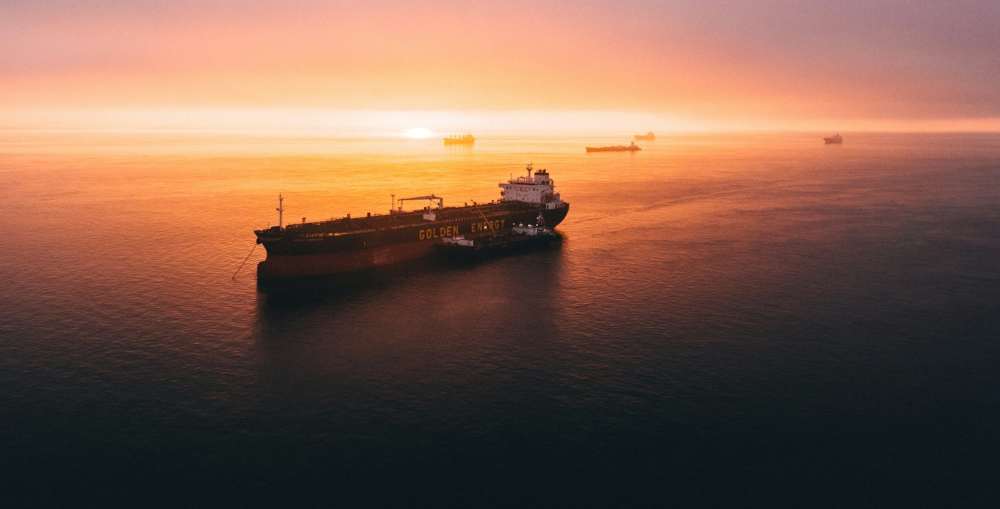
Flight disruptions, insurance cost increases and delays have added friction to established routes, while instability affecting key shipping corridors, including the Strait of Hormuz, has introduced further uncertainty.
Exporters are responding by reshaping logistics strategies. Some firms are increasing their use of air freight to maintain delivery timelines, while others are routing goods overland through Saudi Arabia to sustain supply flows.
These adjustments carry additional cost, particularly for smaller exporters with limited capacity to absorb sustained disruption. Even so, companies continue to prioritise maintaining market presence.
“These are not long-term solutions, but they show the determination of Irish businesses to stay active in these markets,” Younis said.
Regional demand
Despite the logistical challenges, demand across key Middle Eastern markets remains broad-based.
Saudi Arabia continues to lead as Ireland’s largest export destination in the region, with exports rising by 20% year-on-year to €301.3 million in the first quarter.
Egypt recorded one of the sharpest increases, with exports climbing 63% to €78.3 million. Jordan also delivered strong growth, with exports up 93% to €31.8 million.
The United Arab Emirates remains a central trading partner, with exports of €162.1 million in Q1, reflecting its role as a regional hub.
“Even with disruption, the demand hasn’t gone away,” Younis said. “These figures show how important the region has become for Irish exporters. The challenge now is increasingly logistical, with companies facing delays, rising transport costs and ongoing uncertainty across key trade routes.”
The strong start to 2026 follows sustained growth in 2025. Saudi Arabia recorded exports of €998.5 million, up 20.3% year-on-year, while exports to the UAE reached €759.5 million, an increase of 14.5%. Egypt, Qatar and Oman also posted solid gains, underlining the depth of demand across multiple markets.
Middle Eastern promise for Irish retailers
Beyond traditional export sectors, Irish brands are also expanding their physical presence in the region. The Arab Irish Chamber reported a 9% increase in export documentation services during the first quarter, reflecting higher levels of trading activity.
Retail growth is contributing to this trend. Penneys, trading internationally as Primark, has expanded its footprint following a strong launch in Kuwait. The retailer has since opened multiple stores in Dubai, with further sites planned in Bahrain and Qatar.
“When you see an Irish brand like Penneys scaling at that level in the Middle East, it sends a very strong signal,” Younis said. “It shows long-term vision and confidence and reflects the level of commercial activity and opportunity developing across the region.”
Strategic importance deepens
The Middle East continues to present a substantial structural opportunity for Irish exporters. The region imports close to 90% of the goods it consumes, creating sustained demand for international suppliers.
For Ireland, this offers a pathway to broaden its export base and reduce reliance on a limited number of core trading partners. Around 400 Irish-owned companies are already active across the region, spanning sectors including agri-food, pharmaceuticals, education, aviation and technology.
The relationship extends beyond goods. Irish service exports to the region reached €16.2 billion in 2024, reflecting strong engagement in areas such as technology, finance and education.
While current conditions are expected to present medium-term challenges, the fundamentals underpinning demand remain intact. Population growth, infrastructure investment and reliance on imports continue to support long-term economic activity across the region.
Younis said maintaining engagement will be critical for Irish businesses.
“We must not underestimate the importance of the Arab world to Irish business or to the wider economy,” he said. “This is a long-term strategic relationship, and one Ireland cannot afford to step back from. We are seeing strong determination as businesses adapt to the circumstances, and those that remain committed will be well placed to benefit from future growth.”
Top image: Photo by David Rodrigo on Unsplash
-
Bank of Ireland is welcoming new customers every day – funding investments, working capital and expansions across multiple sectors. To learn more, click here
-
For support in challenging times, click here
-
Listen to the ThinkBusiness Podcast for business insights and inspiration. Latest episodes are here. You can also listen to the Podcast on:
-
Spotify
-
SoundCloud
-
Apple