
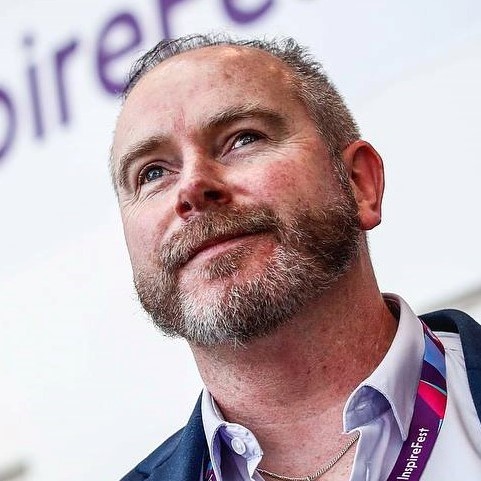
Podcast Ep 334: With more than €170bn on deposit and a generation of newly wealthy professionals and entrepreneurs looking for guidance, Ireland is edging towards a more sophisticated investment culture. Alan Dunne of Archive Capital explains what still needs to change.
Ireland now has at least 11 billionaires. The population of high net worth individuals has roughly doubled in a short space of time. And somewhere north of €170 billion sits on deposit in Irish bank accounts.
For Alan Dunne who has just launched Archive Capital Advisors, a regulated investment advisory firm focused on the high net worth market, the picture represents both an opportunity and a puzzle. The money is there. The habits, the products, and the policy framework to put it to work are only beginning to catch up.
“When you go to places like the US or the UK, there are pools of capital that have been built up over many generations. That is not a feature we have had to the same extent in Ireland. We are starting to see it now”
“We are definitely in the middle of a sea change culturally,” Dunne says. “And I think it is for the better, to be honest.”
Ireland’s financial transformation
The scale of Ireland’s financial transformation over the past two decades is easy to understate. For a country whose self-image for much of the 20th century was shaped by emigration and austerity, the emergence of a sizable cohort of wealthy citizens is genuinely new territory.
Dunne points to the distinct channels feeding that wealth: technology salaries for professionals in their twenties and thirties working at multinational firms, proceeds from business exits, and generational transfers that are themselves something of a first.
“When you go to places like the US or the UK, there are pools of capital that have been built up over many generations,” he says. “That is not a feature we have had to the same extent in Ireland. We are starting to see it now.”
Those transfers are historically thin because, until recently, there was little to transfer. Property was the primary store of value. For most families, that meant a site or a house, not a portfolio. The Downton Abbey model of dynastic wealth, as Dunne puts it, was not something most Irish households recognised from experience.
Part of the explanation for why so much Irish money stays on deposit lies in the tax structure. The deemed disposal rule, which requires investors in funds to pay tax on unrealised gains every eight years, is an explicit disincentive to long-term investing. It has no equivalent in the UK or the US, and wealth managers have long argued it distorts behaviour in ways that harm both individual investors and domestic capital formation.
“At the moment it is very much an outlier in an international context,” Dunne says. Rates on fund investments came down in last year’s Budget, and there is momentum towards further reform, but the framework still penalises exactly the kind of patient, diversified investing that financial advisers recommend.
Cultural memory also plays a role. The Eircom float of 1999, which left hundreds of thousands of retail investors nursing losses after buying into the privatisation of the national telecoms company, cast a long shadow. “People were burned,” Dunne says simply. “And people think: it is easier to keep money in the bank.”
Property’s strong grip
The alternative has historically been bricks and mortar. Ireland’s attachment to property as an investment vehicle is well documented, and it has real logic to it, particularly in a market with a structural housing shortage. What concerns advisers is the concentration risk for individuals who treat property as the entirety of their financial plan.
Many view their property as their pension plan. Dunne agrees the pattern persists, though he sees signs of maturation. The wave of property-linked club deals that wealth managers were selling in 2005 and 2006 has receded. The vocabulary of asset allocation, portfolio construction, and private markets is entering the conversation, even if slowly.
“I would still say we are a bit behind, say, the US or the UK, in terms of the sophistication of the investment offering generally,” Dunne says. “But it has evolved.”
What equities have delivered, and what they cannot promise
For those ready to move beyond deposits and property, Dunne’s starting point is conventional: equities, specifically US equities, have delivered around 10% annualised returns over the past century in nominal terms. Compounded over decades, the case for being in the market rather than in cash is compelling.
The caveat is the journey. That long-run average conceals entire lost decades. Between 2000 and 2009, US equities returned essentially nothing. In the 1970s, inflation eroded real returns to the point where cash was competitive. The message Dunne takes from the record is not that equities are risky to be avoided, but that building a portfolio around them alone is insufficient.
He cites Howard Marks of Oaktree Capital, whose observation he returns to often: the single biggest mistake investors make is assuming that the way things are today is how they will always be.
“If you go back to 2007, there were storm clouds rising. But the view at the time was: as long as the market is still going up, stay in it. The music was playing. Then it stopped pretty abruptly.”
The buy-the-dip reflex, reinforced by the speed of post-2020 recoveries, has conditioned a generation of retail investors to treat drawdowns as opportunities rather than warnings. Dunne is wary of that conditioning.
The regime has changed
The structural shift he is most focused on concerns the relationship between bonds and equities. For most of the decade between 2010 and 2019, the two asset classes moved in opposite directions reliably enough that holding both provided meaningful protection. When equities fell, bonds tended to rise, giving portfolio managers a cushion.
That relationship has broken down. In a world where inflation is higher and stickier than it was for most of the post-financial-crisis period, bonds and equities have been moving together more often. The diversification that advisers relied on no longer works as dependably as it did.
“That kind of creates a bit of a dilemma when you are trying to build a portfolio,” Dunne says, “because historically bonds were the default buffer for an equity portfolio. That will not work as well in an environment where you have more persistent inflation.”
The answer, in his view, lies in assets that behave differently from both. Gold has been one beneficiary of renewed interest, performing strongly as investors searched for uncorrelated returns. Hedge fund strategies and alternative investment approaches, which can generate returns through market-neutral or trend-following approaches, are another avenue. These are instruments that were previously the preserve of pension funds and institutional investors but are gradually becoming accessible to high net worth individuals through the wealth management channel.
What ordinary investors can do now
Auto-enrolment, which finally launched in Ireland this year after years of delay, will bring a new cohort of savers into the market automatically. For those already paying attention, Dunne’s practical advice is straightforward, even if it is easier to state than to follow.
Tax efficiency comes first. Pension contributions attract income tax relief at the marginal rate, a benefit that few other investment structures can match. “If you can find more tax-efficient ways to invest, that is great,” he says. “Keep your tax liabilities down.”
Second, diversification matters more than stock selection for most investors. Index funds, which give exposure to hundreds of companies rather than the one tip heard at the golf club, reduce the risk of catastrophic concentration. Dunne acknowledges the indices themselves have become more concentrated, with a handful of US technology firms now representing a substantial share of global equity benchmarks, but the principle holds.
Third, there is no substitute for experience. Artificial intelligence tools can summarise conventional wisdom on asset allocation, and Dunne is curious rather than dismissive about their role in retail investing. But they cannot, he says, walk an investor through the emotional experience of watching a position fall ten per cent the day after buying it.
“You need the actual experience of investing, the highs and lows,” he says. “Dip your toe in and experience what it feels like.”
Lessons from history
The final piece of advice Dunne offers is less practical than attitudinal. Get familiar with historical episodes of market stress: not to become paralysed by the prospect of a repeat, but to hold open the possibility. We all lived through the financial crisis and through Covid, he observes. We did not expect either. We should not assume those were the last surprises the markets have to offer.
Terms that were specialist jargon a decade ago, bond yields, quantitative easing, are now part of everyday conversation in Ireland. Stagflation, fiscal dominance, and financial repression are entering the discourse. Dunne sees that as a sign of progress, even if it reflects a more complicated world.
“That is not a reason to put your money under the mattress,” he says. “It is a reason to think about how you build a portfolio that is diversified and resilient, but can still participate in longer-term market growth.”
For a country that not long ago measured prosperity by emigration statistics, learning to think that way is itself a form of arrival.
-
Bank of Ireland is welcoming new customers every day – funding investments, working capital and expansions across multiple sectors. To learn more, click here
-
For support in challenging times, click here
-
Listen to the ThinkBusiness Podcast for business insights and inspiration. Latest episodes are here. You can also listen to the Podcast on:
-
Spotify
-
SoundCloud
-
Apple