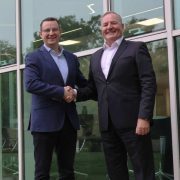
Ireland’s expanded Growth and Sustainability Loan Scheme gives SMEs access to long-term finance for growth, technology, sustainability and expansion. We talk to SBCI CEO Colin Moran and senior bank professionals about the prerogative to encourage business growth.
Irish small businesses are returning to their lenders with expansion plans rather than survival budgets, according to Bank of Ireland, as a €1bn State-backed loan scheme reopened for applications this week.
The Growth and Sustainability Loan Scheme (GSLS), delivered by the Strategic Banking Corporation of Ireland (SBCI), has been given an additional €500m and extended to 30 June 2029.
“If we can have businesses that are more sustainable and then more competitive on the international scale, that’ll be the measure of success”
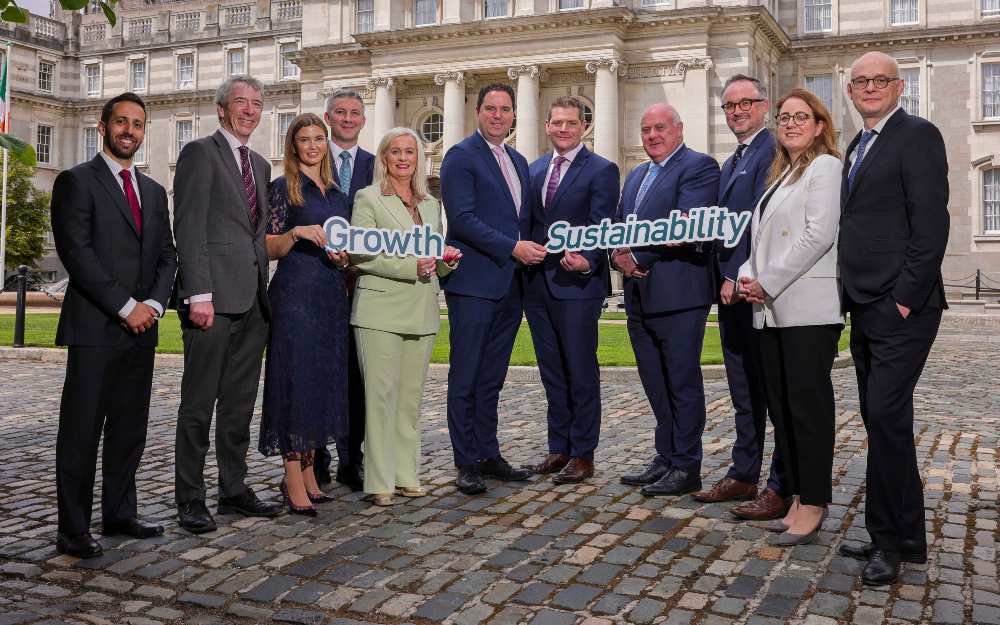
The scheme was announced on Monday (12 October) by Peter Burke, TD, Minister for Enterprise, Tourism and Employment, and Martin Heydon TD, Minister for Agriculture, Food and the Marine. It is run in partnership with the European Investment Bank Group and both Government departments.
“The scheme has been very popular among Irish SMEs, with the first €500 million already largely deployed,” said Colin Moran, chief executive of the Strategic Banking Corporation of Ireland (SBCI). “So we’re delighted to be delivering the extension of the scheme, with an additional €500 million now available until June 2029.”
Confidence is running ahead of borrowing
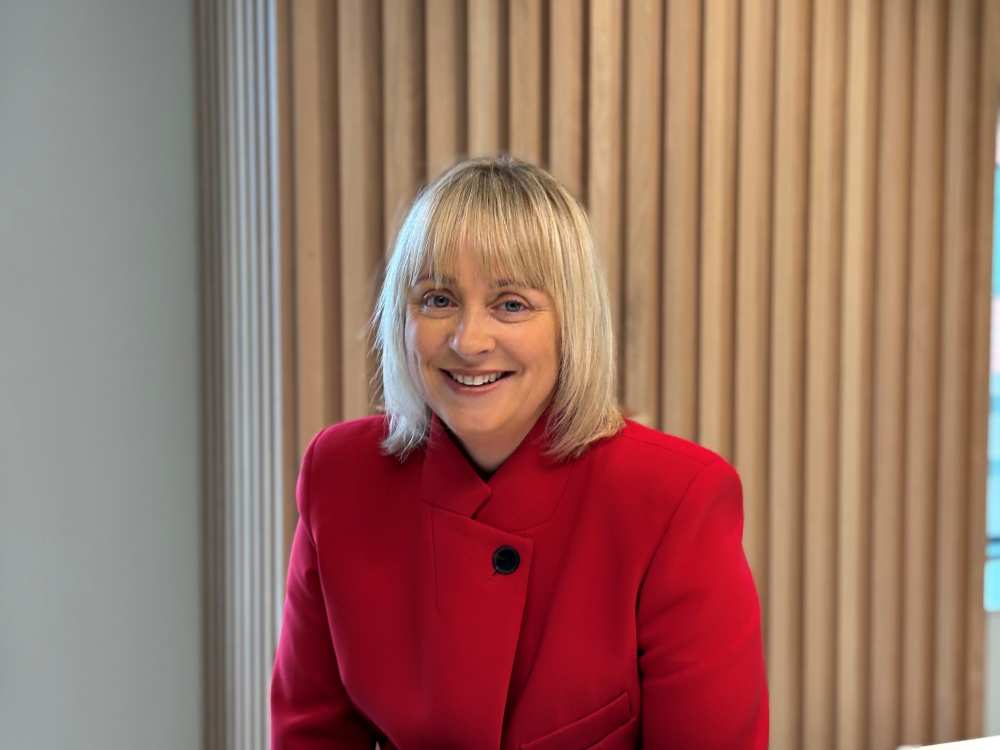
Paula Harmon, Head of Small Business and Agri, Everyday Lending at Bank of Ireland
The expansion lands at a moment of measured optimism among small firms.
Paula Harmon, Head of Small Business and Agri, Everyday Lending at Bank of Ireland, said “65% of SMEs expect their financial position to improve over the next 12 months”. She put that down to trading conditions: “Business owners are experiencing stable or growing demand for their products and services, giving them confidence in future growth, revenue, and opportunities to grow and expand their existing businesses.”
The confidence is qualified. “Rising energy, transport, and material costs remain major concerns, and uncertainty in the wider economic environment persists. The optimism we are seeing is therefore, I would say, best described as cautious confidence.”
Harmon said that businesses need to look at lending as an opportunity to give oxygen to growth ambitions. “Many SMEs have become understandably cautious after several years of uncertainty.” She said many were relying on internal funds or delaying major investment decisions. “They’re balancing geopolitical uncertainty, rising costs, labour shortages, and challenging market conditions.”
👉 No tech background needed to bring your business into the AI age! Secure your Google AI Professional Certificate to complete the certification at no cost. Apply now and get started!
She described cash reserves as sound practice with a cost attached. “Maintaining strong cash reserves is a really good financial discipline, and I think every business should have an appropriate buffer. However, there is also an opportunity cost to holding too much capital on the sideline.”
“The key question for customers shouldn’t be ‘Should I borrow?’ but rather, ‘What return will this investment generate for my business?’” she said.
An attractive option
Moran says the scheme’s terms are worth considering for SME owner-managers. “The longer-term funding that goes up to 10 years is typically longer than what’s available in the market”, and that the interest rate discount “can be over 2% in some cases”, which “makes repayment capacity easier for the borrower”.
Security is the other factor. “A key component of the Scheme, that has been very popular with the 2,000 borrowers who have used it to date, is the fact that loans up to €500,000 are unsecured,” Moran said. “For businesses that don’t have traditional tangible security to offer the lender, that’s a significant feature of this scheme for them. The Government provides an 80% guarantee to the participating lenders, so that helps them expand their risk appetite.”
The scheme is available through Bank of Ireland, AIB, PTSB, Close Brothers and Finance Ireland, and is open to SMEs, farmers, foresters and fishers. At least 30% of lending is directed at environmental sustainability.
Borrowing for expansion
Harmon said the reasons businesses give for borrowing have changed markedly in recent years.
“We are seeing actually a notable shift. In previous years, many businesses were borrowing primarily to manage their cash flow, absorb cost inflation, and navigate economic uncertainty. Today, we are increasingly seeing SMEs seek finance to invest in growth, whether that’s expanding capacity, adopting new technology, hiring talent, or entering new markets.”
The change is uneven across sectors, and some still lean on working capital facilities. Harmon pointed to the Bank’s recently launched discounted agri working capital loan as “a clear example of how we at Bank of Ireland react to these sectors when it’s needed.”
Overall, the profile of the borrower walking through the door looks different. “Compared to the post-pandemic period, we are seeing far more businesses approaching lenders with well-defined growth plans and a stronger focus on long-term value creation rather than just short-term survival.”
Backing sustainability
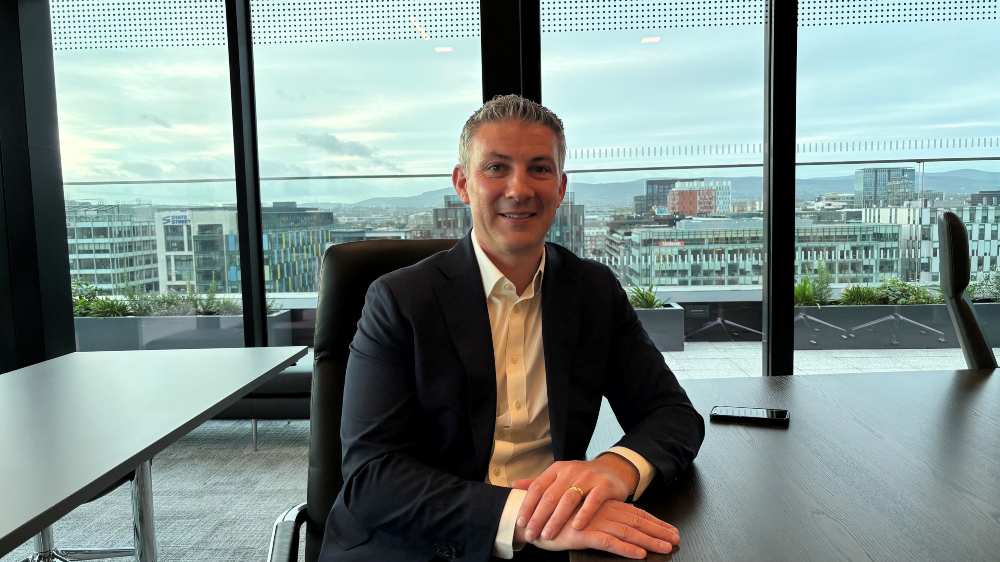
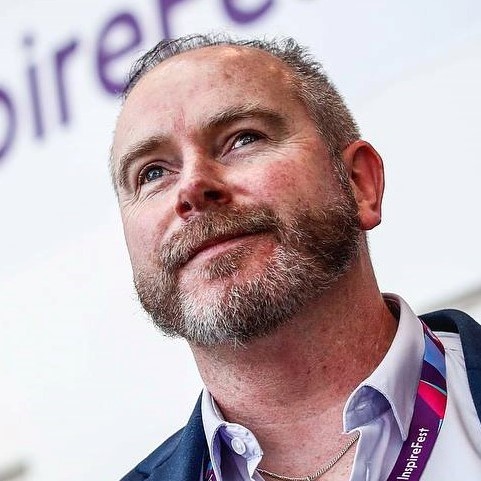
Colin Moran, chief executive of the Strategic Banking Corporation of Ireland
Moran linked much of the spending under phase one to cost pressure. “When you look at the geopolitical situation at the moment, we’ve seen rapid rises in inflation, particularly in energy costs and labour costs,” he said. He cited “motor dealerships investing in solar on the roof of their showrooms”, which lowered their electricity costs. “We have seen hotels investing in better insulation, energy efficient lightings, heat pumps, electric chargers, and so on.”
“The agri sector has been one of the big users of the scheme, circa 30%,” he said. One farmer bought a GPS-guided seed spreader with the finance, and Moran said “that makes that farmer more efficient as well as more environmentally friendly.”
Other borrowers targeted staffing costs. “I was with one food company over the course of the summer, who invested in their packing facilities, their distribution lines and automated labelling, which has helped them reduce their labour costs.” Others, he said, had increased production capacity for new products and export growth.
Harmon said businesses now treat energy and climate projects as commercial decisions. “Increasingly, these investments are no longer seen simply as environmental initiatives. They have been viewed as business initiatives that can improve competitiveness, reduce costs, and strengthen the business resilience.” Of energy efficiency upgrades, she said: “That makes them more resilient to future energy price volatility while improving their profitability.”
“In the agri sector, sustainability and competitiveness increasingly go hand in hand,” she said. She added that the scheme supports agricultural climate action and sustainability investment, including eligible TAMS-related projects.
Investment and resilience
On AI, automation and digital tools, Harmon said: “I think Irish SMEs have made significant progress, but there is no doubt that the pace of technological change means businesses need to keep moving.”
She described the risk of waiting. “The biggest, I think, risk for businesses that delay investment is not necessarily that they’ll fall behind overnight, but that the gap gradually widens between them and their competitors. Those that delay may find it harder to compete in cost, speed, service and innovation.”
Alan Durcan, Head of Distribution at Bank of Ireland, said the Bank had been preparing customers before the announcement. “I think there’s been a lot of pent up demand over the last number of months. I suppose customers have been waiting for an announcement and a go live, and our teams across the country have been actively out meeting customers over the last number of weeks.”
He said the relaunch had also drawn in customers “who weren’t ready at previous stages and iterations”, adding: “I think they’re very open to this at the moment.” Applications go through relationship managers and local bank managers “across our 168 branch network”, and customers “can reach out directly to our teams in the local branches.”
Think global
Moran said many borrowers combine the loan with grant aid. “When you look at the breakdown of the customers that have used it, they’re also tapping into SEAI grants or Enterprise Ireland grants, and then they’re using the loan to complement that.” He described the National Enterprise Hub, where those supports are listed, as “a great source of information”, and said that “a lot of these businesses are time poor, very busy people.”
Moran framed the scheme as part of a wider economic aim. “We want to support the indigenous sector to grow their markets abroad, and that’s exactly what this scheme is designed to do.” He said “many of the SMEs that use this scheme are exporters, so they do need to be as efficient as possible to compete with other economies.”
His benchmark for June 2029 is international. “If we can have businesses that are more sustainable and then more competitive on the international scale, that’ll be the measure of success.”
Harmon said she hoped to see “a stronger culture of long-term investment” emerge.
She explained: “One of the challenges we’ve discussed earlier is that many SMEs continue to rely heavily on internal funds and cash reserves,” she said.
“Success would mean more businesses recognising that strategic investment and financial resilience go hand in hand, and that access to finance can be an important enabler of sustainable growth.”
Image at top: Colin Moran, Chief Executive of the Strategic Banking Corporation of Ireland; Paula Harmon, Head of Small Business and Agri, Everyday Lending at Bank of Ireland; and Alan Durcan, Head of Distribution, Bank of Ireland
FAQ: Growth and Sustainability Loan Scheme
What is the Growth and Sustainability Loan Scheme?
The Growth and Sustainability Loan Scheme (GSLS) is a State-backed scheme giving Irish SMEs access to long-term finance for investment in growth, technology, sustainability and expansion. It is delivered by the Strategic Banking Corporation of Ireland (SBCI).
How much funding is available under the Growth and Sustainability Loan Scheme?
The scheme has received an additional €500m, bringing it to €1bn in total. The first €500m has already been largely deployed, and the scheme has been extended until 30 June 2029.
What are the key features of loans available through the scheme?
Funding can extend for terms of up to 10 years, while the interest rate discount can be more than 2% in some cases. Loans of up to €500,000 are unsecured, and the Government provides an 80% guarantee to participating lenders.
Who can apply for the Growth and Sustainability Loan Scheme?
The scheme is open to SMEs, farmers, foresters and fishers. It is available through Bank of Ireland, AIB, PTSB, Close Brothers and Finance Ireland.
What can businesses use the Growth and Sustainability Loan Scheme for?
Businesses are using finance to expand capacity, adopt new technology, hire talent and enter new markets. Sustainability investments include solar energy, insulation, energy-efficient lighting, heat pumps and electric chargers, while other businesses have invested in automation, production capacity and efficiency improvements. At least 30% of lending is directed towards environmental sustainability.
👉 No tech background needed to bring your business into the AI age! Secure your Google AI Professional Certificate to complete the certification at no cost. Apply now and get started!
-
Bank of Ireland is welcoming new customers every day – funding investments, working capital and expansions across multiple sectors. To learn more, click here
-
For support in challenging times, click here
-
Listen to the ThinkBusiness Podcast for business insights and inspiration. All episodes are here. You can also listen to the Podcast on:
-
Spotify
-
SoundCloud
-
Apple