
Declaring disability employment gap a ‘systemic failure’, Open Doors Initiative urges CEOs and Government to lead change.
Ireland remains one of the weakest performers in the European Union when it comes to employing people with disabilities, despite operating at near full employment.
This is one of the key findings at the centre of a new report published today (24 April) by the Open Doors Initiative (ODI), which calls for decisive leadership from both business and Government to close what it describes as a deeply embedded employment gap.
“The persistence of the employment gap doesn’t reflect a lack of capability among disabled people, or a lack of intent among employers, but the cumulative impact of systems that continue to function within a prescriptive and narrow concept”
The report ‘From Awareness to Action: Ireland’s Business and Policy Roadmap to Closing the Disability Employment Gap’ was developed in partnership with EY and shaped through roundtables with senior business leaders, policymakers and people with lived experience of disability.
It concludes that current outcomes are the result of how systems are designed, rather than lack of talent, ambition or willingness to work.
Human impact is lasting and costly
According to the report one in five Irish people (22%) live with a disability, yet only 49.3% of working-age people with disabilities are employed, compared to 70.8% of those without – a 21.5% employment gap, among the largest in the EU.
This gap is costing individuals deeply, with an additional cost of living of €8,700 – €12,300 per year for a person with a disability, significantly increasing poverty risk.
For businesses, it represents a significant missed opportunity with research showing that companies leading in disability inclusion are 28% more productive and have twice the net income.
“Ireland is facing a stark reality. Inaction in tackling this paradox further increases the risk of poverty and social exclusion for members of the disabled community,” said Jeanne McDonagh, CEO, The Open Doors Initiative.
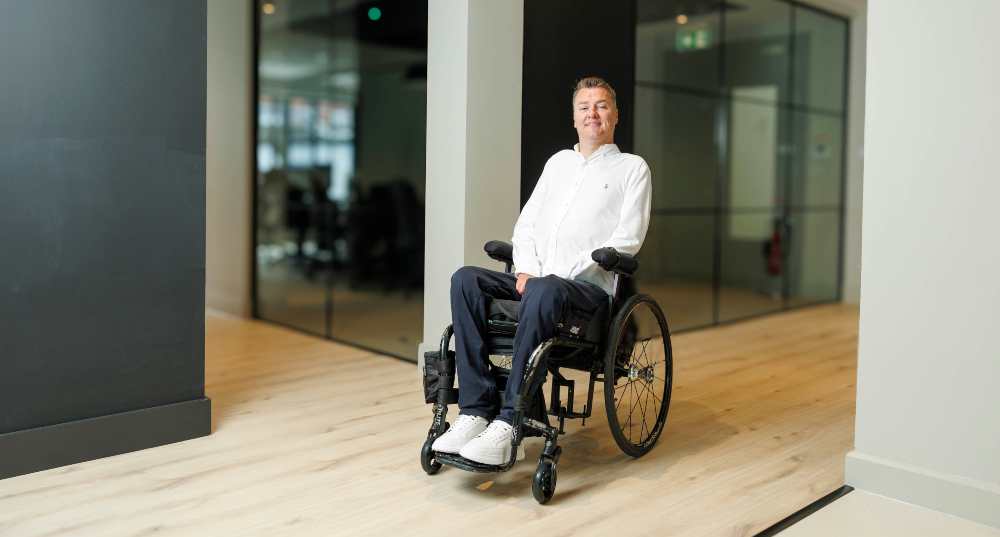
“We can no longer view disability inclusion as a ‘social issue’ managed by the state through welfare. It is a systemic failure within the labour market and a missed economic opportunity for Irish businesses. As a CEO with a disability myself, I stand here to advocate for the hiring of my peers. When barriers are removed and an equitable playing field created, people can work to their full potential.”
Corporate Social Justice
The report argues for a fundamental shift from Corporate Social Responsibility (CSR), often viewed as “charity,” to Corporate Social Justice (CSJ).
CSJ demands that businesses actively dismantle systemic barriers within their core operations to ensure equity, dignity, and justice.
This involves designing workplaces for human diversity, building trust through transparent data, equipping managers with practical tools, and crucially, placing disability representation at the leadership table.
“The business case for inclusion is clear: diverse and equitable organisations are more adaptive, innovative, and resilient. They bring creativity, problem-solving, and a different lens, all of which benefits the bottom line and strengthens stakeholder capitalism. This is not simply a matter of compliance; it is a strategic imperative,” continued McDonagh.
5 clear actions
The report, co-created through the ODI Roundtable Series, provides a concrete implementation roadmap across three phases – Foundation, Embedment, and Transformation – with five priority recommendations for businesses and government:
- Redesign Recruitment and Workplace Systems for Inclusion by Default: Moving beyond individual advocacy to embed accessibility and flexibility from the outset.
- Build Employer and Business Trust Through Transparent Data and Communication: Encouraging disclosure through trust-building and clear impact reporting.
- Equip Managers with Practical and Proactive Tools, Not Just Awareness Training: Providing tangible resources like reasonable accommodation passports and clear guidelines.
- Reduce Financial Risk Associated with Employment (Government Action): Decoupling essential supports from employment status and implementing a permanent, non-means tested Cost of Disability payment.
- Increase Visibility of Disability Leadership: Actively ensuring people with lived experience are present in leadership and decision-making roles.
“The persistence of the employment gap doesn’t reflect a lack of capability among disabled people, or a lack of intent among employers, but the cumulative impact of systems that continue to function within a prescriptive and narrow concept,” the report states. “Closing the disability employment gap will not be achieved through goodwill alone. It requires redesigning systems, so inclusion is the default rather than an exception or add-on.”
Jeanne McDonagh concluded, “Businesses play a pivotal role in driving this change, but government initiatives are equally crucial. By investing in education, addressing the cost of disability, and simplifying support systems, policymakers can empower individuals with disabilities and enrich our society and economy. I urge you to join Open Doors as a partner and help us build on this work, ensuring Ireland becomes a leader in disability inclusion.”
Top image: Adam Harris, Founder and CEO of AsIAm, Ireland’s Autism Charity; Ciara Foxton, Managing Director of Circle K Ireland; Jeanne McDonagh, CEO of the Open Doors Initiative; and Mary Buckley, Executive Director of IDA Ireland
-
Bank of Ireland is welcoming new customers every day – funding investments, working capital and expansions across multiple sectors. To learn more, click here
-
For support in challenging times, click here
-
Listen to the ThinkBusiness Podcast for business insights and inspiration. All episodes are here. You can also listen to the Podcast on:
-
Spotify
-
SoundCloud
-
Apple