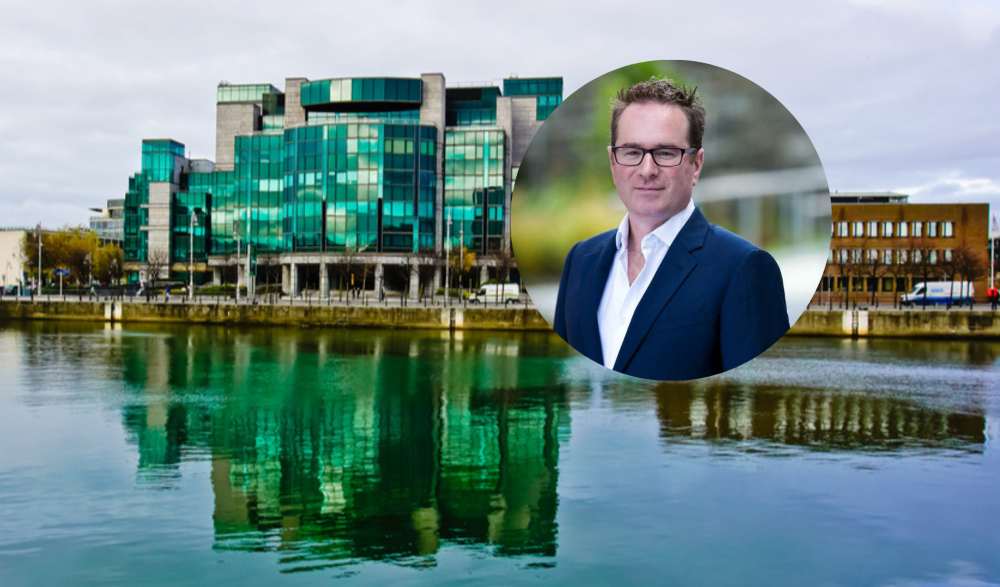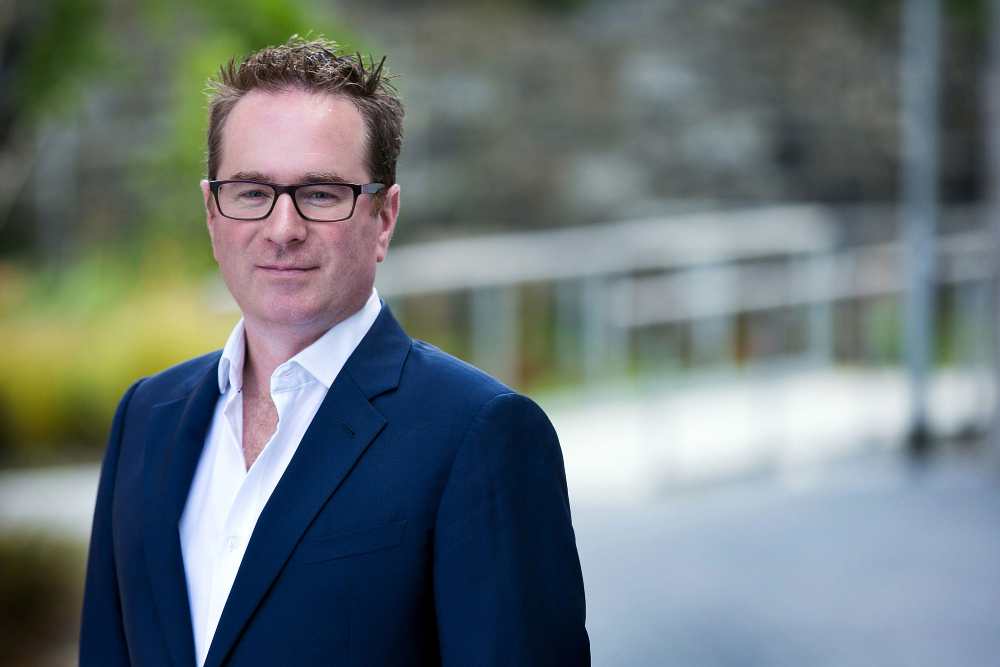

Applications have opened for the second cohort of InsTech.ie’s Foundry accelerator, with chief executive Gary Leyden saying the hunt for founders now reaches well beyond conventional insurtech into industries insurance never expected to reach.
Applications opened this week for the second cohort of the InsTech.ie Foundry, the accelerator built to connect early-stage founders with the insurers who might one day become their customers, partners or investors.
The programme, delivered in partnership with Furthr and hosted at the FINEOS offices in Dublin, closes to new entrants on 5 August, with founder interviews running through August ahead of a September start.
“What we’re looking for is not just pure play insurance technology ideas, but also companies that might be insurance adjacent”
The first cohort was, in Gary Leyden’s words, something of an experiment. As chief executive of InsTech.ie, the industry body backed by 23 insurance members including Allianz, Aviva, AXA, FBD, Irish Life and Canada Life, Leyden had no certainty that Irish founders would see insurance as fertile ground.
Assessing demand, then exceeding it
“Last year we piloted the first cohort to assess demand, and we had about 30 applications, which we were thrilled with, and we ended up supporting ten companies to go through cohort one,” he said.
That response has since translated into commercial momentum. Among the graduates, Solvera Underwriting, founded by former AXA XL country head David Gallagher and former Hiscox Europe chief underwriting officer Stuart Middleton, has developed a parametric “sunshine guarantee” product for solar installations and is preparing to commercialise it more widely across Ireland and the UK.
ITUS Secure Technologies was recently chosen as one of 20 companies worldwide to present at the Lloyd’s Lab Accelerator Pitch Day, selected from 220 international applicants, and is now part of the current Lloyd’s Lab cohort.
“The Foundry gave us access to experienced mentors and direct engagement with insurers and industry experts who understood both the challenges and opportunities facing our business,” said Dr Clare Ryan, founder and chief executive of ITUS Secure Technologies.
“The relationships we built through the programme have continued beyond the cohort and have supported the next stage of our growth.”
Insurance adjacent trend
For Leyden, the more interesting discovery has been how far the definition of insurtech can stretch. The Foundry does not confine itself to companies building insurance products outright.
“What we’re looking for is not just pure play insurance technology ideas, but also companies that might be insurance adjacent,” he said. “Products that could actually help the customer experience of an insurance company, or provide data that helps them make better pricing decisions or better risk decisions. That’s really opened up an awful lot of opportunities. It brings us into cyber, it brings us into solar. It’s amazing where the idea is that could partner with an insurance company to scale.”
That widening scope reflects a broader shift in how insurers see their own customers. Leyden argues that an industry built on risk has been slower than most to modernise the experience around it.
“Insurance enables us to do so much,” he said. “It enables us to travel to places in a less risky way, it allows us to try new technologies and to adopt new technologies, and to take the risk out of all that type of adoption. It’s really important in our daily lives, and it has such an important role in society and economies.
“Insurance companies sit on so much data in relation to their customer that they could give a much more personalised and customised experience.”
A regulated industry needs a translator
Founders who make it through the Foundry’s selection process are paired with an industry mentor drawn from an established insurer, matched to the specific opportunity they are pursuing.
“If you’re successful and you get selected for the Foundry, you get allocated a one-to-one mentor from the insurance industry that’s specific to the opportunity you’re going after,” Leyden said. “It really helps you understand what it means to partner with a regulated industry partner.”
That mentoring model cuts both ways. Some founders arrive from outside insurance and need to learn how the sector behaves; others come from deep inside the industry and need help thinking like a startup.
“We had founders who had thirty years plus insurance industry experience, but needed to learn how to think like a startup,” he said. “It’s very much a customised programme down to a company by company basis. It really wraps around what you want to do.”
Insight over algorithm
Asked whether a start-up can exist today without artificial intelligence somewhere in its pitch, Leyden pushes the question aside.
“We look beyond that, and really what we’re looking for in the application process is: do you have an understanding of the problem you’re fixing?” he said. “How you fix that problem is kind of irrelevant at the moment, and it more than likely will involve AI technology. But that’s not what we’re looking for. We’re looking for deep insight into the problem.”
Over a career that includes being an entrepreneur and that has taken in the National Digital Research Centre (NDRC) Leyden has developed a strong view of what separates founders who succeed from those who do not, and it rarely comes down to charisma or age.
“Over my years I’ve probably invested in about 300 or 400 start-ups, so there’s definitely some pattern matching there,” he said. “You weren’t necessarily looking for a particular type of person. It comes back to that insight into the problem.
“If I look at my best investments over those years, they were in niche industries. It wasn’t the next Facebook, it was the next learning management system.”
He points to LearnUpon, the Dublin-founded learning management system built by Brendan Noud, as the model he looks for.
“Brendan Noud from LearnUpon, they just knew that industry inside out, knew its flaws, knew why it wasn’t working, knew what the next generation could look like, and were determined to do that,” Leyden said. “Those are the types of businesses that you look for.”
Applications close on 5 August
The Foundry’s second cohort will again pair eight in-person sessions with six learning modules running from September to April, covering opportunity validation, value proposition development, product design, business modelling, financing and investment readiness, before founders present to insurers and investors on a Foundry Showcase Day.
“The success of our first Foundry cohort has demonstrated both the strength of insurance innovation emerging in Ireland and the value of bringing founders together with the people who can help accelerate their businesses,” Leyden said.
“As applications open for Cohort 2, we’re looking for ambitious founders who want to solve real challenges facing the insurance sector and scale their businesses with the support of Ireland’s insurance ecosystem.”
To learn more, click here
👉 No tech background needed to bring your business into the AI age! Secure your scholarship to complete the certification at no cost. Apply now and get started!
-
Bank of Ireland is welcoming new customers every day – funding investments, working capital and expansions across multiple sectors. To learn more, click here
-
For support in challenging times, click here
-
Listen to the ThinkBusiness Podcast for business insights and inspiration. All episodes are here. You can also listen to the Podcast on:
-
Spotify
-
SoundCloud
-
Apple