Minister urges shift from pilots to delivery as finance sector highlights commercial opportunity and awards highlight emerging leaders.
Ireland is seeking to convert years of research and pilot activity within its bioeconomy into commercially viable industries, with policymakers and financial institutions signalling a stronger focus on scale, markets and delivery.
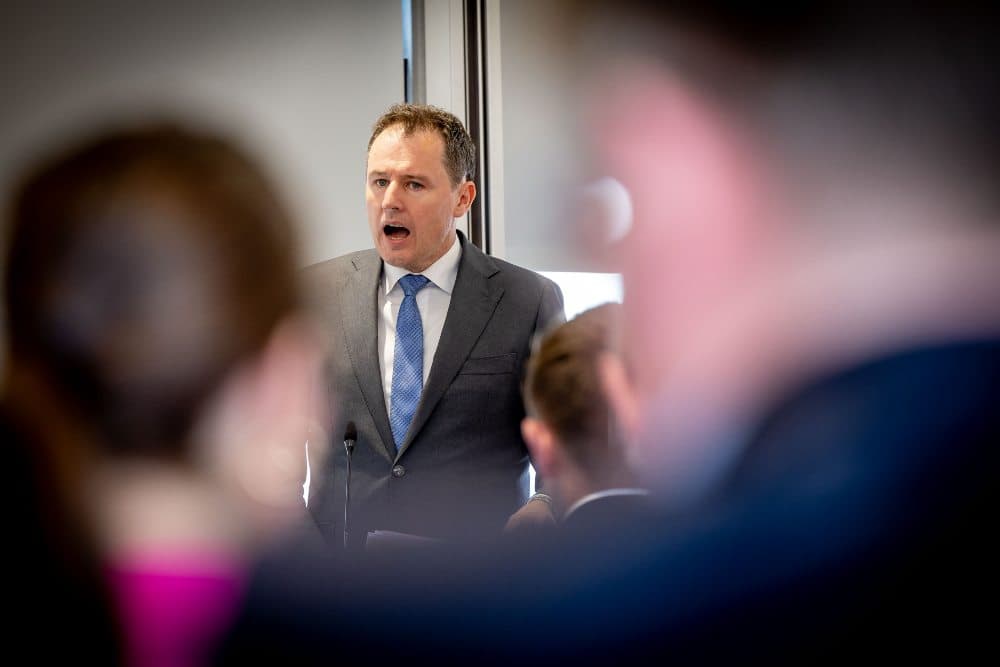
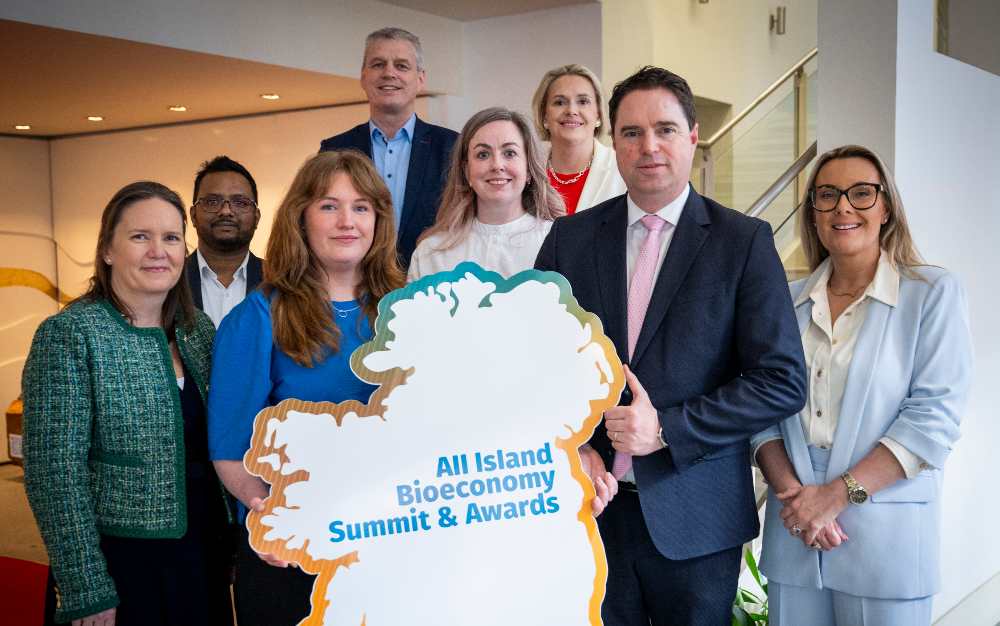
At the All-Island Bioeconomy Summit at the Johnstown House Hotel in Enfield, Co Meath, this week Timmy Dooley, TD, Minister of State with responsibility for Fisheries And The Marine, said the sector must now demonstrate tangible results across communities and supply chains.
“The bioeconomy really is a transformational opportunity across all sectors in Ireland”
“The bioeconomy is not owned by any one sector. It sits between sectors, it connects land and sea, science and business, rural and coastal communities,” he told attendees.
He described the current moment as a transition point, with Ireland moving beyond early-stage experimentation.
“The next phase… is about moving from promising projects and pilots to a wider system of delivery,” Dooley said.
Just this week Gas Networks Ireland agreed to connect a new €80 million biomethane facility in Co Cork to the national gas grid, marking a further expansion of Ireland’s renewable gas infrastructure and circular economy ambitions.
Getting value from resources
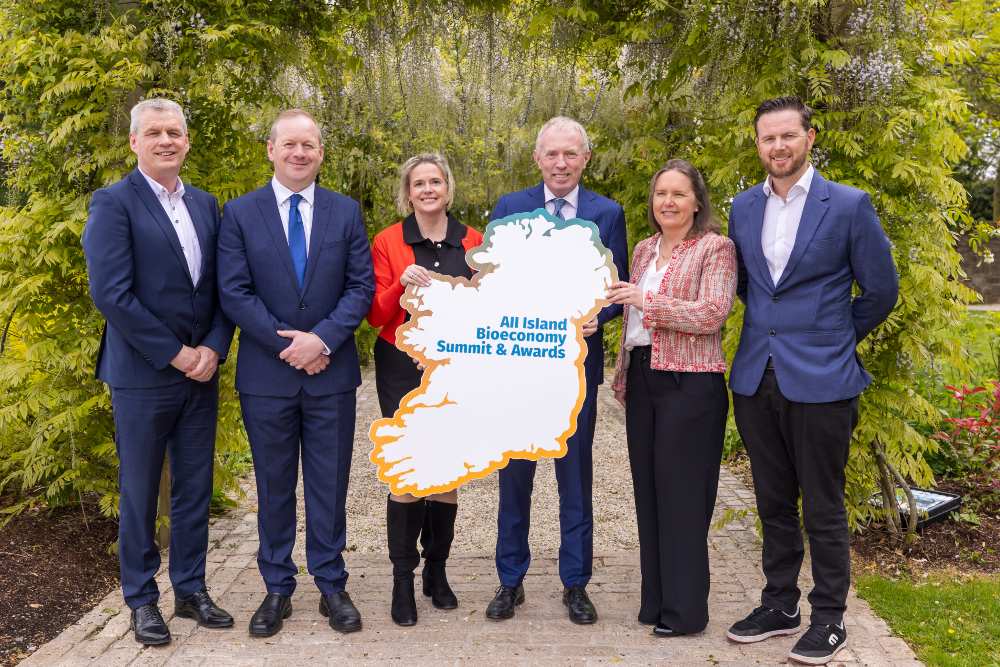
For policymakers, the focus is increasingly pragmatic. The Minister framed the bioeconomy as a means of generating greater value from existing resources rather than relying solely on new inputs.
“This is about getting more value from resources that we already have, reducing waste, replacing fossil-based materials and creating new opportunities where those resources are produced,” he said.
The bioeconomy spans agriculture, marine resources, energy, food processing and manufacturing. Its development is linked to Ireland’s broader climate and energy objectives, alongside concerns about supply chain resilience following geopolitical disruption.
Industry participants highlighted Ireland’s strong starting position, built on its agri-food sector, marine assets and research base. The main constraint lies in translating innovation into scalable businesses supported by stable demand and investment.
Financial institutions are beginning to adapt to that shift. Colette Shirley, director of Sustainability within Corporate & Commercial Banking at Bank of Ireland, said the sector is now emerging as a significant commercial opportunity across multiple industries.
“The bioeconomy really is a transformational opportunity across all sectors in Ireland,” she said at the summit’s awards ceremony.
The Bank is positioning itself to support companies exploring new business models linked to circularity, including the use of waste streams and by-products.
“We want to support customers and Irish SMEs to consider commercial opportunities within their own business models,” Shirley said, adding that attracting capital and scaling projects would depend on clearer market signals and investor understanding.
She also stressed the importance of awareness and education in building that market.
“It’s about building that market and raising awareness for the bioeconomy and circular economy across the business community,” she said.
All-island Bioeconomy Awards
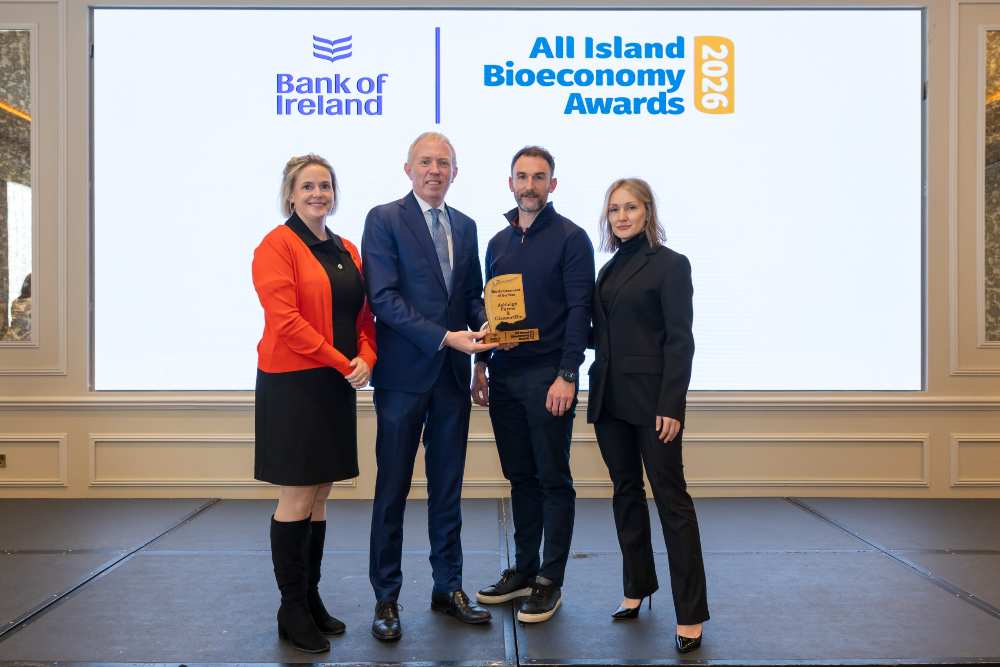
The summit included recognition of emerging projects and talent through the All-Island Bioeconomy Awards, which offered a snapshot of activity across the sector.
Ashley Farms and Glasport Bio were named for bioeconomy achievement of the year. The partnership involves the integration of an emissions reduction system in pork production, combining farming practices with renewable energy and carbon reduction technologies. Judges cited the adoption of a “world’s first” solution to reduce methane emissions within pork farming as a notable signal of innovation that could be replicated.
In the young talent category, Dr Emer O’Neill of Technological University of the Shannon was recognised for her research into integrated agriculture systems on peatlands, alongside her engagement with schools, industry and policymakers. Judges highlighted both her academic contributions and her role in promoting wider awareness of the sector.
Bia Energy’s biomethane facility in Dublin was awarded best biomethane development. The plant processes tens of thousands of tonnes of organic material annually, converting waste streams into energy, while also serving as a hub for research and regulatory training. Judges noted its operational performance and its contribution to knowledge transfer within the sector.
In the product category, AmuGreen’s MyGug micro anaerobic digester was recognised as bio-based product of the year. The system is designed to convert food waste into energy and nutrient outputs at a small scale for businesses, schools and communities, and has been cited for its practicality and role in raising awareness of bioeconomy concepts.
Looking to the future
For policymakers, such projects represent early examples of what a scaled bioeconomy might look like across Ireland’s regions. Dooley said the next stage would depend on connecting individual initiatives into broader systems that can attract investment and build public trust.
The forthcoming national bioeconomy strategy is expected to focus on linking these efforts, improving infrastructure and supporting demand for bio-based products. It will align with the review of Food Vision 2030, Ireland’s long-term strategy for the agri-food sector.
The Minister emphasised that governments can set direction, but delivery must come from those operating within the sector.
“Government cannot deliver the bioeconomy on its own,” he said. “You are the delivery system.”
Ireland will host the Global Bioeconomy Summit later this year, providing an opportunity to present its progress to an international audience. Officials see the event as a chance to attract investment while learning from developments elsewhere.
Participants at the Meath summit suggested that the speed of delivery will now determine whether the bioeconomy becomes a central component of Ireland’s economic model. The transition from research to scalable industry will test the alignment between policy, finance and commercial execution.
Dooley urged those involved to demonstrate the sector’s relevance beyond policy discussions.
“Show people what the bioeconomy means in real life,” he said, pointing to the need for visible projects that link national ambition with everyday economic activity.
-
Bank of Ireland is welcoming new customers every day – funding investments, working capital and expansions across multiple sectors. To learn more, click here
-
For support in challenging times, click here
-
Listen to the ThinkBusiness Podcast for business insights and inspiration. Latest episodes are here. You can also listen to the Podcast on:
-
Spotify
-
SoundCloud
-
Apple