Podcast Ep 312: Fitzgerald Power’s Stuart Fitzgerald says a different SME mindset is emerging that will lead the way to a very different country.
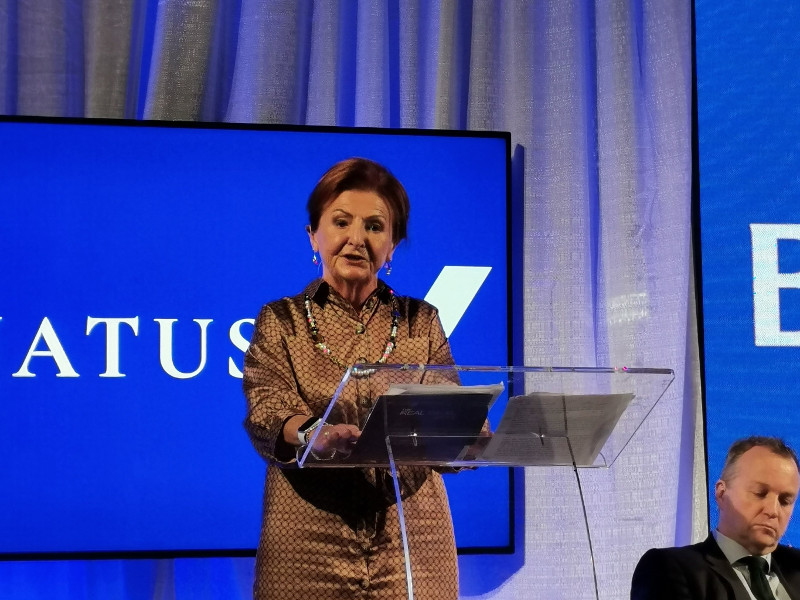
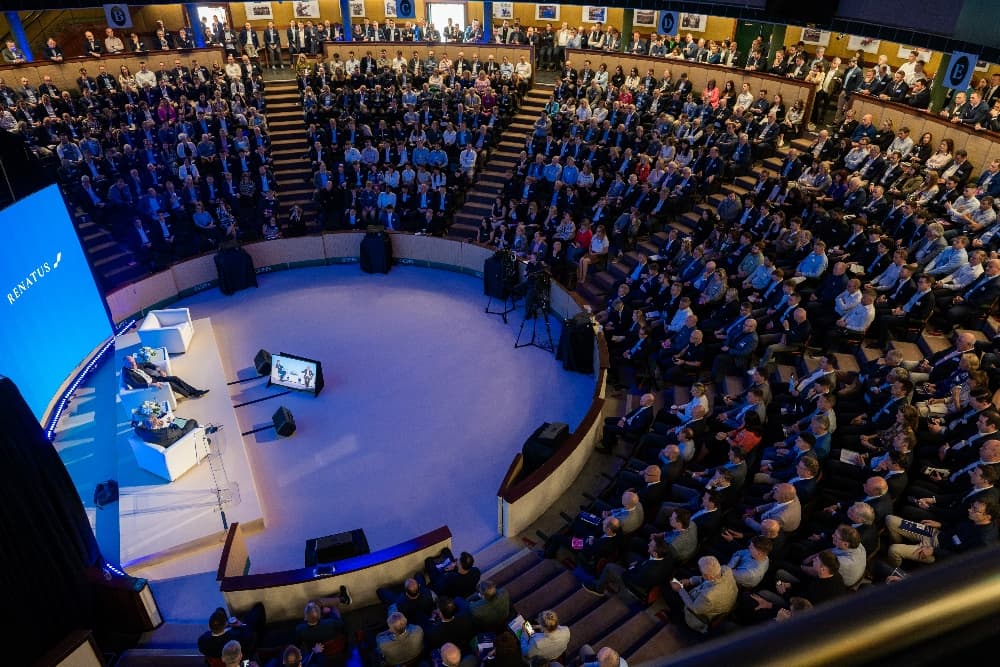
My conversation with Stuart Fitzgerald begins with us both discussing the recent and untimely passing of one of Ireland’s foremost entrepreneurs John Purdy, co-founder of Ergo. Purdy had just a day earlier sold Ergo to US investor Presidio for €100m. We reminisce on Purdy’s powerful appearance almost two years ago at The Real Deal event, an event co-organised by Fitzgerald Power, that takes place every summer at Goff’s in Kildare.
Purdy built what Fitzgerald terms “an amazing business” and he said Purdy’s candid presentation exemplified what The Real Deal represents: unvarnished accounts of entrepreneurial success and failure, delivered without sales pitches to an audience hungry for practical insights.
“The only way to drive economic value is through export-led growth, and we don’t have enough businesses that have been able to get off the island”
“He was so generous with his time, which was typical of the man,” Fitzgerald recalls. “The way he approached The Real Deal was very much the way he approached business. He was an investor in one or two client companies, and the CEOs would consider him an unbelievable mentor and a great friend.”
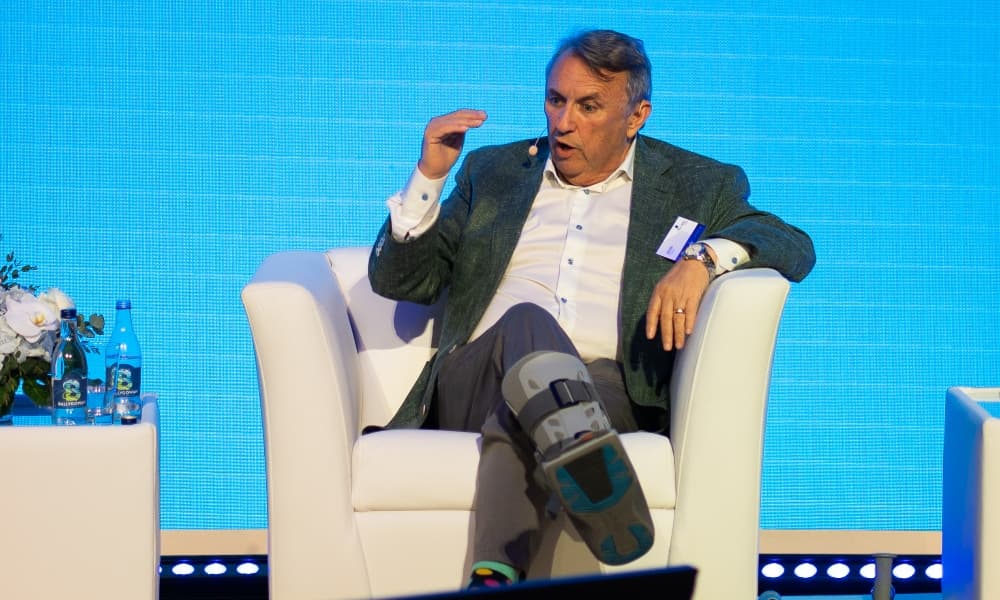
As CEO of Fitzgerald Power, one of Ireland’s fastest-growing accountancy firms, Fitzgerald has helped orchestrate The Real Deal event for several years, creating what he calls “a blank canvas” for authentic business storytelling.
A new generation emerges
-
Listen to the ThinkBusiness Podcast for business insights and inspiration. Latest episodes here. You can also listen to the Podcast on:
-
Spotify
-
SoundCloud
-
Apple
The evolution of events like The Real Deal reflects a broader transformation in Ireland’s small and medium enterprise sector. Where once the narrative focused on the struggles of indigenous businesses overshadowed by foreign direct investment, a new confidence is emerging among Irish SME owners.
Fitzgerald’s own company exemplifies this trend. Eight years ago, he and partner Noel Winters acquired what was then a traditional accountancy practice formed from the merger of two family firms in the early 1990s. Today, Fitzgerald Power serves ambitious management teams across the country, offering everything from compliance services to strategic exit planning.
“We took a view to reinvest in the business and see how much we could grow it,” Fitzgerald explains. “SME Ireland was going from strength to strength. There were infrastructural factors opening the market up – broadband connectivity, motorway connectivity. The world was becoming a very small place.”
The firm’s growth trajectory mirrors that of its clients. Eighteen months ago, Fitzgerald Power raised capital from high net worth strategic investors and established an advisory board – moves that would have been unusual for a business of its scale two decades earlier.
Professional advice drives change
This professionalisation reflects broader changes across Irish SMEs. Fitzgerald identifies four key factors driving the transformation: lessons learned from multinational companies operating in Ireland, improved quality of professional advisory services, better educational outcomes, and increased availability of institutional capital.
“If you have the next generation who’s had the opportunity to work at Stripe, to see what excellence looks like, the confidence that creates – the ecosystem impacts, the network effects – it’s all good for Ireland”
“If I take our company as an example, we brought in a chair who led our investment round,” he says. “A company of our size 20 or 30 years ago just wasn’t doing anything like that. Once we started to bring in someone with an external lens and different career experience to challenge our thinking, that brought a degree of structure and governance rigour that we just didn’t have.”
This trend extends beyond individual companies to systemic changes in how Irish businesses approach growth and succession. Research conducted by Fitzgerald Power found that while 75% of SMEs have strategic plans, only 27% have developed plans to grow valuation, and just one in three have exit strategies in place.
“The main concentration of SME owners is focusing on today’s issues – firefighting, making sure the business is working properly,” Fitzgerald observes. “The problem with running a small business, particularly one that’s scaling, is that you never get everything nailed. If you keep putting off what the ultimate strategic goal of the business is, you’re missing opportunities.”
Balancing FDI success with indigenous growth
Ireland’s success in attracting foreign investment creates both opportunities and challenges for domestic businesses. While FDI companies provide an ecosystem within which SMEs can operate and offer procurement opportunities, they also dominate export statistics – SMEs employ 99% of the workforce but account for only 30% of exports.
“The IDA has been one of the linchpins of progress in our economy and society,” Fitzgerald acknowledges. “But at the end of the day, we’re a five and a half million population country. The only way to drive economic value is through export-led growth, and we don’t have enough businesses that have been able to get off the island.”
He points to examples like Adam Keane’s start-up Altra, which provides engagement platforms for care homes. Within 18 months of focusing initially on Dublin, the company had expanded to the UK and France. “It’s a great example of a small business with really big ambitions that got off the island quite early,” Fitzgerald says.
Capital and risk appetite
Despite growing confidence, Irish businesses face structural challenges around capital allocation and risk appetite. Fitzgerald estimates that €1.6 billion sits in private bank accounts “doing nothing”, while pension funds lack mechanisms to support scaling SMEs.
“This is the second time we’ve had meaningful wealth created in Ireland,” he reflects. “The first time, the whole country felt like it won the Lotto. Now people are probably scared because we’re all old enough to remember that crash.”
However, he sees opportunities emerging. Scale Ireland has been advocating for structures allowing pension fund allocation into the scaling market, while successful Irish entrepreneurs who built global businesses like Stripe and Intercom are creating demonstration effects.
“If you have the next generation who’s had the opportunity to work at Stripe, to see what excellence looks like, the confidence that creates – the ecosystem impacts, the network effects – it’s all good for Ireland,” Fitzgerald argues.
The road ahead
As Ireland’s economy shows resilience despite global trade volatility, Fitzgerald believes the country needs multiple engines of growth. While FDI remains crucial, developing indigenous businesses capable of competing internationally becomes increasingly important.
“We need to be running more than one horse,” he concludes. “An economy of our size may never get to the stage where we have access to capital and talent like Silicon Valley, but can we make big incremental improvements to support the next Stripe and help them get out of the traps earlier? Absolutely.”
The transformation of Irish SMEs from defensive local players to confident scaling businesses represents a quiet revolution in the country’s economic landscape. Events like The Real Deal will continue to provide platforms for sharing that journey, even as the business community mourns mentors like John Purdy who helped light the way.
-
Bank of Ireland is welcoming new customers every day – funding investments, working capital and expansions across multiple sectors. To learn more, click here
-
For support in challenging times, click here
-
Listen to the ThinkBusiness Podcast for business insights and inspiration. Latest episodes here. You can also listen to the Podcast on:
-
Spotify
-
SoundCloud
-
Apple