
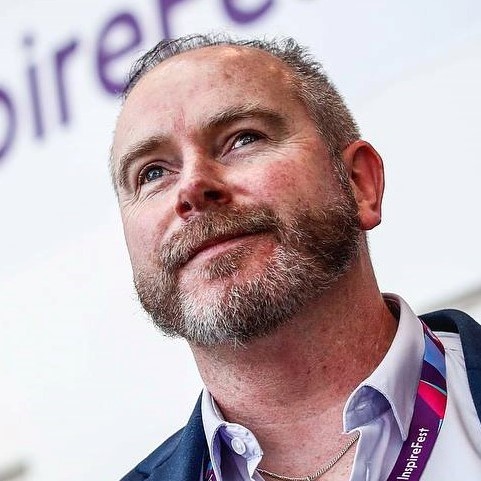
Former TikTok marketing scientist George Filippou says businesses are wasting up to 60% of ad spend due to flawed measurement systems.
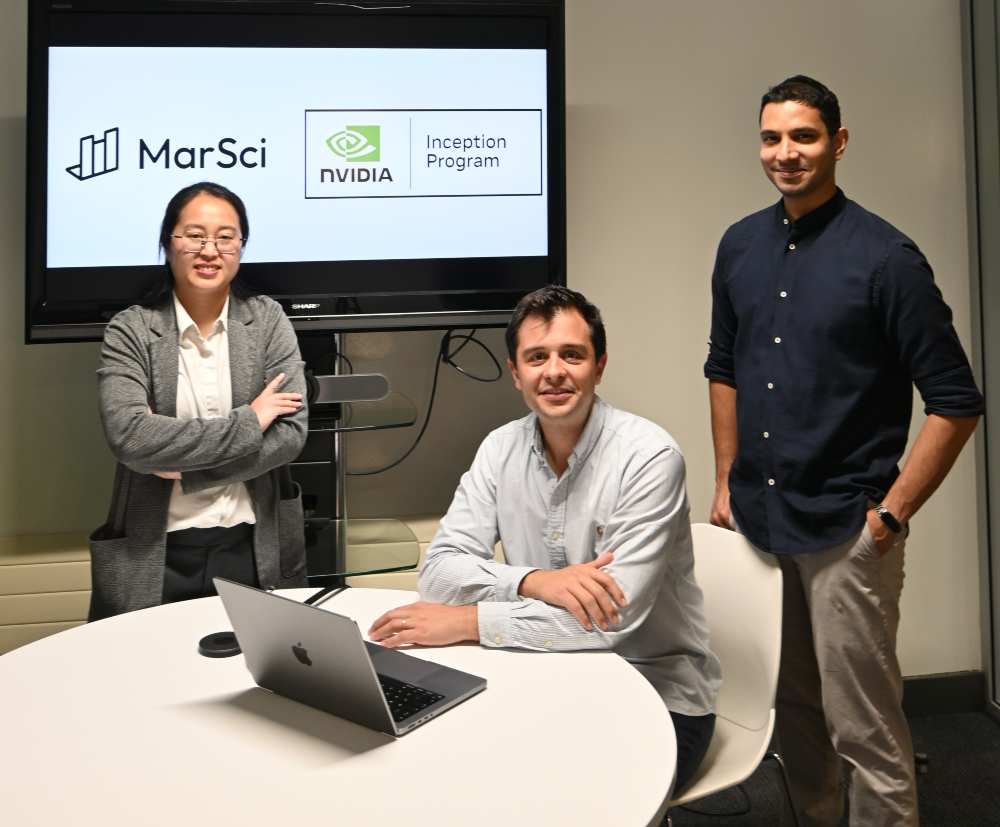
An Irish deep tech business called MarSci is setting its sights on one of the advertising industry’s biggest challenges: helping businesses to understand which marketing investments genuinely drive sales and which are taking credit for them.
The business, founded by former TikTok lead marketing scientist George Filippou, has developed proprietary technology designed to solve the long-standing marketing attribution problem, an issue that affects businesses investing in a global advertising market worth more than $1 trillion annually.
“Advertisers come to MarSci when they don’t know how to optimise their marketing spend, or when they want to grow their business and can’t”
“With that much money at stake, you would expect companies to know exactly how to allocate their budgets and grow,” Filippou said. “They don’t. I have spent my whole career in media and advertising, and I can tell you that the biggest unanswered question in the industry is deceptively simple: where should the next 1,000 dollars go?
“When we ask new clients that exact question in our first meeting, 90% of them answer ‘well, it depends.’ That answer tells you everything. Even for sophisticated teams, there is no straightforward way to decide.”
Filippou estimates that between 40% and 60% of advertising spend is wasted because organisations cannot accurately determine which marketing activities are responsible for business outcomes.
The attribution challenge
At the heart of the problem is how digital platforms assign credit for customer purchases.
“If a customer sees your ad on Facebook, then another on Google, then one on Pinterest, and finally buys, all three platforms will claim credit for that sale. Add up what each channel reports and you have 100 sales on paper when in reality you have 20.”
And, with the advent of AI, the problem is getting bigger, not smaller. “AI is changing how we consume. As AI assistants enter the consumer journey, recommending products and answering questions before anyone ever clicks an ad, that journey becomes even harder to see and even easier to misattribute.”
Filippou says MarSci fixes the marketing attribution problem. “We have proprietary technology, we have IP, and we have changed the entire way marketing data is captured. As a result, we run our own operations around 8x more efficiently, and we save our clients an average of 30%of their marketing spend.
“The prize sits on top of that $1 trillion in ad spend: the marketing measurement and analytics market itself is worth roughly $27 billion today and is forecast to pass $50 billion by 2031.”
MarSci is a deep tech company. It builds data infrastructure and develops new statistical models that answer the measurement challenges millions of businesses face.
“Our algorithms are proprietary, but we also release them as open source, and we provide the service layer that supports clients using those same methods. Both models and services are available through our platform,” Filippou explains.
“Advertisers come to MarSci when they don’t know how to optimise their marketing spend, or when they want to grow their business and can’t. We analyse their data, we build bespoke algorithms, and we deliver a plan with specific actions. Crucially, the client’s team is embedded in the entire process, so we understand their context and they stay informed at every step.”
Proprietary tech
MarSci’s operations rest on several bespoke technological component spanning private data, the consumer journey and learning from the past.
The company’s response to the trillion-dollar challenge is what it calls its Causal-Driven Attribution (CDA), a proprietary technology currently under provisional patent and accepted for publication in the Journal of Marketing Analytics.
The platform enables advertisers to visualise customer journeys and identify which touchpoints have a measurable influence on purchasing decisions.
MarSci analyses client data, develops bespoke algorithms and provides practical recommendations designed to improve business performance.
The company says its technology allows its own operations to run eight times more efficiently while helping clients to save an average of 30% on marketing spend.
One of its innovations addresses data ownership, a growing concern for businesses that rely on external advertising platforms. Rather than storing customer marketing data in its own cloud environment, MarSci returns connected datasets directly to a client’s Google Drive account. “The client keeps full ownership of their data,” Filippou says.
The company also offers what it calls a pseudo-lift testing capability, enabling businesses to assess advertising effectiveness without conducting costly market experiments.
From academia and big tech to entrepreneurship
MarSci was founded by Filippou, previously lead marketing scientist at TikTok and, before that, at Meta and Skyscanner. He holds a PhD from Trinity College Dublin in the Department of Statistics, specialising in causal inference.
Entrepreneurship was never a priority for George in itself, even though this is not his first company. What drives him is the problem he is trying to solve, not the structure of decision making.
He had always worked with large organisations, which for the most part know how to handle the challenge of marketing decision making.
It was when he took over the mid-market leadership team at TikTok that it clicked: most businesses simply don’t know what is right for them. They are pulled between conflicting opinions, and there seems to be no ground truth in marketing.
“Data scientists and marketing professionals know that a ground truth does exist; the problem is defining it. That is exactly what MarSci does. It gives you a very clear answer on how people find your brand, which ad was responsible for a purchase, and how much you can scale.”
Alongside his commercial work, Filippou co-founded the Marketing Science Meetup community in Ireland and has been involved in supporting Dublin MeasureCamp initiatives.
Time to rethink Ireland’s start-up ecosystem
Filippou is candid in his assessment of the Irish start-up environment. He argues that success should be measured not only by a handful of standout companies, but by the overall effectiveness of support structures.
“Pointing to a handful of great Irish start-ups is not, by itself, evidence that the system works, and AI is going to hit many businesses hard, so we have to rethink our approach.
“The way I frame it is this: having 10 or 20 great startups in Ireland is not the argument. The real question is, given the amount of support and money the Government puts in, how many should we have?
“Ireland has of course demonstrated exceptional successes with great start-ups and global impact. But I believe those successes are driven by the character and attitude of Irish people rather than by the system built to support entrepreneurs.”
MarSci is itself supported by Enterprise Ireland and Filippou believes there is serious work being done by the State agency to support Irish start-ups.
“There are also several great communities like Baseline but there is a lot of work to be done. I think we need to realise that there is risk associated with doing business, and Ireland cannot change that.
“Therefore, organisations, VCs, communities and the government have to become familiar with higher risks, especially in this environment.”
Despite receiving a term sheet worth €1 million, MarSci chose not to proceed after achieving profitability earlier than expected.
“So we are now thinking about raising a larger round and expanding into hardware, operating across both software and hardware, and serving not only our clients but our competitors as well.
“Marketing technology (martech) and digital marketing overall suffers from the ‘cloud tax.” That is driven by the fact that digital data has to always be hosted somewhere. Therefore businesses either pay big amounts of money to host that information themselves or for SMBs, they choose to let marketing providers like Facebook or Google to hold that information. Some could argue that this is part of the problem we described with data and ownership of data.”
Reflecting on his advice for fellow-founders, Filippou advises spending more time on product than anything else.
“I personally spent far too much time with venture capitalists. Funnily enough, I was reading Gary Lavin’s recent post about his and his team’s great success with VIT HIT and he also mentioned “Oh yeah, and never taking outside funding.” which I can understand why.
“What I had not realised is that venture capital is going through a shock moment of its own: investors are willing to spend time with founders, but not willing to deploy cash at anywhere near the same speed. Meetings are cheap; term sheets are not.”
So while he believes access to funding, networks and publicity can accelerate growth, none of those factors compensate for a product that fails to solve customer problems. The only thing that matters is a great product, he believes. “I know it is a very old school answer, but that is it. Raising capital, and even sales, can be driven by many other factors. If you have an angel investor with a strong network, you will make sales, guaranteed.
“If you have exceptional leadership, a strong start-up background and you are technical enough, you will certainly raise a few million in the AI era. Again, that does not mean you are serving your customers.
“The only thing that matters is a great product. And when I say product, I do not mean features. I mean usability in the hands of strangers: people you do not know and cannot stand next to and explain things to.”
It simply has to work.
👉 No tech background needed to bring your business into the AI age! Secure your scholarship to complete the certification at no cost. Apply now and get started!
-
Bank of Ireland is welcoming new customers every day – funding investments, working capital and expansions across multiple sectors. To learn more, click here
-
For support in challenging times, click here
-
Listen to the ThinkBusiness Podcast for business insights and inspiration. All episodes are here. You can also listen to the Podcast on:
-
Spotify
-
SoundCloud
-
Apple