Podcast Ep 373: Bank of Ireland’s Paula Harmon on how Irish SME businesses are increasingly approaching their lenders with plans to expand rather than requests to cover rising costs.
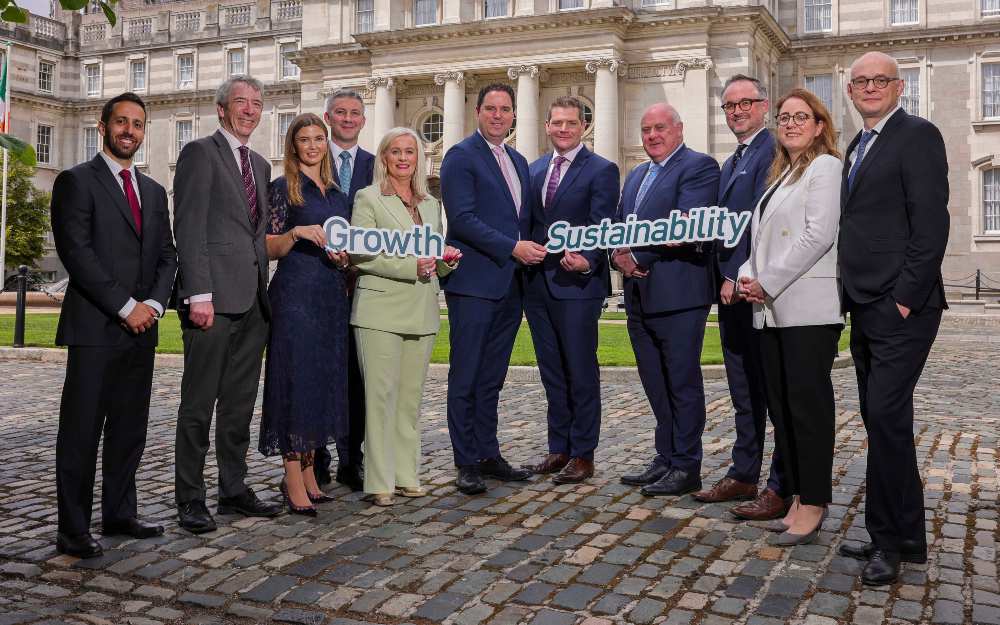
In recent weeks a €1bn State-backed loan scheme for SMEs reopened for applications. The expanded Growth and Sustainability Loan Scheme from the Strategic Banking Corporation of Ireland (SBCI) which is supported by Ireland’s leading lenders gives SMEs and agri players access to long-term finance for growth, technology, sustainability and expansion.
Paula Harmon, head of Small Business And Agri, Everyday Lending at Bank of Ireland, said the lender had seen “a notable shift” in why businesses borrow. “In previous years, many businesses were borrowing primarily to manage their cash flow, absorb cost inflation, and navigate economic uncertainty,” she said. “Today, we are increasingly seeing SMEs seek finance to invest in growth, whether that’s expanding capacity, adopting new technology, hiring talent, or entering new markets.”
“Many SMEs had become understandably cautious after several years of uncertainty”
The Growth and Sustainability Loan Scheme (GSLS), delivered SBCI has been given an additional €500m and extended to 30 June 2029. It is available through Bank of Ireland, AIB, PTSB, Close Brothers and Finance Ireland to SMEs, farmers, foresters and fishers. At least 30% of lending is directed at environmental sustainability.
The CEO of SBCI Colin Moran says the scheme’s terms are worth considering for SME owner-managers. “The longer-term funding that goes up to 10 years is typically longer than what’s available in the market”, and that the interest rate discount “can be over 2% in some cases”, which “makes repayment capacity easier for the borrower.”
KEY NUMBERS: SME growth finance
- €1bn State-backed Growth and Sustainability Loan Scheme
- €500m additional funding committed to the scheme
- 30 June 2029 new application deadline
- 65% of SMEs expect finances to improve within 12 months
- 30% minimum of lending earmarked for environmental sustainability
- Up to 10 years long-term funding available
- Over 2% interest-rate discount possible in some cases
- Five lenders offering the scheme to eligible businesses and producers
Editorial takeaway: Irish SMEs are showing cautious confidence, with finance increasingly supporting growth and investment rather than short-term cost pressures.
Listen here:
-
Listen to the ThinkBusiness Podcast for business insights and inspiration. All episodes are here. You can also listen to the Podcast on:
-
Spotify
-
SoundCloud
-
Apple
Harmon said 65% of SMEs expect their financial position to improve over the next 12 months, and that these were the businesses “increasingly seeking finance to support the growth in existing products and services, rather than simply dealing with short-term challenges”.
She said owners were reporting stable or growing demand but had not set aside concerns about costs. “Rising energy, transport, and material costs remain major concerns, and uncertainty in the wider economic environment persists,” she said. “The optimism we are seeing is therefore, I would say, best described as cautious confidence.”
The change is uneven across sectors. “That said, it’s not a complete shift,” Harmon said. “Some sectors continue to face cost pressures, and are still using credit facilities to support working capital requirements.” She cited the bank’s recently launched discounted agri working capital loan as an example. Compared with the post-pandemic period, she said, the bank was “seeing far more businesses approaching lenders with well-defined growth plans”.
The cost of holding cash
Asked whether the problem was now ambition rather than access to credit, given that relatively few SMEs are seeking finance, Harmon said: “In many respects, I would say yes.” She said approval rates “remain strong for quality propositions”.
“I think the biggest challenge today is often encouraging those businesses to seek the finance,” she said. “Many SMEs had become understandably cautious after several years of uncertainty.” She said many were relying on internal funds or delaying major investment decisions.
Harmon described cash reserves as “a really good financial discipline”. “However, there is also an opportunity cost to holding too much capital on the sideline,” she said. “The key question for customers shouldn’t be ‘Should I borrow?’ but rather, ‘What return will this investment generate for my business?’“
She said lenders should not encourage unnecessary debt. “Sometimes the best decision is not to borrow, but equally we don’t want businesses missing opportunities that could strengthen their business for the long term simply because they’re reluctant to explore those finance options.”
Energy, farms and automation
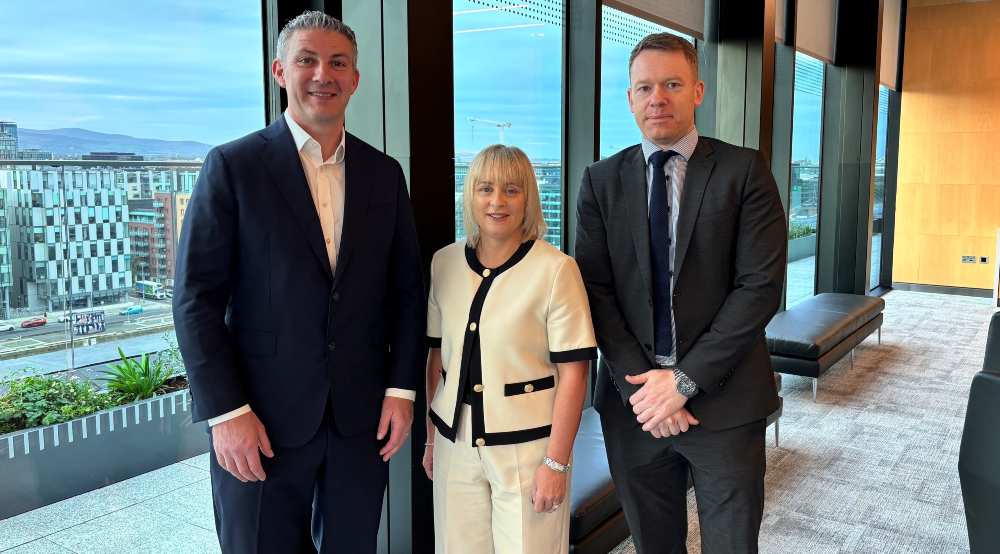
Colin Moran, Chief Executive of the Strategic Banking Corporation of Ireland; Paula Harmon, Head of Small Business and Agri, Everyday Lending at Bank of Ireland; and Alan Durcan, Head of Distribution, Bank of Ireland
Harmon said she expected the second phase of the scheme to fund investment in technology, automation and digitisation, larger premises and production capacity, new markets and export capability. She also expected strong demand for climate-related projects such as energy-efficient equipment, renewable energy, building upgrades and sustainable farming. She said the framework covers eligible TAMS-related projects in agriculture.
“In the agri sector, sustainability and competitiveness increasingly go hand in hand,” she said. For energy upgrades such as solar panels and heating and cooling systems, she said lower operating costs made businesses “more resilient to future energy price volatility”.
On AI and automation, Harmon said Irish SMEs had made significant progress but that delay carried a cost. “The biggest, I think, risk for businesses that delay investment is not necessarily that they’ll fall behind overnight, but that the gap gradually widens between them and their competitors,” she said. She linked the issue to recruitment. “Employees increasingly expect to work with modern tools and processes.”
Asked what success would look like in three years, Harmon said it would not be measured by how much of the scheme had been lent. She said she hoped to see “thousands of SMEs, farmers, and business owners” use it to expand capacity, adopt new technologies, enter new markets and create jobs.
Listen to the ThinkBusiness Podcast on Apple, Spotify and SoundCloud or wherever you get your podcasts.
👉 No tech background needed to bring your business into the AI age! Secure your Google AI Professional Certificate to complete the certification at no cost. Apply now and get started!
-
Bank of Ireland is welcoming new customers every day – funding investments, working capital and expansions across multiple sectors. To learn more, click here
-
For support in challenging times, click here
-
Listen to the ThinkBusiness Podcast for business insights and inspiration. All episodes are here. You can also listen to the Podcast on:
-
Spotify
-
SoundCloud
-
Apple