
PwC report shows retail and hospitality sectors improving, but rising unemployment could reverse trend.
Corporate insolvencies in Ireland have remained broadly stable over the past three years, according to PwC’s latest Insolvency Barometer, which recorded 848 cases in 2025.
That figure is slightly down from 868 in 2024 but still above the 736 reported in 2023. PwC said the consistency reflects the resilience of Irish businesses amid inflationary pressures and geopolitical uncertainty.
“Businesses should focus on their core strategies and cost bases while actively managing their working capital and cash positions to ensure that they are financially sustainable into the future”
The report calculates an insolvency rate of 27 per 10,000 companies for 2025, well below the long-term average of 49 and far from the peak of 109 recorded in 2012.
Irish economy continues to perform well
“Despite geopolitical instability, inflation, interest rate variability and tariff changes in recent years, the Irish economy has continued to perform well, and is reflected in the current low and stable levels of corporate insolvencies,” said Ken Tyrrell, Business Recovery partner at PwC Ireland.
“However, our analysis also shows that if Irish unemployment were to continue to increase, we will also likely see increasing insolvencies in the future. We cannot ignore ongoing global geopolitical risks and prevailing economic uncertainties and we will be closely monitoring insolvency levels as 2026 unfolds.
“Businesses should focus on their core strategies and cost bases while actively managing their working capital and cash positions to ensure that they are financially sustainable into the future.”
Retail and hospitality sectors showed signs of recovery. Retail insolvencies fell 25% to 151 cases, while hospitality recorded an 8% decline to 141.
However, PwC warned that persistent cost pressures mean hospitality remains vulnerable. Court-appointed liquidations nearly doubled to 113, driven largely by Revenue Commissioners’ enforcement actions following the end of debt warehousing.
The report also highlighted a strong correlation between unemployment and insolvency rates. Ireland’s jobless rate rose from 4% in January to 4.9% in November. PwC estimates that every sustained one-point increase in unemployment could add 245 insolvencies annually. “If Irish unemployment were to continue to increase, we will also likely see increasing insolvencies in the future,” Tyrrell said.
Other findings include a decline in voluntary liquidations, down 13% to 576, and a rise in examinerships, which more than doubled to 23. Uptake of the Small Company Administration Rescue Process (SCARP) remains low, with just 23 cases initiated in 2025.
Dublin, Cork and Galway accounted for 70% of all insolvencies, underscoring the concentration of business activity in urban centres. PwC urged companies to maintain a “cash-conscious culture” and focus on core strategies to navigate uncertainty in 2026.
Business lessons:
- Stability Can Mask Emerging Risks
Even though insolvency levels have remained steady, PwC’s analysis shows a strong correlation between unemployment and insolvency rates. Businesses should monitor macroeconomic indicators like jobless trends as early warning signals.
- Sector Resilience Requires Continuous Adaptation
Retail and hospitality showed improvement, but persistent cost pressures mean resilience is fragile. Companies in these sectors should continue restructuring and cost optimisation to maintain momentum.
- Enforcement Trends Matter
Court-appointed liquidations nearly doubled in 2025, driven by Revenue Commissioners’ actions. Firms must stay proactive on tax compliance and debt management to avoid legal enforcement.
- Alternative Rescue Tools Need Awareness
Low uptake of SCARP compared to examinership suggests SMEs may not be leveraging available restructuring options. Educating management teams on these processes could prevent unnecessary closures.
- Cash Culture Is Critical
PwC emphasises creating a “cash-conscious culture” across organisations. Forecasting, scenario planning, and minimum cash thresholds should be embedded in decision-making to safeguard financial sustainability.
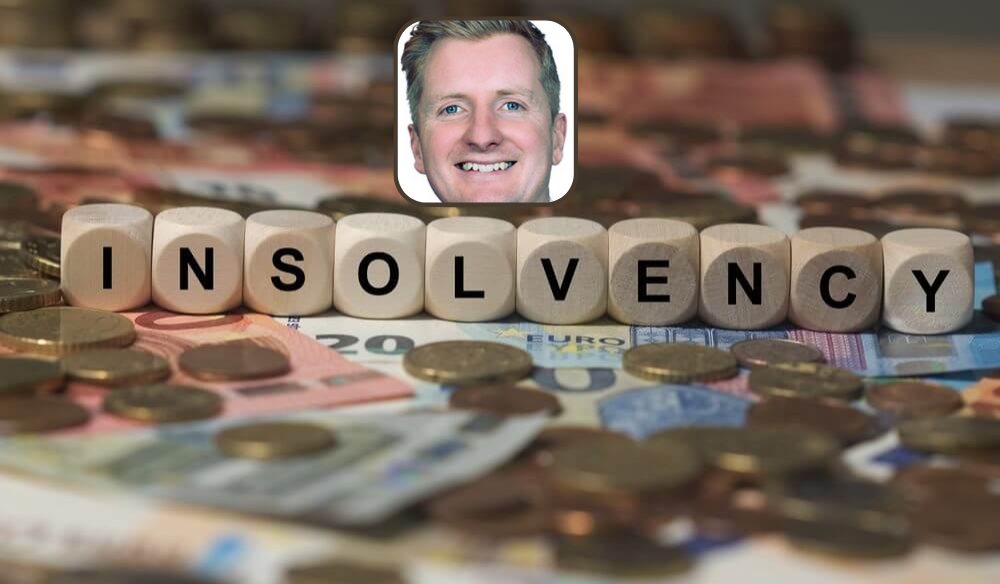
Top image: Ken Tyrell, PwC Ireland
-
Bank of Ireland is welcoming new customers every day – funding investments, working capital and expansions across multiple sectors. To learn more, click here
-
For support in challenging times, click here
-
Listen to the ThinkBusiness Podcast for business insights and inspiration. All episodes are here. You can also listen to the Podcast on:
-
Spotify
-
SoundCloud
-
Apple