
Parents back restrictions but question enforceability while calling for shared responsibility across society.
A growing majority of adults in Ireland favour a ban on social media use for under-16s, reflecting mounting concern about the impact of digital platforms on younger users and the role of technology companies in safeguarding them.
New research from Pure Telecom shows that 74% of adults support the introduction of such a ban, with backing particularly strong among parents. Four in five parents with children aged 16 and under favour restrictions, rising further among parents of younger children.
“A whole-society approach, which includes government, teachers, parents and children, is the one that is preferred by the large majority”
The findings come during an intensifying policy debate internationally, following the UK government’s recent move to outline plans for restricting social media access for under-16s. While Ireland has not adopted similar measures, the survey suggests public opinion is shifting towards stronger intervention.
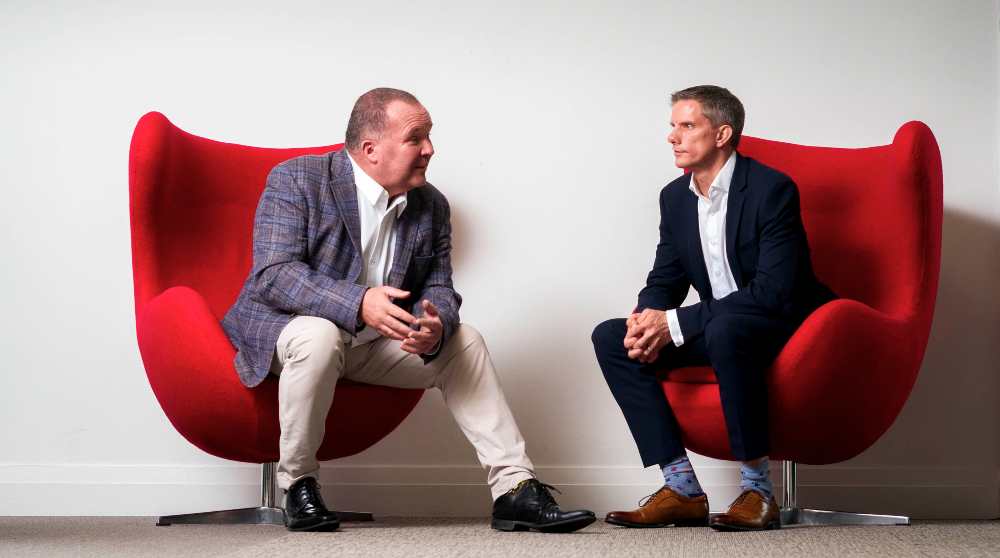
Paul Connell, chief executive of Pure Telecom, said the issue is high on the public agenda and cuts across generational boundaries.
“Our research shows that this is a topic that adults in Ireland care deeply about, but there are mixed opinions on whether an outright ban can be effective, or if it is enough on its own,” he said.
Parents lead support for restrictions
Support for a ban is strongest among those closest to the issue. Among parents of younger children aged six to eight, approval rises to 88%, pointing to heightened concerns about early exposure to digital platforms.
The data also reveals a gender split in attitudes. Men are more likely to support a ban, with 78% in favour compared with 69% of women.
At the same time, the findings suggest public sentiment is far from uniform. Younger adults aged 18 to 24 are the least likely to back a ban, instead placing greater emphasis on education and digital literacy.
Connell noted that generational divides shape the conversation. “Eighteen- to 24-year-olds are the least likely age group to support a ban, but the most likely to advocate for social media safety to be taught in schools,” he said.
“Older adults, meanwhile, are more likely to support a ban and less likely to call for schools to be involved.”
Doubts over enforcement persist
Despite clear support for restrictions, many adults question whether a ban could be implemented effectively. Half of those surveyed believe it would be impossible to prevent under-16s from accessing social media, regardless of legal constraints or parental controls.
These concerns highlight the challenges of regulating digital behaviour in an environment where platforms are easily accessible and enforcement mechanisms are difficult to scale.
Responsibility for children’s online safety remains contested. Nearly a third of respondents believe that the primary responsibility lies with parents, while a larger group argues that government intervention is necessary to support families in managing online risks.
A majority also believe that social media companies themselves should carry greater accountability. Some 57% of respondents say platforms should be legally responsible for protecting children online, reflecting growing scrutiny of the industry’s role in content moderation and user safety.
Education seen as part of the solution
Even as support for a ban gathers momentum, many adults acknowledge that social media can play a constructive role for young people. More than four in ten respondents view it as a positive outlet for children in certain contexts.
This nuance is reflected in strong backing for education initiatives. A majority of adults believe schools should play a central role in teaching children how to use social media safely, while 44% suggest that digital literacy programmes could prove more effective than an outright prohibition.
Connell said the findings point towards a more integrated approach. “Regardless of where people stand individually, our research shows that a whole-society approach, which includes government, teachers, parents and children, is the one that is preferred by the large majority,” he said.
A policy debate gathering pace
The survey, conducted by Censuswide among 1,000 adults in Ireland as part of Pure Telecom’s Connected Lives 2026 report, captures a moment of transition in public attitudes.
As policymakers across Europe examine the regulation of online platforms and the protection of children in digital spaces, Ireland faces similar questions about the balance between restriction, education and shared responsibility.
The research suggests that while public appetite for stronger controls is rising, there is also recognition that no single measure will address the complexity of the issue. Instead, the emerging consensus points towards a combination of regulation, corporate accountability and education as the most viable path forward.
-
Bank of Ireland is welcoming new customers every day – funding investments, working capital and expansions across multiple sectors. To learn more, click here
-
For support in challenging times, click here
-
Listen to the ThinkBusiness Podcast for business insights and inspiration. All episodes are here. You can also listen to the Podcast on:
-
Spotify
-
SoundCloud
-
Apple