Nationwide study finds widespread pension participation, but limited understanding, leaving employers facing productivity, wellbeing and succession challenges.
A large majority of people in Ireland believe they manage their day‑to‑day finances well, but most do not feel ready for retirement, according to one of the most extensive studies of retirement readiness ever carried out in the State.
The research, conducted by Amárach Research for the Financial Planning Standards Board Ireland (FPSB Ireland), Institute of Banking (IOB), LIA and the Retirement Planning Council of Ireland (RPCI), surveyed 1,200 employees and 500 employers across private, public and not‑for‑profit organisations.
“Ireland has made significant progress in encouraging pension participation. Participation is not the same as preparedness”
It points to a persistent gap between saving for retirement and understanding what those savings will deliver in later life, with growing implications for individuals, employers and the wider economy.
It makes for stark reading. Almost three quarters of employees say they manage their money well on a day‑to‑day basis, but 79% say they feel financially unprepared for retirement. More than half worry their savings will not last throughout retirement.
Lack of clarity on pensions
The study suggests the issue is not a lack of pension participation. Instead, it is a lack of clarity. Forty‑five percent of employees say they do not understand retirement planning, and more than a third say they do not fully understand their own pension scheme.
Many continue to think in terms of a pension “pot”, rather than the income that pot will need to generate over a potentially long retirement.
On average, respondents expect their pension to replace 42% of their salary in retirement. That level of income is below the 50–55% generally required to maintain living standards. As a result, half of employees expect to work part‑time in retirement for income reasons, and nearly half believe they will have to work longer than they would like in order to fund later life.
Confidence also falls as retirement approaches. Among people aged 55 to 64, only 10% say they are financially prepared, and fewer than half feel confident about managing their finances in retirement.
For employers, the findings point to immediate and practical challenges. Only 31% believe their workforce is financially ready to retire, and just 32% feel employees are prepared for the lifestyle transition retirement involves. More than three quarters of employers say financial stress is already affecting productivity, engagement and focus at work.
Delayed and uncertain retirement timelines are also complicating workforce planning. Employees say they would like to retire at around 60, but most now expect to retire closer to 65, with many anticipating working until 70. Employers report knock‑on effects across succession planning, career progression and retention.
Emer Kirk, CEO of Financial Planning Standards Board Ireland, said the research shows Ireland has reached a turning point in retirement planning.
“Ireland has made significant progress in encouraging pension participation. Participation is not the same as preparedness,” she said. “The real gap now is understanding and being able to picture not just the money, but the life you want after work.
“Employees are saving, but many do not know what those savings will deliver as income in retirement or how prepared they are for the lifestyle change, from routine and social connection to purpose and identity. Without that clarity, people delay decisions about contributions, careers and retirement timing. Financial uncertainty is no longer just a personal issue; it has become a workforce planning issue for employers.”
The report highlights that retirement planning is about more than finances alone. Leaving work often involves a major shift in routine, identity and social connection. Employees who feel uncertain about that transition are more likely to delay retirement, even when they would prefer to step back earlier.
There is also a strong appetite for support. Nearly three quarters of employees believe employers should help support the transition to retirement, and 60% would welcome working with a professional to plan ahead. Employers are open to help as well, with 63% saying they would welcome external specialist support. Despite that, only 32% currently offer a structured retirement planning programme.
Joanne Keane, CEO of LIA, said employers have a clear opportunity to improve outcomes for employees.
“With the right structures and access to high quality financial guidance, employers are well placed to make a real difference to how people prepare for retirement,” she said. “Strengthening retirement planning, particularly across SMEs, can significantly improve long‑term financial confidence for employees.”
The report emphasises that employers are not being asked to provide financial advice. Instead, the focus is on enabling access to trusted, professional guidance that helps employees understand expected retirement income, make informed decisions about contribution levels and retirement age, and plan earlier in their working lives.
Presenting savings in income terms at different retirement ages can support better decision‑making over time, improve employee confidence and wellbeing, and give employers greater predictability when planning workforce transitions. As pension participation continues to grow, the research suggests the next challenge for Ireland is turning saving into certainty.
Mary O’Dea, CEO of IOB, said access to clear information can be transformative. “Knowledge is empowering. With the right support and guidance, individuals gain the clarity and confidence to plan and prepare for their future. Sometimes, a single conversation can be the first step toward long‑term financial wellbeing.”
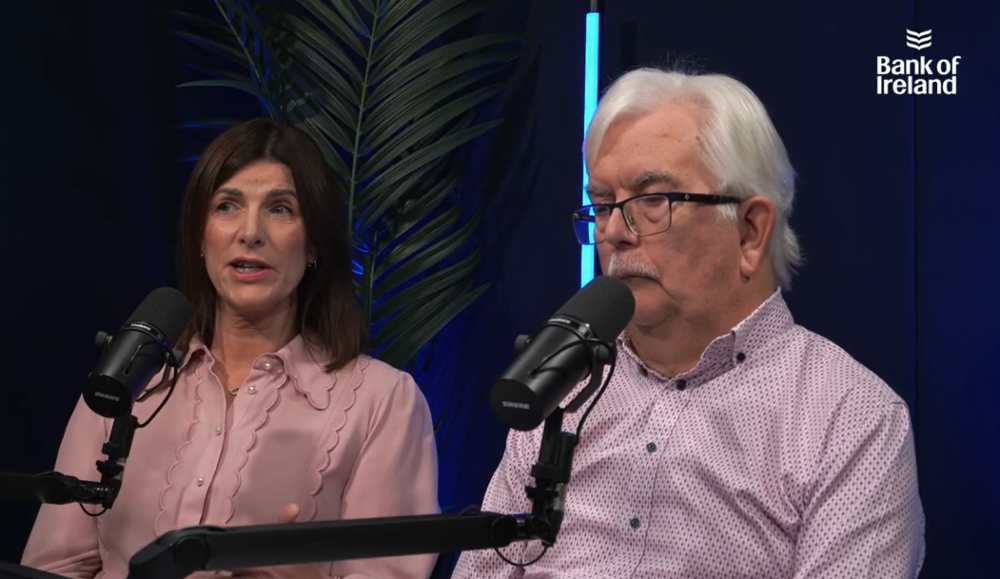
Top image: Mary O’Dea, CEO of IOB, Emer Kirk, CEO of Financial Planning Standards Board Ireland and Joanne Keane, CEO of LIA
-
Bank of Ireland is welcoming new customers every day – funding investments, working capital and expansions across multiple sectors. To learn more, click here
-
For support in challenging times, click here
-
Listen to the ThinkBusiness Podcast for business insights and inspiration. All episodes are here. You can also listen to the Podcast on:
-
Spotify
-
SoundCloud
-
Apple