

As anxiety rises over AI-driven threats grow, new Landmark Technologies survey finds widespread fear that Ireland is unprepared for escalating cybersecurity risks.
Irish employees are increasingly convinced that the country is heading towards a significant cybersecurity crisis in 2026, according to new research from Landmark Technologies.
The survey, conducted by Censuswide in January and released on Friday, shows that more than half of workers believe a major incident is likely this year.
The findings depict a workforce that feels exposed as cyber threats evolve with speed and sophistication.
A majority of respondents say Ireland is not as well equipped as other European nations to defend itself, and many report personal encounters with cyberattacks in the workplace.
Catastrophic cybersecurity event is not a question of if, but when
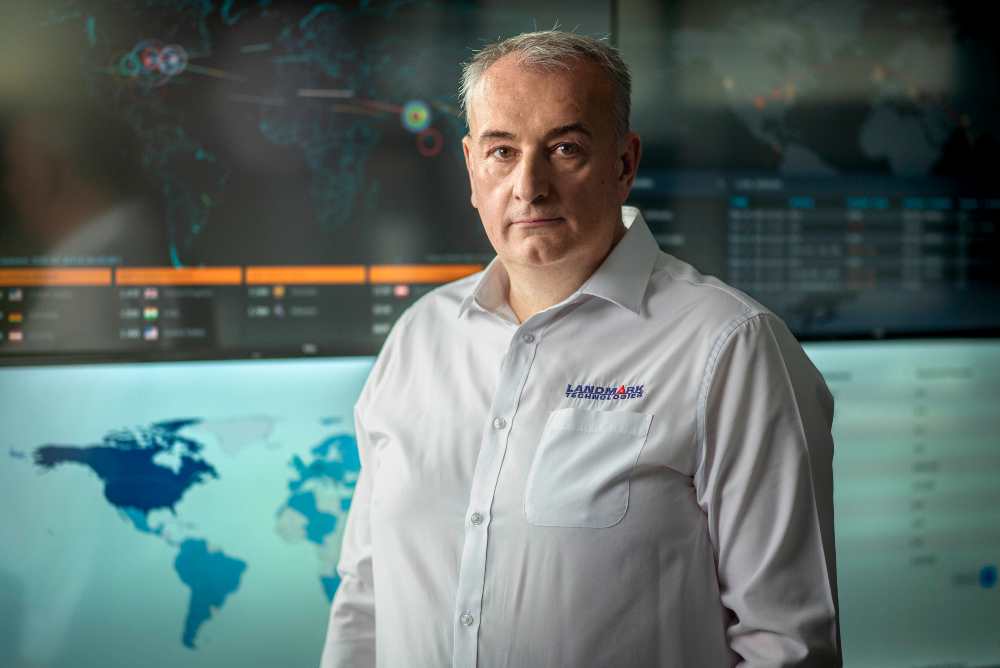
Landmark’s managing director, Ken Kelleher (pictured above), said the results should prompt urgent action across both business and government.
“Irish workers are clearly fearful that a major cyber incident is not a question of if, but when. The fact that more than half expect a catastrophic event this year should be a wakeup call for all businesses and relevant stakeholders,” he said.
Kelleher added that the research shows a need for more open internal communication and stronger defences as technologies such as artificial intelligence become embedded in both legitimate operations and criminal activity.
The report highlights AI driven threats as the source of the most acute concern. Nearly nine in ten employees say they are worried about AI powered phishing attempts that are becoming more difficult to detect.
A similar proportion believe cybercriminals will use the technology to steal company data. Workers also expressed high levels of anxiety about ransomware attacks and deepfake scams that could target organisations.
Cybersecurity incidents appear to have become commonplace across Irish workplaces. Four in five survey participants say they personally experienced at least one cyber incident in the past year, and a significant minority report encountering multiple attacks. Looking ahead, half expect their organisation to suffer a data breach in the coming 12 months.
Human behaviour remains a persistent vulnerability. Sixty one per cent of respondents believe that staff continue to pose the greatest security risk. Some admitted to clicking on malicious links without reporting the mistake, while others said their organisation had lost confidential data. More than one in ten employees reported that a senior leader had fallen victim to a phishing or cyber scam last year, and a similar share said a departing colleague had taken sensitive information with them.
Kelleher said organisations need to match rising threat levels with improved readiness.
“As we look ahead, it is crucial that businesses strengthen their defences, improve employee awareness and receive the highest levels of support so that they are better equipped to deal with increasingly sophisticated cyber threats,” he said.
The survey, which captured the views of 1,000 employees across the Republic of Ireland, reflects mounting concern over the country’s resilience at a time of rapid technological change and heightened global cyber activity.
-
Bank of Ireland is welcoming new customers every day – funding investments, working capital and expansions across multiple sectors. To learn more, click here
-
For support in challenging times, click here
-
Listen to the ThinkBusiness Podcast for business insights and inspiration. All episodes are here. You can also listen to the Podcast on:
-
Spotify
-
SoundCloud
-
Apple