Podcast Ep 344: We talk to Google’s Karen Stolberg as Google and Bank of Ireland offer 10,000 AI professional upskilling courses at no cost to Irish SMEs while AI adoption gap widens.
A new upskilling partnership between Bank of Ireland and Google gives small businesses across Ireland no-cost access to Google’s AI Professional Certificate. Karen Stolberg, Vice President of Google Customer Solutions for the UK and Ireland, explains what is at stake and where most businesses are going wrong.
Artificial intelligence(AI) is generating €45 billion in potential GDP gains for Ireland over the next decade, according to research commissioned by Google.
“Only 6% of Irish SMEs say AI is central to their operation today. That is expected to jump to 15% within three years”
That figure represents an 8% lift in national output, driven largely by productivity improvements across an estimated two thirds of the Irish workforce. The question facing Irish businesses right now is not whether AI matters. It is whether they are moving fast enough to capture any of that opportunity.
👉 Ready to reclaim an extra day a week? Secure your scholarship to complete the certification at no cost. Apply now and get started!
The answer, for most, is that they are not. New research from Google and Amarách found that while 80% of Irish SME owners believe AI is a positive development for their business, only 37% say they are using it regularly or widely in their operations. More than half already feel they are falling behind their competitors.
That gap is the backdrop to a new partnership between Google and Bank of Ireland that makes up to 10,000 licences for the Google AI Professional Certificate available to Irish SMEs at no cost.
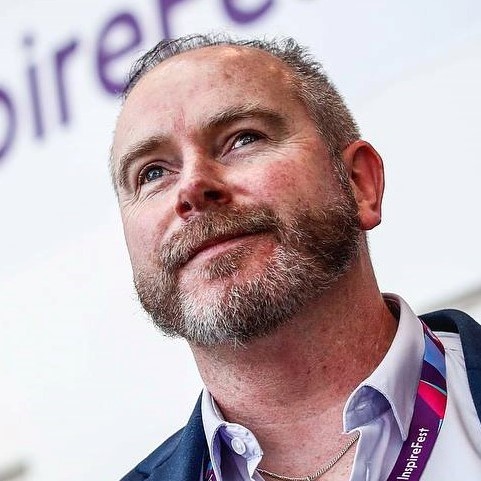
To mark the launch, Karen Stolberg, Vice President of Google Customer Solutions for the UK and Ireland, joined The ThinkBusiness Podcast to discuss the state of AI adoption in Ireland, why the technology is proving harder to adopt than expected, and what it looks like in practice when small teams start putting it to use.
Upskilling the SME nation
Stolberg is clear that the opportunity is real, but she is equally clear that it will not arrive automatically. “We are still in the early days of the AI journey, and it is not going to change every shop or every office overnight,” she says. “But the long-term gains are there to be had, and those gains will ultimately be shaped by the individual choices that businesses and Irish SME owners make today.”
The research points to a familiar set of barriers. Skills gaps, cost concerns, and the fear of making a mistake collectively account for most of the hesitation. Stolberg is careful not to dismiss that hesitation.
“Oftentimes it is not nervousness around the tech itself, it is the nervousness of making a mistake or feeling that you don’t have the right skills. That is an incredibly human response to a time of change.”
What she finds more alarming is the competitive pressure building underneath. Ireland is currently on a par with the EU average for AI adoption, but it lags behind the Northern European front runners, particularly Denmark, Finland, and Belgium.
The strategic risk is not that Ireland falls behind the United States or the large Asian economies on AI development. It is that Irish SMEs fall behind their nearest peers on adoption.
“Only 6% of Irish SMEs say AI is central to their operation today. That is expected to jump to 15% within three years.”
How AI is helping Irish SMEs
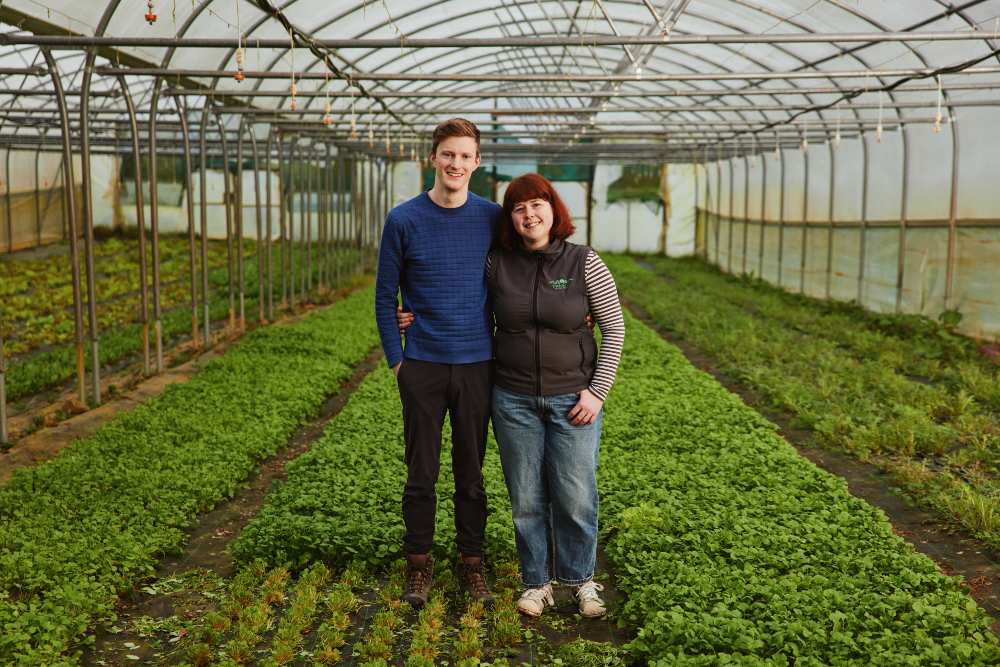
The examples Stolberg draws on are grounded and specific, which is part of what makes them useful. McNally Family Farm in North Dublin has been using AI tools to work through years of operational records, supply chain variables, and weather data that previously sat unused. The farm is not employing a data analyst or a software firm. It is using tools like Gemini to ask plain English questions of its own historical data and get answers it can act on.
OpenHive, the Irish conservation organisation working to protect the native black honey bee, faced a different kind of problem. Volunteer beekeepers were writing handwritten field notes across hundreds of colonies, notes that were difficult to produce in protective gloves and nearly impossible to digitise at scale. The organisation began using Gemini to photograph those notes and convert them into structured, searchable records. “The beekeepers still know the bees,” Stolberg says. “The conservationists are still the ones making the decisions. The AI simply removed the administrative burden that sat between the people and the work they actually cared about.”
For businesses in the creative and retail space, the impact has been different again. Brands including BKultured and IPERA Skincare are using Gemini for prototyping and market research, work they would previously have outsourced to agencies.
Lahinch Surf Shop, a family-run business, is using it to manage website copy across thousands of inventory items and to align stock decisions with weather forecasts. “They used to do that all on Post-it notes,” Stolberg notes.
Starting small, with one hour
The Google AI Professional Certificate is a seven-part programme built on Google’s existing AI Essentials course. It is designed to take learners from a basic understanding to a working AI-first approach, and it includes 90 days of free access to Google AI Pro. The partnership with Bank of Ireland makes the scholarship available through the Think Business SME AI Academy Hub.
Stolberg’s advice for business owners who feel overwhelmed by the pace of change is straightforward. “I have been in tech and at Google for twenty years and I am still learning every single day,” she says. “You certainly don’t need to become an AI expert to benefit from it. Start by committing just one or two hours a week to hands-on learning. Allow yourself the space to get more familiar, learn one new thing, and let the curiosity build from there.”
The broader ambition is cultural as much as technical. Stolberg points to an internal shift she observes in businesses that have moved beyond initial experimentation.
Employees who begin by automating routine tasks gradually stop thinking of AI as a separate tool and start using it to redesign processes. “They are essentially creating a new way of working without ever having to write a single line of code,” she says.
“That is what makes AI different from previous technology waves. It puts the ability to improve processes directly into the hands of the people who make up the business.”
👉 Got two minutes over a coffee today? That’s all it takes to secure your scholarship to complete the certification at no cost. Apply now and get started!
-
Bank of Ireland is welcoming new customers every day – funding investments, working capital and expansions across multiple sectors. To learn more, click here
-
For support in challenging times, click here
-
Listen to the ThinkBusiness Podcast for business insights and inspiration. All episodes are here. You can also listen to the Podcast on:
-
Spotify
-
SoundCloud
-
Apple