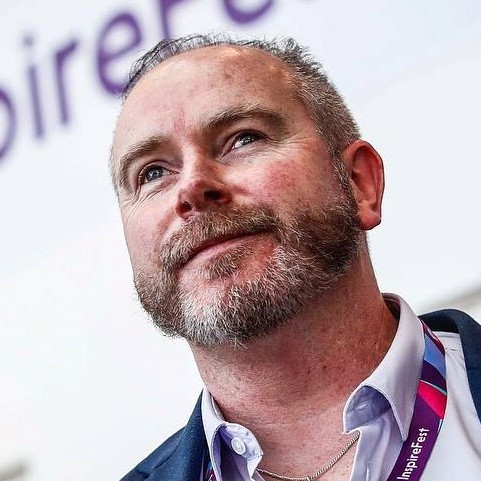
Podcast Ep 376: Ride-hailing app giant Freenow’s Irish general manager Danny O’Gorman says the purchase of dispatch operators Lynk and Swift targets the third of taxi bookings still made by phone. He says autonomous vehicles, while only in their infancy, could yet fill a useful gap in the Irish market.
Irish taxi passengers book in roughly equal shares by app, by phone and at the rank or kerb, according to Danny O’Gorman, general manager of Freenow in Ireland and the UK. That split, he said, is why an app-based company has bought two phone dispatch operators.
“If you were probably interviewing one of my contemporaries doing this job 10 years ago and asking them would they buy a phone dispatch business… they probably looked at you funny,” O’Gorman told the ThinkBusiness Podcast. “But the kind of makeup of how people request taxis has not changed in Ireland in 10 years.”
“There’s lots of drivers that won’t drive for love nor money in the nighttime hours, and that’s becoming more and more of an issue”
Freenow, originally known in Ireland as Hailo, was acquired over a year ago by global giant Lyft.
In July of this year Freenow acquired Limerick-based taxi and B2B dispatch service Swift as well as Dublin-based Lynk, bringing it into the phone-based taxi dispatch world, though not for the first time.
KEY NUMBERS: Ireland’s taxi market
• 1 in 3 taxi bookings still made by phone
• 36 staff added to Freenow through the Lynk and Swift deals
• 96% of the week has sufficient taxi supply
• 90%+ booking success rate for Freenow
• 2027 target for autonomous commercial services in London
• 12+ autonomous vehicles being tested with Baidu Apollo Go
• ~60 autonomous cars operating across London trials
Editorial takeaway: Phone bookings remain significant while autonomous vehicles are still tiny in scale, leaving Freenow focused on combining traditional dispatch with app-based supply.
Phones, apps and autonomous vehicles
-
Listen to the ThinkBusiness Podcast for business insights and inspiration. All episodes are here. You can also listen to the Podcast on:
-
Spotify
-
SoundCloud
-
Apple
The reason for doing so appears to be about capturing a side of the Irish taxi market that was showing no sign of changing any time soon – the part of the market where people still ring in.
O’Gorman said rank and street hails were difficult to compete for, although passengers who flag down a cab can pay through the Freenow app.
“A lot of people love the kind of familiarity of talking to someone, ideally local or ideally that knows them,” he said, adding that this was “not just a rural thing”. Freenow bought a company in Waterford two or three years ago, but O’Gorman described the Lynk and Swift deals as “our first kind of meaningful entry into this area”.
Both businesses keep their staff and their phone operations. The first operational change, which O’Gorman says has gone live, is overflow: when Lynk has no driver available, the booking will pass to a Freenow driver.
👉 No tech background needed to bring your business into the AI age! Secure your Google AI Professional Certificate to complete the certification at no cost. Apply now and get started!
“It’s not taking the work away from Lynk drivers,” he said. “It’s just that that work is not able to be fulfilled at that moment in time. A Freenow driver will pick it up.”
Overflow jobs will include the dispatch firms’ corporate work, which he said involved “a lot of B2B contracts, HSE contracts” with “longer distance, higher fare trips”. The deals also bring 36 staff, a second Dublin office and an office in Limerick.
Catching a Lyft
The acquisitions come almost a year and a half after global taxi giant Lyft bought Freenow. In the coming weeks, US Lyft users landing at Dublin or Shannon airports will be able to book through the Lyft app, with trips fulfilled by Freenow drivers. Until now those travellers have been prompted to download Freenow with a discount.
“That’s obviously not a great user experience for those US people,” O’Gorman said. “They’ve landed. They have an app now. Suddenly, they have to download another app.”
Irish users should not expect the reverse arrangement in the US to happen immediately. “Direction of travel is to all unite under one brand, which is Lyft,” O’Gorman said, expecting this next year. A separate link for Freenow users in the US would be “in essence, wasted work when we move to the Lyft brand in the future”.
Night shifts and driverless cars
O’Gorman said changes to the SPSV licence test about a year ago had cut preparation from weeks of study to days, and that National Transport Authority figures show steady growth in driver numbers since the pandemic. The constraints, he said, are night work and rural areas.
“There’s lots of drivers that won’t drive for love nor money in the nighttime hours, and that’s becoming more and more of an issue,” he said. Freenow has called for national data on attacks on drivers and for staggered late-night closing times. He said there were enough taxis for 96% of the week, and that Freenow’s booking success rate was “well into the 90s”.
In rural areas, he said, the work does not support a full-time income, and a local area hackney scheme from the NTA “hasn’t really got off the ground”. Further regulatory changes would not shift supply, he said. “They’ll just gravitate towards cities.”
In London, Freenow is testing more than a dozen autonomous vehicles with Baidu’s Apollo Go in the borough of Brent, with drivers behind the wheel, and is looking to run commercial services in 2027. O’Gorman put the number of autonomous cars across operators in the city at about 60, against 112,000 licensed taxis and private hire vehicles. “We’re very much at the inception of this,” he said.
He favours a hybrid network in which drivers complete the vast majority of trips and autonomous vehicles cover routes drivers avoid, such as late-night shifts, rural areas, outer suburb to outer suburb journeys and short fares of around €8 at peak times.
Of a driver offered that short fare five minutes away at a busy time, he said: “It doesn’t make economic sense for them to do it.”
“Autonomous vehicles (Avs) can fill the gap there,” he said.
Listen to the ThinkBusiness Podcast on Apple, Spotify and SoundCloud or wherever you get your podcasts.
Freenow Ireland taxi FAQs
1. Why did Freenow acquire Lynk and Swift?
Around one-third of Irish taxi bookings are still made by phone. The acquisitions give Freenow a stronger presence in this established part of the market.
2. How do Irish passengers book taxis?
According to Danny O’Gorman, Irish taxi bookings are split roughly equally between apps, phone bookings, and taxi ranks or street hails.
3. What changes will Lynk and Swift customers see?
Both businesses retain their staff and phone operations. When Lynk has no driver available, overflow bookings can pass to a Freenow driver.
4. Is Freenow becoming Lyft?
Danny O’Gorman said the “direction of travel” is to unite under the Lyft brand, which he expects next year.
5. Could autonomous vehicles help Ireland’s taxi shortages?
Danny O’Gorman believes autonomous vehicles could cover trips drivers may avoid, including late-night, rural and short peak-time journeys.
👉 No tech background needed to bring your business into the AI age! Secure your Google AI Professional Certificate to complete the certification at no cost. Apply now and get started!
-
Bank of Ireland is welcoming new customers every day – funding investments, working capital and expansions across multiple sectors. To learn more, click here
-
For support in challenging times, click here
-
Listen to the ThinkBusiness Podcast for business insights and inspiration. All episodes are here. You can also listen to the Podcast on:
-
Spotify
-
SoundCloud
-
Apple