
Drivalia research reveals rising fuel bills, insurance challenges and administrative burdens are shaping fleet strategies as firms prepare winter budgets
Fuel costs are influencing company vehicle decisions for nine in 10 Irish businesses as organisations contend with continued uncertainty around pump prices and fuel taxation heading into the final months of the year.
The findings come from Drivalia‘s inaugural Ireland Fleet & Mobility Index, a new research programme designed to track how Irish businesses manage, fund and operate their company cars and commercial vehicles.
“If Ireland is to accelerate EV adoption, business fleets need to be central to that conversation”
Research carried out by iReach among 200 Irish organisations operating company cars and vans found that 91% of businesses say fuel costs are affecting vehicle decisions, with almost half (47%) reporting a significant impact.
More than half of respondents (52%) said rising fuel costs and efficiency pressures are among their biggest fleet-management challenges, while 40% highlighted the ongoing challenge of controlling vehicle-related expenditure.
The survey arrives at a crucial time for businesses. According to AA Ireland’s September fuel analysis, petrol prices stand at an average of €1.87 per litre, while diesel has reached €1.94 per litre following increases during August.
KEY NUMBERS: Irish Fleet & Mobility Index
• 47% say fuel costs significantly impact vehicle decisions
• 52% cite fuel costs and efficiency pressures as key challenge
• 83% lose time from core business managing vehicles
• 29% spend more than 20 hours monthly on fleet administration
• 79% report issues with insurance providers
• 20% cite slow or complex insurance claims processes
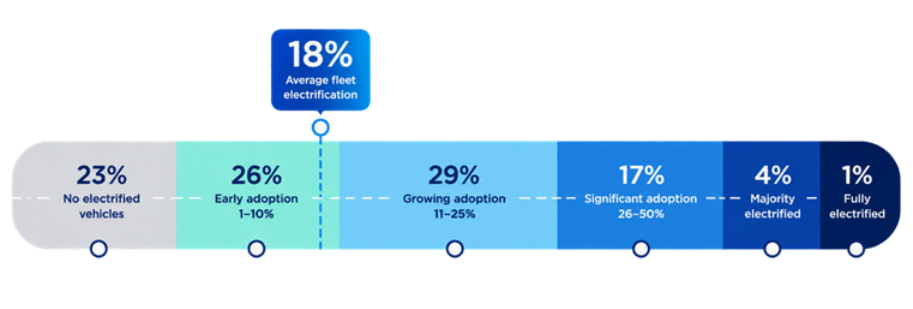
• Average fleet electrification rate: 18%
• 36% identify charging infrastructure as main EV barrier
Editorial takeaway: Irish businesses are under growing fleet-management pressure, with fuel costs, administration burdens and insurance challenges shaping decision-making while EV adoption remains constrained by infrastructure and affordability concerns.
Balancing the books
Businesses are also monitoring potential changes to fuel taxation ahead of Budget 2027 on 6 October. Under the current Government timetable, previously deferred excise increases are scheduled to begin returning from 1 November, with further stages planned through February.
However, fuel costs are only one aspect of the challenge facing fleet operators.
The research found that 85% of businesses believe they manage their vehicles efficiently, but 83% said fleet administration takes at least two hours every month away from core business activities. Almost three in 10 organisations (29%) reported spending more than 20 hours each month managing company vehicles.
Insurance was another major concern identified in the study. Four out of five businesses (79%) said they had experienced at least one issue with an insurance provider. High premiums and unexpected costs were the most commonly cited complaints, while 20% reported difficulties dealing with lengthy or complex claims processes.
The findings suggest that businesses are balancing a mix of rising operating costs, regulatory uncertainty and administrative demands while keeping vehicles on the road.
Electrification remains a work in progress for many firms. The survey found that, on average, just 18% of company fleets are electrified, while nearly a quarter of businesses (23%) have yet to introduce any electrified vehicles.
Among the main barriers to EV adoption, 36% cited a lack of charging infrastructure, 34% pointed to the upfront cost of electric vehicles, and 25% said limited in-house expertise was holding back progress.
Businesses also outlined measures that could accelerate EV uptake. More than a third (35%) said support for installing workplace or depot charging facilities would be effective, while 31% favoured direct grants or financial incentives. A similar proportion (31.5%) called for greater investment in Ireland’s public charging network.
Commenting on the findings, Drivalia Ireland managing director Olivier Mantoulan said: “Fuel prices have brought the cost of keeping vehicles on the road sharply into focus for Irish businesses, but the Index shows that cost is only part of a wider challenge. Company cars and commercial vehicles are essential working assets, and businesses are also managing insurance, administration, downtime and the practical realities of electrification.”
He added: “If Ireland is to accelerate EV adoption, business fleets need to be central to that conversation. One fleet decision can affect five, 20 or 100 vehicles, so the potential impact is significant. The transition needs to work operationally as well as environmentally, with the right charging infrastructure, predictable costs and flexible funding options in place.”
👉 No tech background needed to bring your business into the AI age! Secure your Google AI Professional Certificate to complete the certification at no cost. Apply now and get started!
-
Bank of Ireland is welcoming new customers every day – funding investments, working capital and expansions across multiple sectors. To learn more, click here
-
For support in challenging times, click here
-
Listen to the ThinkBusiness Podcast for business insights and inspiration. All episodes are here. You can also listen to the Podcast on:
-
Spotify
-
SoundCloud
-
Apple