
Digital Hub sets out path to new ownership as Dublin housing plans advance. Strategic blueprint envisages transition to Dublin City Council while safeguarding enterprise cluster
The Digital Hub Development Agency has published a new three‑year strategic plan that maps out the future of its enterprise campus in Dublin’s Liberties and outlines how the organisation could transition to a standalone entity under Dublin City Council once the state agency is dissolved.
The plan (released on Wednesday 28 January) comes as the Land Development Agency progresses a major housing project on parts of the Thomas Street campus.
“It is important that this activity protects existing infrastructure, facilities and enterprises such as The Digital Hub and its member businesses and organisations”
The Irish Government decided in 2021 that the DHDA would be wound down and its lands repurposed for residential development.
Supporting businesses and communities
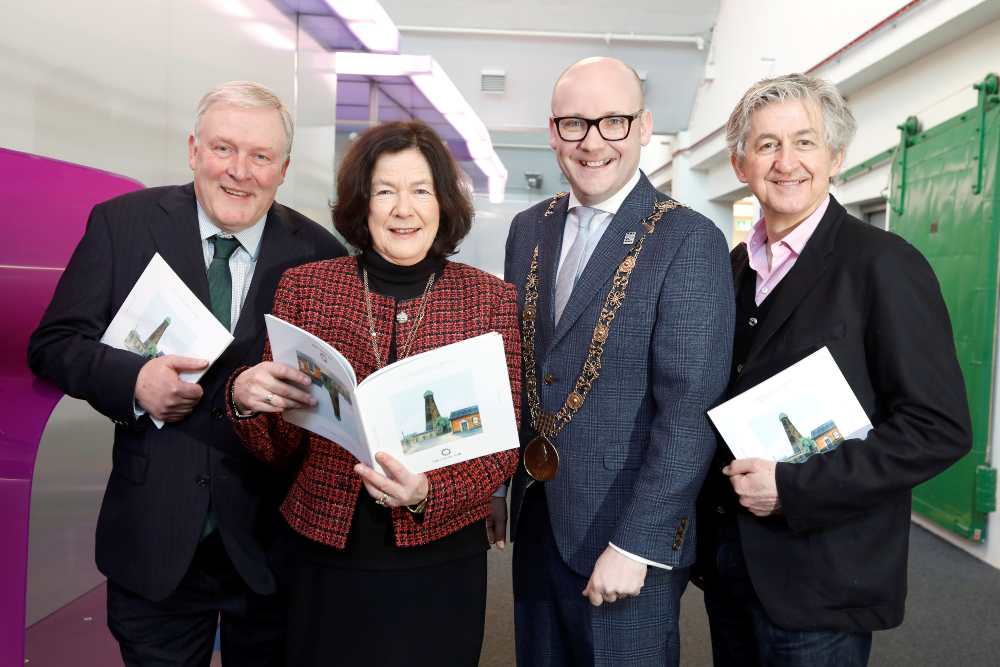
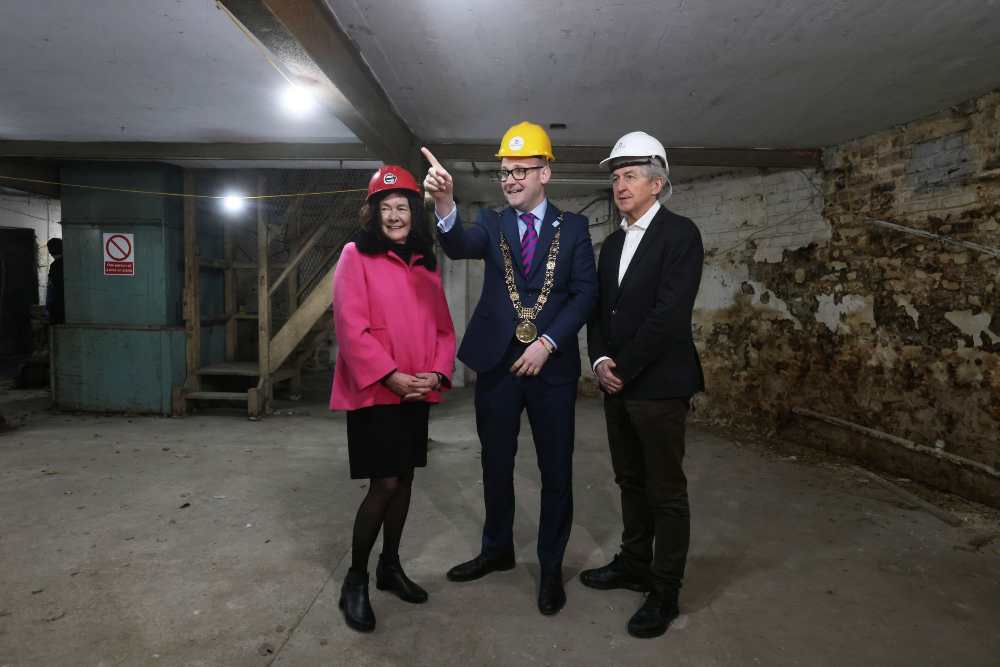
Pictured (from left): Richard Shakespeare, Chief Executive Officer, Dublin City Council; Darina Kneafsey, Chair of the Digital Hub Development Agency; The Lord Mayor of Dublin Cllr Ray McAdam; and Fiach Mac Conghail, Chief Executive Officer, the Digital Hub
Launching the strategy, the Lord Mayor of Dublin Ray McAdam said the Digital Hub’s role in supporting small businesses and community groups had become more important as the campus reached near full occupancy.
“The Digital Hub is home to many successful businesses, social enterprises and cultural groups, operating in wonderfully restored buildings and adding immensely to the vibrancy of what is an historic part of the city,” he said. McAdam added that it “makes sense to maintain the presence and operation of the buildings currently occupied by The Digital Hub’s members”.
Under the Land Development Agency’s Pear Tree Crossing masterplan, about 550 homes are proposed for vacant or derelict plots on the site, alongside commercial spaces, cultural venues and community facilities.
Several historic buildings on Thomas Street are expected to be refurbished and reused. A legal transfer of the relevant properties from DHDA to the LDA is now under way.
The agency has indicated that most of the buildings currently used by Digital Hub members should remain in operation.
The campus hosts 59 companies and organisations employing more than 600 people, including technology start‑ups, social enterprises, artists and established creative groups. The buildings are also widely used for theatre rehearsals, performances and community events.
Darina Kneafsey, chair of the DHDA, described the plan as “a transitional one” designed to steer the organisation through its shift from a state agency to a new structure within Dublin City Council. “This is an exciting and dynamic time for the DHDA and The Digital Hub as we explore new opportunities for our campus and business in the heart of Dublin’s Liberties,” she said.
Fiach Mac Conghail, chief executive of The Digital Hub, said the proposed transition would allow the enterprise cluster and community programmes to continue to develop beyond the dissolution of the DHDA.
“It would position us to continue to support the development of The Digital Hub campus and wider community in partnership with Dublin City Council and the Land Development Agency,” he said.
Richard Shakespeare, chief executive of Dublin City Council, said the council had entered “a new phase of collaboration” with the Digital Hub as discussions continue with government departments and the LDA.
He said the agency’s expertise could “promote and drive further regeneration in Dublin 8 and perhaps in other parts of the city”.
Shakespeare added that regeneration and new housing had to recognise existing assets. “It is important that this activity protects existing infrastructure, facilities and enterprises such as The Digital Hub and its member businesses and organisations,” he said.
The Digital Hub currently offers more than 51,000 sq ft of workspace, with a further 7,500 sq ft used for events, classes and rehearsals. Member organisations range from tech companies such as Akara, Bizimply and Neuromod to arts groups including Pallas Projects, the Dublin International Film Festival and The Stinging Fly. Social enterprises such as Bee8 and Change Clothes also operate on the campus, alongside public sector bodies including Codema and the City of Dublin Education and Training Board.
The strategic plan proposes that this mix should be preserved as part of a future integrated community in Dublin 8, balancing new housing with sustained employment and cultural activity.
-
Bank of Ireland is welcoming new customers every day – funding investments, working capital and expansions across multiple sectors. To learn more, click here
-
For support in challenging times, click here
-
Listen to the ThinkBusiness Podcast for business insights and inspiration. All episodes are here. You can also listen to the Podcast on:
-
Spotify
-
SoundCloud
-
Apple