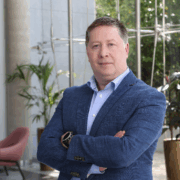
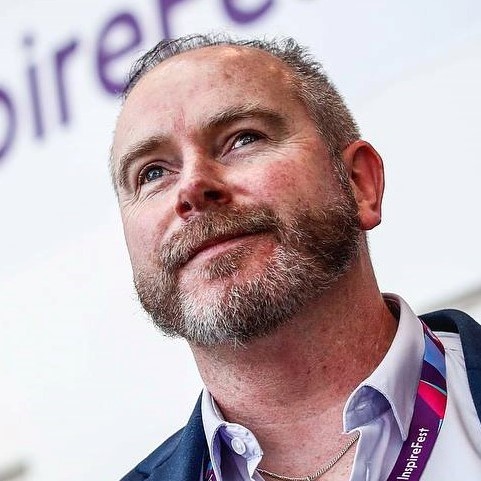
Podcast Ep 298: Tomas Sercovich, CEO of Business in the Community in Ireland, reflects on the organisation’s transformative achievements over the past 25 years and its vision for the future.
In recent months Business in the Community Ireland (BITCI) marked its 25th anniversary. Since its founding in 2000, BITCI has helped move sustainability and diversity from the margins of business operations to the mainstream. Today, environmental, social and governance (ESG) practices are widely measured, reported and expected.
BITCI works with more than 350 of Ireland’s largest companies, supporting their efforts to build a low-carbon, nature-positive and inclusive society.#
“We talk about leadership voids in political systems and civil society – well, business has an amazing opportunity. More and more businesses will be valued for their advocacy, their voice, where they stand in terms of forums, rather than staying quiet”
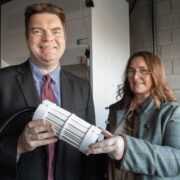
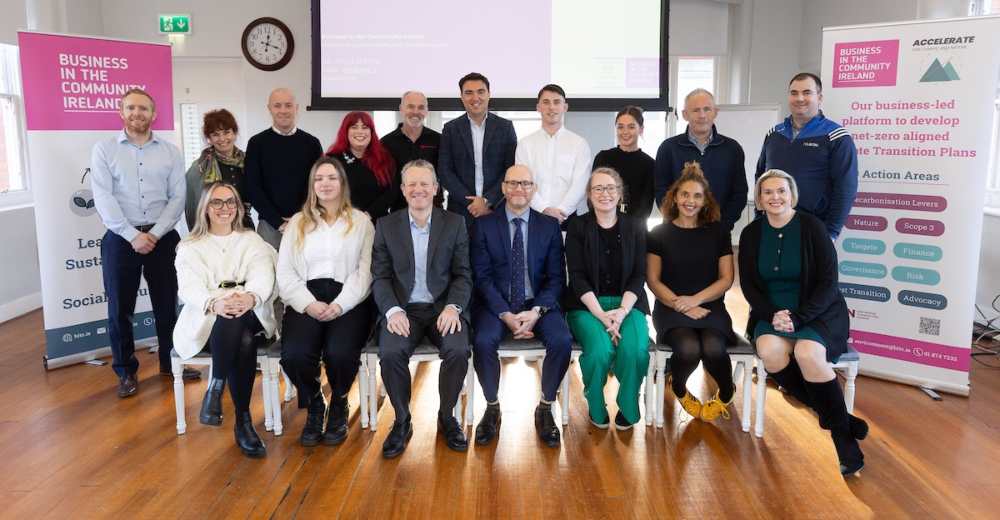
A recent example of the kind of work it does can be seen in the graduation of 40 SME businesses from BITCI’s All-Ireland Climate Action Programme. Delivered with support of major corporates including Bank of Ireland Group, ESB and SSE Airtricity, the programme provided accredited carbon literacy training and help SMEs develop tailored climate action plans. It also encourages collaboration between large companies and their suppliers to cut emissions across value chains.
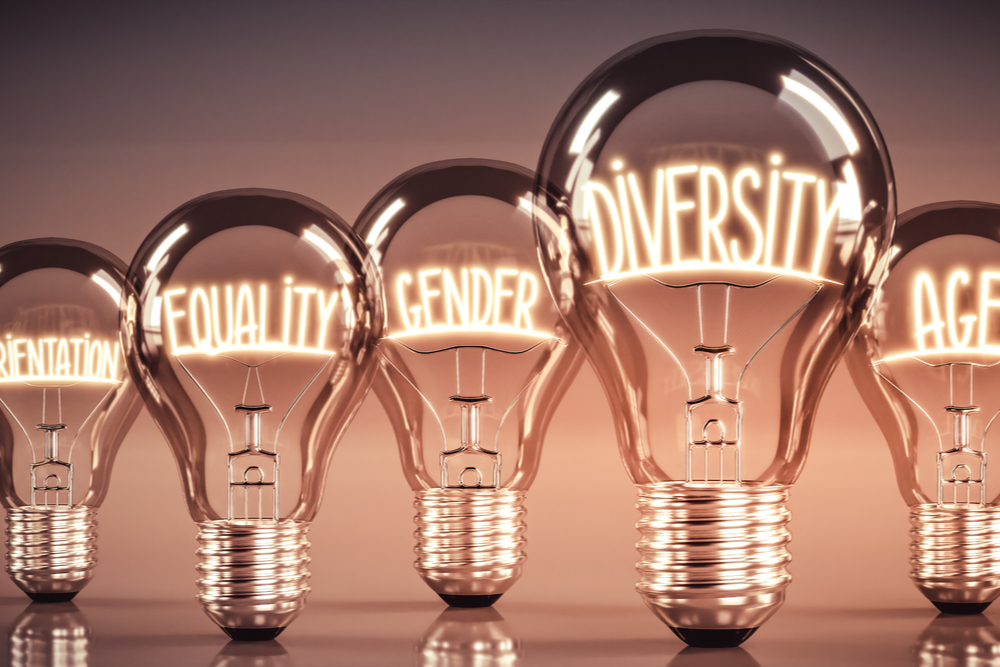
BITCI is also focused on diversity and its Elevate initiative has seen more than 60 large companies with a combined workforce exceeding 160,000 employees in Ireland sign up for a Pledge to hold firm on diversity, equity and inclusion (DE&I).
In short, BITCI has been a driving force in Ireland’s sustainability and diversity story, encouraging firms large and small to make actionable progress.
Driving change
-
You can also listen to the Podcast on:
-
Spotify
-
SoundCloud
-
Apple
I ask Sercovich what in his view has been Business in the Community Ireland’s most transformative achievement in the past 25 years.
“If there was one particular moment I would highlight, it was probably between 2017 and 2019. That’s when I really felt that companies understood sustainability had moved from a fringe conversation to centre stage – into the boardroom and the C-suite. It was no longer seen as something ‘fluffy’ or ‘nice to have’ but had become a ‘must have’ – fully measurable and articulated.
“Companies were being asked about it in investor roadshows, by customers and clients in tenders and procurement processes, and by young people entering the workforce asking: ‘How do you match your actions with your values? Because it doesn’t look like it does.’
“That was the moment I felt we had cracked it. Obviously, that journey came with ups and downs. We had an economic crisis in the middle of our journey that really showed who was fully embedded in sustainability – those who maintained their commitment versus those who used it as an excuse to say they couldn’t afford it due to the economic downturn.
“What I’m really proud of is how Business in the Community stood firm on that journey, supported companies, and also informed the policy landscape on evolving the regulatory framework. Today it’s mandatory – we have to see how far regulation goes, but what I really like is that even reflecting on this challenging year, with diversity and inclusion pushback, green business challenges, and geopolitical issues, it doesn’t seem to have had a significant impact. The conversation we’re having is about how to do sustainability, not whether to do it.”
Positive peer pressure
What is outside of BITCI’s control, however, is political change and no doubt the new White House administration’s attitudes towards diversity and inclusion and climate action have resulted in a corporate pushback on ESG initiatives.
I ask Sercovich how he sees this playing out. “There are several layers here. Many companies we engage with understand this is essential and critical. I can give examples of companies asking us how to better articulate who they are in tenders, knowing that having third-party audited management systems gives them extra points. They understand what they need – the question is how to get there.
“Companies tell us they’re being asked within their workplaces about where they really stand on diversity – employees won’t tolerate ambiguity on these issues. These companies have been struggling with articulation, validation, and creating convincing narratives. We need to marry facts and figures – all that regulatory data – with storytelling. Companies need to tell compelling stories about how they’re transforming their business for the next 5, 10, or 20 years.
“Companies are being accused of greenwashing on one hand or being ‘woke’ on the other. I remember talking to an international financial services company whose British clients accused them of being too soft on sustainability while US Midwest clients called them too woke and dropped them. If you think of that global landscape, it is difficult.
“Some companies are using current challenges as a chance to get off the hook, saying sustainability is expensive, and their effort goes only into compliance – filling forms with data like any other regulatory requirement. That’s a shame because they’re missing opportunities.
“Smaller companies face particular challenges – they don’t have teams of five to 10 people dedicated exclusively to sustainability across procurement, finance, HR, and community engagement. They need special support and guidance.
“What will really mark the frontrunners and leaders is companies that use their influential voice for advocacy and leadership to keep driving this agenda. We need those loud voices saying sustainability is critical and we don’t leave it behind because of geopolitical issues.”
In essence, by encouraging businesses to sign up to sustainability initiatives such as the Low Carbon Pledge, it creates positive peer pressure where competitors feel compelled to participate to avoid being left behind.
“A key element of all these initiatives is collective action,” Sercovich explains. “When we realise the challenge ahead is monumental, the only way to make change work is if we’re aligned and united. With the Low Carbon Pledge, after a few companies signed up and others were hesitant, we saw peer pressure work really well – companies saying, ‘If my competitor is there, how am I not there?”
“For small and medium enterprises, nobody has 100% deciphered the best engagement model. That’s why we bring together companies from different sectors with different suppliers into decarbonization journeys. The same applies to climate transition planning, which is at the core of our Accelerate Pact.
“Ireland has all the tools to be a leader in this space. With Accelerate, we want to create a centre of excellence for climate transition planning, showcasing how you can have transition plans that are second to none.
“In the social space, our Elevate campaign focuses on workplace inclusion – dimensions that are quite hard to tackle, like measuring and building trust with employees, enabling good decision-making through data, and reviewing recruitment and retention so nobody gets left behind. Companies feel they need extra help, and that comes from talking to peers in safe spaces about their challenges, not just their accolades.”
A fair and just transition
Sercovich said Business in the Community in Ireland came in the wake of the Peace Process in the late 1990s. “Ireland was in an optimistic growth phase, and there were conversations about the role of business, government, trade unions, and civil society in tackling major challenges.
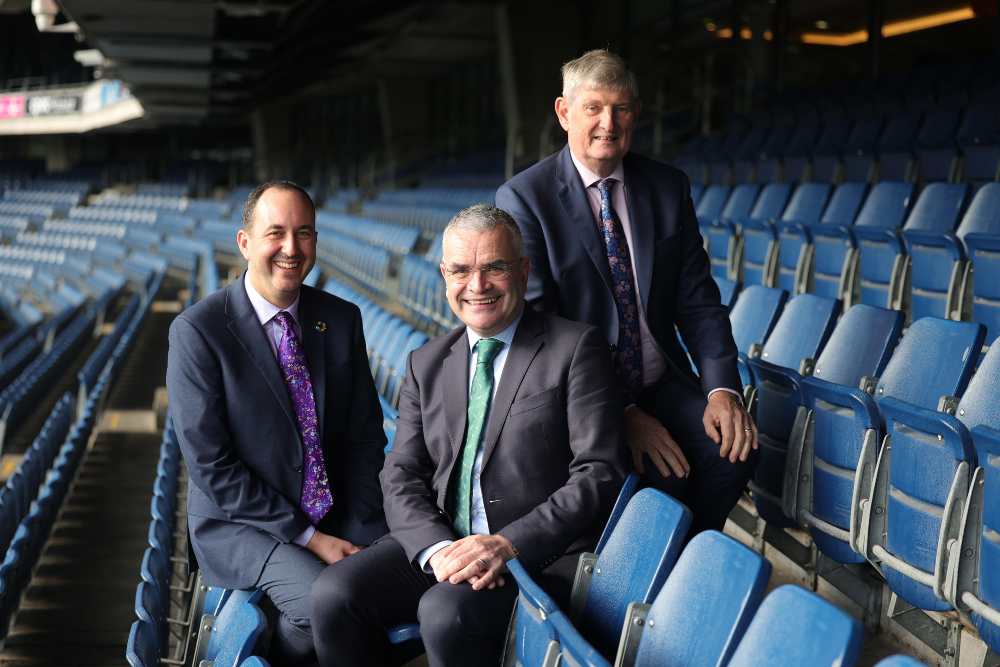
“A group of enlightened business leaders – our founders – came together. Twenty companies initially, of which 11 are still with us today. They wanted a space for conversation about business’s social and community agenda, creating a platform for best practice, research, and advocacy.
“We were inspired by movements in Britain and Northern Ireland that asked: What role can business play in favouring education and inclusion, tackling societal divides, and providing workplace opportunities for everyone to grow and be treated equally?
“We had a fabulous combination of multinationals and growing Irish indigenous companies with a culture of continuous improvement and systematic approaches – like health and safety, which was still developing at the time. This mindset helped us articulate that this wasn’t just conversation; it had to be embedded in management systems.
“A few years later, Ireland hosted the Special Olympics World Games, with every town hosting different delegations and phenomenal volunteering. Afterward, businesses said their staff motivation and engagement had gone through the roof, asking us to help them maintain that momentum.”
I asked Sercovich what his vision was for the organisation and its work in the decade ahead.
“The next big frontier is the notion of a fair and just transition – and this is much more than just ensuring peat farmers don’t lose jobs when plants close. The just transition will affect us all: digital skills, access to learning, demographics of an aging population, disruptive technologies like AI impacting our workplaces and how we learn.
“Even here in Ireland, there are parts of the country that are becoming uninsurable. Businesses have to consider whether they’ll locate operations in areas where they may not have access to water or transportation during severe weather events.
“This just transition means addressing nature and climate considerations – sustaining the pressure and energy to ensure we don’t derail from the net zero agenda – while considering who’s most affected. Who can afford house retrofitting and electric vehicles? Who’s struggling most with bills this winter?
“Our role will continue with research, best practice, knowledge sharing, and peer learning, but we’ll need more practical demonstration through partnerships. We need more businesses engaged in employing people from asylum seeker and refugee communities, because if we’re worried about social cohesion and anti-migrant sentiment, business has a critical role as agents of stabilisation and harmony within our communities.”
A better Ireland
Ireland has been rocked by xenophobic rhetoric and violence in the past few years. At the same time most people would agree that the country needs immigration in order to maintain its economic growth.
Sercovich believes Ireland will get past this, but the key is to bring all of Irish society on the journey. Businesses will need to play a role.
“We have to be optimistic because that’s human nature and our mandate. I do feel we’ll overcome today’s challenges, though there will be others as we go along. Every company I talk to says they’re struggling to recruit and retain talent – maybe that’s new language for diversity and inclusion, but that’s the absolute challenge we’re facing: having the right people at the right time with the right skills, qualifications, attitude, and values.
“We need to build infrastructure ensuring nobody feels left behind while ensuring everyone gets opportunities regardless of who they are or where they come from – next door or 10,000 kilometres away. That equity and equality piece will be fundamental.
“Looking at AI around the corner, I’d like to think we’ll find conversations and leadership to ensure it doesn’t leave people behind, or if it does, it’s done ensuring we can retrain, upskill, and find other opportunities so technology helps us rather than the other way around.”
In conclusion, his message to businesses is that they too have a voice.
“Firstly, these are interesting, challenging, and difficult times for business with lots of disruption and change. I’d urge businesses to reflect on their values and those purpose and mission statements on walls or websites, asking: ‘Why did we set up this company in the first place, and do we remain true to those ambitions?’
“Second, the challenges we face need us all to work together. We can’t leave this agenda behind.
“Third, this is the time for leadership. We talk about leadership voids in political systems and civil society – well, business has an amazing opportunity.
“More and more businesses will be valued for their advocacy, their voice, where they stand in terms of forums, rather than staying quiet. When the dust settles with today’s challenges, people will look at exemplars – those that stood up, spoke out, and tried to influence the agenda. We’re delighted to be part of that transformation.”
-
Bank of Ireland is welcoming new customers every day – funding investments, working capital and expansions across multiple sectors. To learn more, click here
-
For support in challenging times, click here
-
Listen to the ThinkBusiness Podcast for business insights and inspiration. All episodes are here. You can also listen to the Podcast on:
-
Spotify
-
SoundCloud
-
Apple