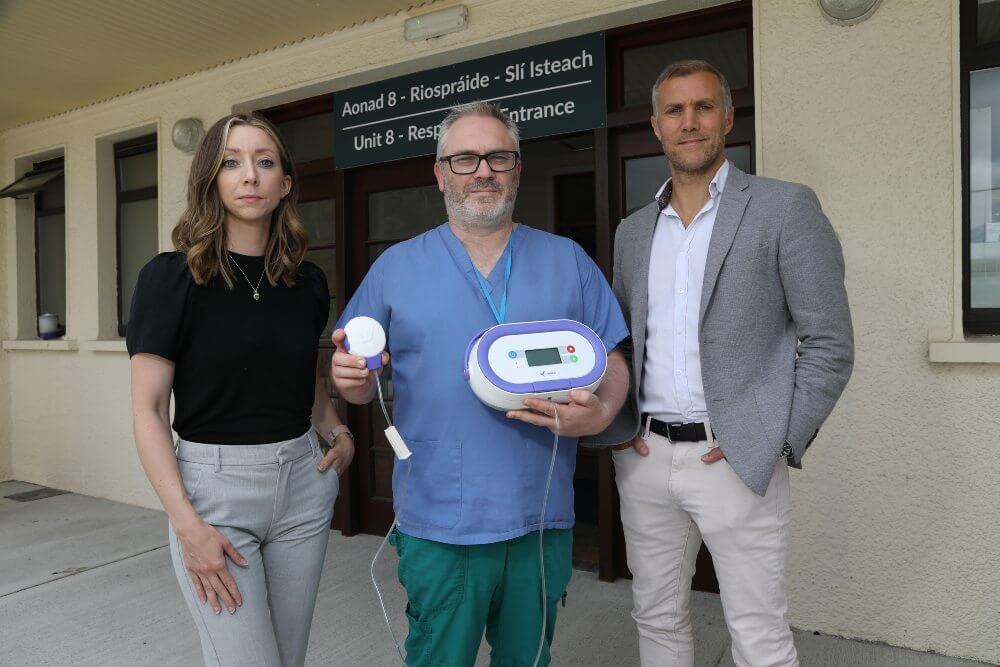
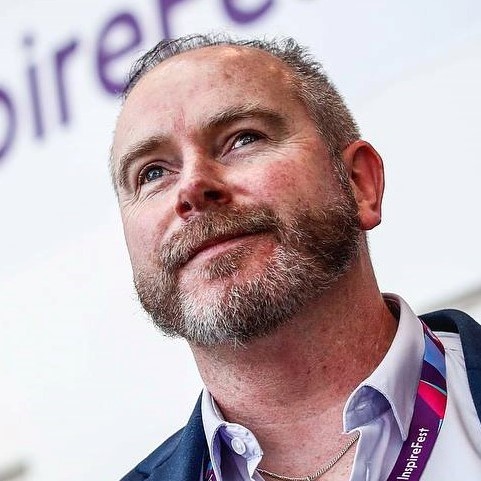
Podcast Ep 321: Galway medical device business Symphysis Medical is entering the US market at pace. CEO Tim Jones reveals how the Irish business is on the cusp of transforming cancer patient care.
“When you get a bill for monitors and keyboards, then you know it’s very real,” Symphysis Medical co-founder Tim Jones laughs wryly as he talks about how the Irish business is in the process of opening its first US office in Rhode Island and prepares for a pivotal FDA submission.
That FDA submission for the company’s Releaze product could unlock a market potentially worth billions worldwide in treating late-stage cancer patients.
“All of the systems we have put in place, all of the investment, everything is about finding the best way to get that product to the patient”
Founded by CEO Tim Jones and chief scientific officer Dr Michelle Tierney, Symphysis Medical has spent the last seven years developing a catheter device that treats fluid build-up in the chest cavity of terminal cancer patients. It represents a new generation of Irish medtech companies that are moving beyond product development to focus heavily on commercialisation strategy from an early stage.
Getting a foot in the door
The start-up is targeting one of the most common complications of late -stage cancer care where patients typically have three to 12 months to live once diagnosed. The condition can involve the build up of two to three litres of fluid in the chest, causing severe breathlessness and limiting a patient’s mobility.
Developing a product, breaking into the US, securing FDA clearance and growing the business is a very carefully orchestrated balancing act for the Symphysis team.
The tricky part for the business is that when it comes to FDA clearance and pleural care, the product does not win on the approval aloe but on whether the home pathway works end-to-end. This includes discharge planning, reimbursement, DME setup and home drainage continuity.
The focus is putting the pathway and relationships in place so that, post clearance, a staged early experience rollout is actually feasible, starting with 10 to 20 initial placements at target reference centres, then expanding to 30 to 50 placements across five plus centres as adoption grows.
Standing on the shoulders of giants
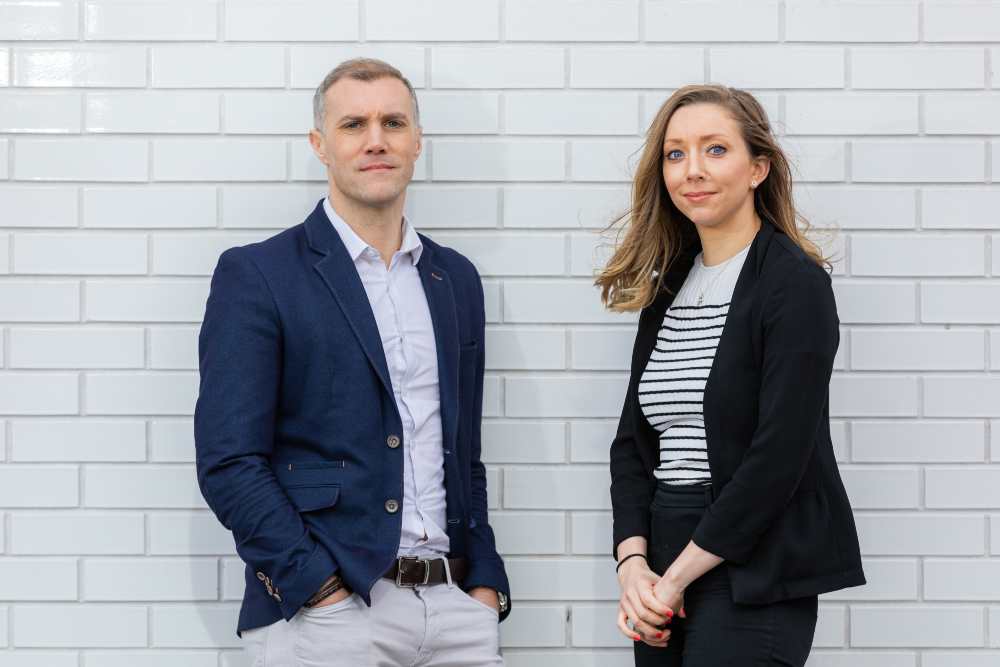
Symphysis CEO Tim Jones and chief scientific officer Dr Michelle Tierney
The rise and rise of Galway’s medtech ecosystem is one of the great unexpected victories for Ireland’s industrial ecosystem. In 1994 Digital Equipment Corporation shut down its Galway operations with hundreds of layoffs. Despite this economic catastrophe for the West of Ireland city, something amazing happened – many of the laid off executives started forming businesses.
Most of those businesses turned out to be medtech businesses and now the Galway region is a veritable case study for how a region can turn its fortunes around with thousands of people employed in hundreds of globally-focused businesses. It is today one of the densest clusters of medtech businesses on the planet.
“We’re standing on the shoulders of giants,” Jones said. “The medtech community and ecosystem in the West here and in Ireland in general is incredible.
As part of its scaling journey the business appointed Joe Villanova, a seasoned medtech executive, as VP of Sales and Marketing two years ago, a strategic move that Jones describes as crucial for success.
“Much of our development journey has been the product. But as you kind of alluded to there, the innovation is also on the commercial side of things, and this is something that we knew we needed to focus on very early. And we have done even to the point of bringing in a commercial VP of marketing and sales two years ago. So it’s crucial. It is crucial for the success of a medtech company, and adoption is always slower than you think. And you know, given the clinicians and the hospitals, the real reason to change needs work and time.”
With clearance from the US Food and Drug Administration (FDA) targeted by 2026, SymPhysis Medical aims to launch its device within the next 18 months and to reach €40 million in revenue by 2030.
In the most recent funding round last year, SymPhysis Medical raised €2.8m and expects to close a further €3 from a combination of current and new investors. Investors have been impressed by SymPhysis Medical’s ambitious growth plans and focus on a market, worth €860 million in the US and Europe alone.
The business recently secured a $1.25 million non-dilutive grant from the Rhode Island Life Science Hub to accelerate the US development of its Releaze Drainage System.
The road to commercialisation
I asked Jones about why Rhode Island has played such a pivotal role in the company’s development.
He says like Galway, the Rhode Island region is synonymous with medical discovery and breakthroughs. “We have a movement that is driving this forward. The grant will enable the commercialisation of the product and that’s because we have a community that believe in the business, not just the product, but in the business and that we are going to be successful. How do we do everything to de-risk the project? We were fortunate enough to partner with the Rhode Island Life Sciences Hub.
“When you get a bill for monitors and keyboards, then it’s very real. And when you’ve been working on commercial plans for more than two years in a very structured and solid manner … well, it just hits home a little more and you start to realise that acceleration is real.”
He said that the presence of Brown University Hospital and medical device companies like Veronics in the local ecosystem on Rhode Island are critical.
The company plans to have 50 patients usings device this year, pending the vital FDA clearance.
As mentioned, Symphysis is currently in the process of raising further capital to carry it through to first patient use and beyond.
Jones says that the dynamics of medtech are changing and companies need to demonstrate revenue generation rather than just proving the technology works in clinical studies.
“Markets change. Now you’re really looking at the delivery of revenue and often up to profit as well in order for that acquisition or that key trigger for you to create value or realise the value in the company.”
Following FDA clearance, the company plans to pursue a Series A funding round of around €10m to scale its operations.
The patient is the north star
The Symphysis Medical journey demonstrates the complexity involved creating and growing a medtech business. The idea alone is not enough. It is a dizzyingly complex road of regulatory approvals, reimbursement codes, distribution networks.
But to Jones and his team, the north star is ensuring patient outcomes remain central to the mission.
He notes that the current standard of care in the field it is target has seen little innovation for almost 30 years.
“Everything we do is built from the start with the patient in mind,” Jones concludes. “All that time we are spending on the commercial side is money well spent.”
Once Symphysis Medical secures that vital FDA clearance, it will cement its
place among Ireland’s cohort of medtech businesses navigating the complex path from lab to market.
“Everything that we’re doing is to get the product to the patient. All of the systems we have put in place, all of the investment, everything is about finding the best way to get that product to the patient.”
-
Bank of Ireland is welcoming new customers every day – funding investments, working capital and expansions across multiple sectors. To learn more, click here
-
For support in challenging times, click here
-
Listen to the ThinkBusiness Podcast for business insights and inspiration. All episodes are here. You can also listen to the Podcast on:
-
Spotify
-
SoundCloud
-
Apple