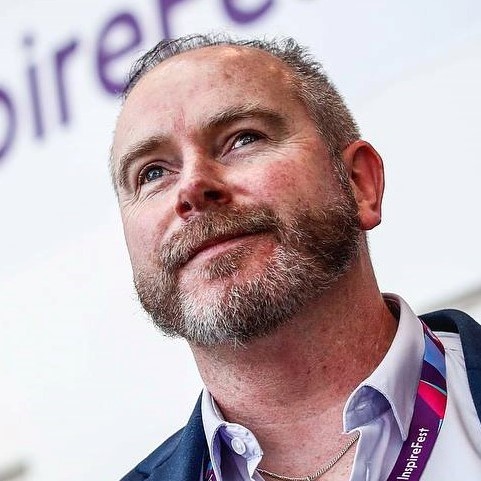
Sean Piggot, the founder of an Irish business that builds and manages AI voice agents for service-led businesses, warns businesses are not short on demand but are losing customers at the first point of contact.
The difference between success and failure in business? If you ask Sean Piggot, founder of Aigency, it is the numbers of missed phone calls businesses let slip through their fingers.
“A dental practice that misses just five calls a day, at an average appointment value of €150, is losing €750 daily. That’s over €15,000 a month in missed revenue, before you factor in wasted ad spend, no-shows, and poor follow-up.”
“rish SMEs aren’t short on leads. They’re losing them”
The issue he says isn’t staffing, it’s capacity. AIgenc
“Humans can’t answer every call, handle multiple enquiries at once, or be available around the clock. But the expectation from customers hasn’t changed. That gap is where revenue leaks.
“In short, Irish SMEs aren’t short on leads. They’re losing them.”
Piggot is the founder of Aigency, a Dublin-based business that builds and manages AI voice agents for service-led companies. The agents answer inbound calls, qualify enquiries, book appointments and follow up with customers, covering the times when teams are stretched too thin to respond.
“Beyond calls, we deploy AI to remove repetitive admin – the kind of work that drains time without generating revenue.
“There are over 250,000 SMEs in Ireland. The verticals we’re focused on – dental, professional services, trades, and hospitality – represent tens of thousands of businesses actively losing revenue every day.
“If a business is investing in marketing to make the phone ring, missing that call isn’t just an inconvenience. It’s a missed customer.”
Aigency designs and manages AI agents that sit at the front line of a business. Each agent is tailored with a defined voice, personality, and deep understanding of how that business “operates.
“We don’t sell AI tools. We make sure every opportunity gets handled.
“Voice agents are our primary solution, but we also support businesses with high-volume admin through AI, removing repetitive tasks that consume time without generating revenue.
When a call comes in, the agent answers instantly, qualifies the enquiry, books directly into the calendar, and only escalates when human input adds value.
“It integrates into existing systems – CRM, calendars, workflows – so we’re not asking businesses to change how they operate, just to stop losing opportunities.
“Clients can clone their own voice or use one of ours, depending on what feels right for their brand.”
Explaining his business model, Piggot said the business is a managed services. “This isn’t SaaS. There’s nothing to figure out. It’s a managed service, built, deployed, and continuously optimised. Pricing starts at €1,000 to build, with ongoing management from €299 per month.”
Each AI agent is designed and deployed by the Aigency team, with a defined voice, tone and personality that reflects the clients brand. Agents are trained on how each business operates and integrate directly into existing systems from calendars to CRM software.
“The outcome is simple: more calls answered, more bookings made, and less revenue left on the table.”
Born of frustration
Piggot spent the best part of two decades working in B2B sales, building pipelines, leading teams and helping businesses to grow revenue.
“Across every role, I kept seeing the same pattern: companies doing the hard work to generate demand, then losing it at the first point of contact. The phone.
“It’s the most valuable moment in the sales process and the most consistently mishandled. When AI voice technology reached the point where conversations felt natural and useful, not robotic, it was clear the timing had changed. Aigency came from that realisation.”
Piggot also runs xSellerate, a sales consultancy. “I’ve always been close to the commercial side of businesses. Aigency is the convergence of that experience – sales, systems, and technology, applied to one very specific problem: making sure no opportunity is missed.”
Scaling momentum
Piggot says that he’s seeing real momentum at SME level in Ireland. “Business owners are more open to trying new technology than they were even two years ago, not just talking about it, but actually implementing it.
“Where I think there’s still a gap is in how we support service-led innovation. A lot of the ecosystem is built around SaaS, venture funding, and scale-at-all-costs models. That doesn’t reflect how most Irish businesses actually operate.
“There’s huge value being built in capital-efficient, service-led businesses, but less structured support around that path.
“That said, initiatives like the GrowDigital grant are genuinely impactful. Giving SMEs up to €5,000 towards digital transformation removes friction, and we actively use that in conversations with clients.”
Piggot said Aigency is not currently raising funding. “The model is deliberately built to be capital efficient. The priority is proving it at scale with the right clients, not raising capital for the sake of it. Revenue is the focus.
“We’re not raising to find a model. We’re scaling one that already works.
“That said, we’re open to the right conversations. If a strategic partner came along, someone with access to our market or a complementary technology, that’s a very different discussion to a purely financial raise.”
Always be closing
The biggest area of growth for Piggot personally as a founder has been learning how to stay focused.
“At the start, I wanted Aigency to apply to every SME with a phone. That’s technically true, but commercially it’s ineffective. The moment we narrowed into specific verticals, everything improved: shorter sales cycles, clearer messaging, more predictable objections. The path to yes became a lot clearer.”
He adds that business founders need to be building and selling simultaneously. “If you’re not selling while you’re building, you’re not building a business. You’re building a demo.
“It’s very easy to hide in product development because it feels productive. But the real feedback comes from conversations, not code. You need both running in parallel.”
His advice to fellow founders is to break out of the comfort zone. “Get in front of the market earlier than feels comfortable. Waiting until something is perfect is one of the most expensive mistakes you can make, because you’re delaying real feedback.
“Also, respect sales as a discipline. The market doesn’t reward the best product. It rewards the best communicated one. Outbound, messaging, and conversations are not things that figure themselves out. They are skills that need to be built deliberately.
“And finally, your environment matters.
“The right peers, mentors, and clients will compress years of learning into months. That’s one of the highest-return investments you can make.”
When it comes to technology tools for growing a business, Piggot says Aigency stays close to the development of new models to ensure every client is running on the most appropriate technology for their needs.
“The real driver of agility isn’t technology, it’s clarity. Clear processes, clear priorities and a bias towards execution will out perform a complex stack every time. Answering 100% of inbound calls reliably will always outperform adding three new tools every time. That’s the standard we hold ourselves to.”
-
Bank of Ireland is welcoming new customers every day – funding investments, working capital and expansions across multiple sectors. To learn more, click here
-
For support in challenging times, click here
-
Listen to the ThinkBusiness Podcast for business insights and inspiration. All episodes are here. You can also listen to the Podcast on:
-
Spotify
-
SoundCloud
-
Apple