Podcast Ep 372: RS Ireland country manager Gary Bradley explains its Ballymount move, celebrating 80 years in business, future growth plans, carbon goals, supply chain pressures and focus on customer service.
There are few businesses in Ireland that can claim a pedigree stretching back 80 years in the technology space. So leaving a building you’ve occupied for almost six decades is a pretty big deal.
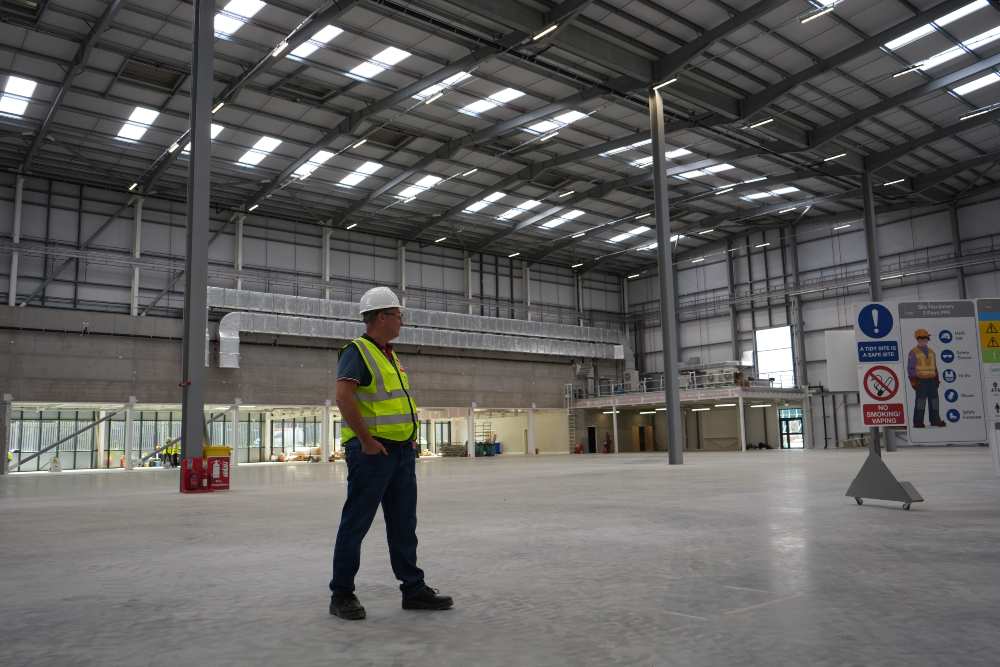
RS Ireland, one of the country’s best-known suppliers of industrial parts and electrical components, is leaving the Rialto base it has occupied for 56 years for a new purpose-built facility in Ballymount, Dublin.
“We’ve seen exceptional growth over the last 10 to 15 years, and space has become a significant barrier in our warehouse”
Since 1970, RS Ireland has run its business from Glenview Industrial Estate in Rialto, Dublin, leasing extra warehouse space on the estate as it grew. That arrangement has reached its limit.
KEY NUMBERS: RS Ireland
- 800,000+ products available across the RS range
- Nearly 2,500 brands supplied to customers
- 3 main European warehouses in France, Germany and the UK
- 90% of Irish car fleet already electric
- 2030 target for carbon neutrality
- LEED Gold certification for the new Ballymount facility
- 56 years at the Rialto site, since 1970
- Almost 80 years of trading history, dating to 1947
Editorial takeaway: Growth, capacity pressures and carbon ambitions are reshaping RS Ireland’s operations while it retains a people-led service model.
On this episode of the ThinkBusiness Podcast, powered by Bank of Ireland, country manager Gary Bradley explains what is driving the move, how rising costs are feeding through global supply chains, and why the company is keeping its Irish warehouse manual.
Tuning into tomorrow
-
Bank of Ireland is welcoming new customers every day – funding investments, working capital and expansions across multiple sectors. To learn more, click here
-
For support in challenging times, click here
-
Listen to the ThinkBusiness Podcast for business insights and inspiration. All episodes are here. You can also listen to the Podcast on:
-
Spotify
-
SoundCloud
-
Apple
He gives two reasons for the move. “We’ve seen exceptional growth over the last 10 to 15 years, and space has become a significant barrier in our warehouse,” he says. The second is the building itself. “The age of the building doesn’t allow us to match our group ambition of being a carbon neutral business by 2030,” he says, adding that it “lacks any environmental sustainability constraints or credentials.”
The new site, the Apex Hub in Ballymount, is certified LEED Gold. Bradley says 90 per cent of the company’s car fleet is already electric, and that customers expect suppliers to keep pace. “All PLCs are working to a carbon neutral environment, and certainly they look to suppliers that have the same goals as them.”
The Irish business has already moved 90% of its car fleet to electric vehicles, he says, and its Dublin delivery vans are switching to electric as they are replaced. The new site will have charging points for both. At group level, packaging has changed so that its Jiffy bags can be recycled.
From radio repair shops to industrial supply
The business was founded in April 1947 by George Brownlee and began trading on Poolbeg Street in Dublin, selling parts for radios and later televisions. It acted as a distributor for RS, which had started in London ten years earlier. It moved to Hatch Street in the 1950s and to Rialto in 1970. In the mid-1980s RS bought the company from Brownlee’s son, Jeffrey, in what Bradley describes as the group’s first acquisition outside the UK. The legal entity is still Radionics Limited; it trades as RS Ireland.
Bradley keeps the original order book. “When you flip through it, it’s TV and repair shops throughout the country,” he says.
The range drifted towards industrial products from the 1970s, which he links to Ireland’s accession to the EEC in 1973 and the foreign direct investment, much of it American, that followed. “A lot of our customers are American customers,” he says.
Electronics is now a smaller part of the mix. Bradley lists automation and control, electrical and electromechanical products as the key ranges, with hand tools, test and measurement equipment and personal protective equipment alongside. Much of the trade is maintenance, repair and operations work, where a customer needs a part because a machine has broken down. The company offers same-day delivery in Dublin and next-day delivery elsewhere.
Keeping the human touch
RS offers more than 800,000 products from nearly 2,500 brands, held in three main group warehouses in France, Germany and the UK. Bradley says global events are putting that model under strain.
The effect shows up in transit times and prices. “It’s lengthening delay times in transporting product, particularly from the Far East to Europe. It’s also costing more,” he says. “We’ve seen the input costs rise certainly on from our suppliers.” The company looks for ways to limit the impact on customers, but Bradley accepts that “it does make its way through the supply chain process”.
The company tries to limit the effect on customers, but he says “it does make its way through the supply chain process”.
RS Group is opening a fully automated warehouse in Italy. Ballymount will stay manual. “We’re still going to maintain a manual pick and pack exercise,” Bradley says, noting that “you need to scale” for full automation to make sense.
He sees service as the company’s long-term advantage. “Sometimes people overthink that, but it’s the simple things which work. We focus on the human touch with our customers,” he says. “They like to ring up, talk to a person, and that’s able to sort out whatever problem they may have.”
He also quotes the late Fergal Quinn: “Don’t treat loyalty with disloyalty.”
Recruiting the people to deliver that service is proving difficult, and Bradley wants the Government to act. “So the Government need to do something about a customer service skill sets because it is one that’s particularly difficult to recruit,” he says.
The company is also going through a generational change. Bradley has been with the business for 30 years, and a colleague about to retire after 44 years was the last employee hired by the Brownlee family before RS took over. “We’re just going through that generational cycle now,” he says.
Bradley describes the Ballymount move as a vote of confidence from the parent company. Growth over the last 10 to 15 years “has demonstrated to our group company that they can invest in the Irish business, that they trust us to be able to deliver around that investment”, he says.
Some of the 1947 business will travel with it. The company incorporated in 1950, and Bradley still holds its original company seals. Unlike in the UK, where colleagues were surprised to learn that e-signatures would not suffice, he says the Irish lease required an original signature and a seal. “Those seals from 1950 are still regularly in use,” he says.
Listen to the full conversation with Gary Bradley on the ThinkBusiness Podcast.
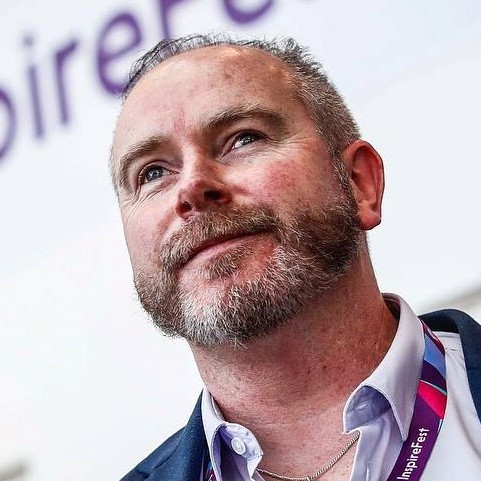
Image at top: Gary Bradley, RS Ireland
FAQ
Why is RS Ireland moving from Rialto to Ballymount?
RS Ireland is moving because strong growth over the past 10 to 15 years has created space constraints at its Rialto warehouse. The age of the building also prevents the company from meeting its ambition to become carbon neutral by 2030.
Where is RS Ireland’s new facility?
RS Ireland is moving to the Apex Hub in Ballymount, Dublin. The new purpose-built facility is certified LEED Gold.
Will RS Ireland automate its new Ballymount warehouse?
No. RS Ireland plans to maintain a manual pick-and-pack operation in Ballymount. Country manager Gary Bradley says a business needs sufficient scale for full warehouse automation to make sense.
How are global supply chain pressures affecting RS Ireland?
RS Ireland says global events are lengthening lead times, particularly for products transported from the Far East to Europe, while also increasing costs. The company tries to limit the impact on customers, although some additional costs make their way through the supply chain.
Why is customer service important to RS Ireland?
RS Ireland sees personal service as a long-term advantage. Bradley says customers value being able to speak directly with someone who can help solve their problems, although recruiting people with customer service skills has become increasingly difficult.
👉 No tech background needed to bring your business into the AI age! Secure your Google AI Professional Certificate to complete the certification at no cost. Apply now and get started!
-
Bank of Ireland is welcoming new customers every day – funding investments, working capital and expansions across multiple sectors. To learn more, click here
-
For support in challenging times, click here
-
Listen to the ThinkBusiness Podcast for business insights and inspiration. All episodes are here. You can also listen to the Podcast on:
-
Spotify
-
SoundCloud
-
Apple