
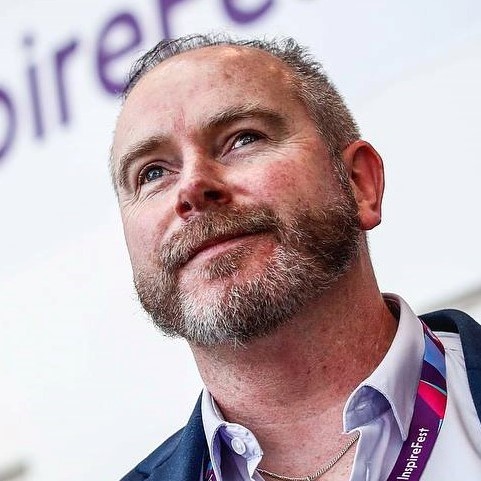
In the The Final Furlong & Freedom podcast, Declan Lawlor and Olivia Ryan provide expert advice on financial planning, emotional preparation and the lifestyle changes required for a fulfilling exit from working life.
When most people talk about retirement, the conversation is invariably about whether there be enough funds to maintain their standard of living?
But this preoccupation with finances, while understandable, masks deeper challenges that could determine whether retirement becomes a fulfilling new chapter or a period of regret and restlessness, according to retirement planning experts.
“If, after endless episodes of Judge Judy or Dr Phil, you think, ‘Mother of God, there must be more to life than this?’ Well, the answer is, there is, but you might have to go and find it”
“If you were to Google the words retirement planning, you will typically get pension and financial websites,” says Declan Lawlor, programme leader at the Retirement Planning Council of Ireland, who has spent years running pre-retirement courses across the country. “It might be easy to think that the only issue to be concerned about is finance – if the money is fine, retirement is guaranteed to be successful.”
Lawlor uses the metaphor of an iceberg to illustrate his point. “The bit above the water line is the finance. That’s what people focus on. But there are issues below the water line that could actually sink your retirement. You might retire financially okay, but if you can’t handle the issues below the water line, the finances won’t necessarily compensate.”
The hidden challenges in retirement
Those submerged concerns encompass three critical areas: emotional adjustment, psychological identity, and lifestyle restructuring.
The emotional challenge involves transitioning away from work that may have provided purpose and fulfilment for three or four decades. The psychological shift centres on losing professional identity and the sense of being valued for expertise and skills.
Perhaps most practically challenging is the lifestyle adjustment. “When you’re working, you go to bed on a Sunday night, you’re already thinking, ‘What have I got on tomorrow?’“ Lawlor explains. “Monday, Tuesday, Wednesday, Thursday, Friday, you’re on autopilot. The challenge when you retire is you’re going to bed on a Sunday night and you’re saying, ‘Well, I’ve nothing on tomorrow.’”
His advice for testing retirement readiness is deliberately provocative: take a week off work a year before retiring, stay home, and watch daytime television. “If, after endless episodes of Judge Judy or Dr Phil, you think, ‘Mother of God, there must be more to life than this?’ Well, the answer is, there is, but you might have to go and find it.”
Financial planning realities
While the non-financial aspects of retirement deserve attention, the money questions remain paramount for most people approaching this life transition. Olivia Ryan, a senior financial consultant with Bank of Ireland, works daily with pre-retirement customers to address these concerns.
“When customers come in to me, their biggest concern is the financial side,” Ryan confirms. “They just want to make sure that there’s going to be enough money there to fund the lifestyle that they want. Everyone has a different plan in terms of what they want to achieve when they retire.”
The Government has made pension saving more attractive through tax relief that can reach up to 40% of your annual earnings, depending on your age. Ryan emphasises that successful retirement planning requires starting early and maintaining consistent contributions, but acknowledges that people must be realistic about what they can afford.
When retirement arrives, retirees typically can access about 25% of their pension pot tax-free, with the remainder taxed as income. This creates two main options for the taxable portion: an approved retirement fund, which remains invested and allows flexible withdrawals, or a single life annuity, which provides guaranteed income for life but offers no inheritance value.
“A conversation needs to be had in terms of which one suits better,” Ryan says. “There is no correct answer – it very much depends on the individual.”
The State pension foundation
Ryan points to the state pension as a foundation, recently increased to €299.30 per week or €15,563 annually.
For someone with a €600,000 pension pot, this might mean €150,000 tax-free at retirement, with decisions needed about the remaining €450,000.
The choice between guaranteed income through an annuity or flexible investment through an approved retirement fund reflects different priorities.
“For some people, they just want to know that from their retirement day, they’re going to be getting this until they’re gone,” Ryan explains. “For other people, they want to make sure that if they pass away, there’s a lump of money there to pass on to their family.”
Planning beyond the numbers
Both experts emphasise that effective retirement planning extends well beyond financial calculations. The timing of serious planning matters – Ryan recommends beginning focused retirement discussions at least five years before the intended retirement date.
Estate planning becomes particularly relevant at retirement, when people often receive substantial tax-free lump sums. Lawlor strongly advocates for writing wills and enduring powers of attorney, noting that previous generations sometimes believed that making a will ‘hastened the event.’
“Writing a will doesn’t mean you’re going to die sooner,” he clarifies. “The real issue is: what do you want to happen when you die? It’s not a case of if – when you die in retirement, what do you want to happen to your assets?”
With increased longevity, planning for potential incapacity becomes equally important. An enduring power of attorney allows people to designate who will manage their affairs if they lose mental capacity, avoiding the need for court intervention.
The longevity challenge
Lawlor identifies longevity risk as perhaps the most misunderstood aspect of retirement planning. The average life expectancy for a male retiring at 65 in Ireland is 20 years, meaning retirement could last as long as some entire careers.
This extended timeline creates different financial needs across retirement phases. Ryan notes that early retirement years typically involve higher spending on travel and activities, followed by a potentially quieter middle period, and then possible increased healthcare costs in later years.
“People have different plans in retirement,” she says. “Your early stages of retirement is when you’re going to be most active. You might be going on a cruise. You might have loads of plans for the first five to ten years. Then you have to think about the whole health issue – in my latter years, am I going to have to fund for care?”
Taking action
Both experts emphasise that successful retirement planning requires professional guidance tailored to individual circumstances. Ryan encourages people to “start funding for retirement in the most tax-efficient way that you can” and to seek advice well before retirement.
“Five years out from retirement, come in, talk to somebody like myself,” she advises. “Sit down. What do I want? How am I going to get there? And we’ll help you put a plan in place to achieve that.”
While financial security remains crucial for a successful retirement, it represents only part of the planning equation.
Those who address both the visible financial challenges and the hidden emotional and lifestyle adjustments are most likely to find retirement fulfilling rather than merely financially sustainable.
Watch previous episodes in the Pension Pot series:
Ireland’s next pensions revolution
Employers race against time as the deadline for auto-enrolment looms. As part of our Pension Pot podcast series Bank of Ireland’s Mark O’Connor and Bobby McDonnell offer sage advice.
Business owners must act fast on pensions
Business owners are being urged to maximise pension contributions amid legislative changes. We talk to Bank of Ireland’s Olivia Ryan and George Nolan about what business owners need to do.
How to prepare for auto-enrolment
As every employer in Ireland should be aware, auto-enrolment is coming. We talk to Mark O’Connor, Head of Corporate Pensions, and Bobby McDonnell, Corporate and Pensions Risk Manager at Bank of Ireland, about what employers need to do to prepare for when auto-enrolment comes into force.
-
Bank of Ireland is welcoming new customers every day – funding investments, working capital and expansions across multiple sectors. To learn more, click here
-
For support in challenging times, click here
-
Listen to the ThinkBusiness Podcast for business insights and inspiration. All episodes are here. You can also listen to the Podcast on:
-
Spotify
-
SoundCloud
-
Apple