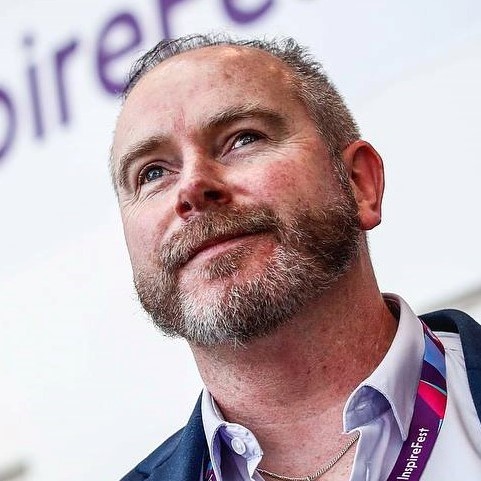
Podcast Ep 309: Patrick Murphy, CEO of Codex Office Solutions, on how the second generation business is pioneering neuroinclusive workplace design as hybrid work reshapes corporate needs.
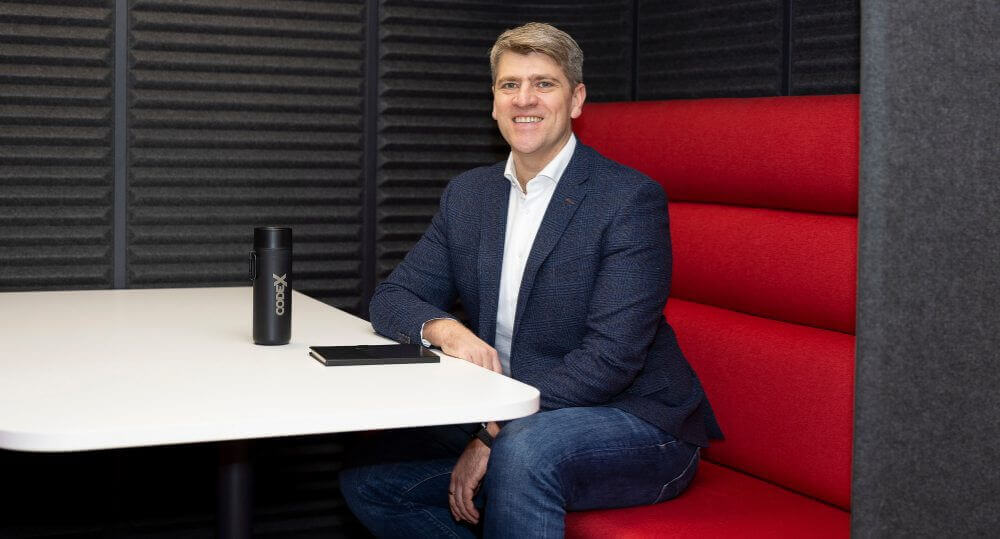
Patrick Murphy was juggling the typical challenges of running a family business when the pandemic hit in 2020. As CEO of Codex Office Solutions, the Dublin-based office supplier his father founded in 1979, Murphy watched clients scramble to equip remote workers while questioning whether the traditional office would survive.
Three years later, Murphy has his answer. Rather than disappearing, the office is evolving – and with it, new opportunities for companies that can adapt quickly.
“Any business leader would agree that engaged staff is productive staff, and that’s good for business”
This year, Codex launched Ireland’s first neuroinclusive workplace product range, positioning the 45-year-old firm at the forefront of a growing movement to redesign offices for n9eurodivergent employees.
The initiative, developed in partnership with AsIAm, Ireland’s national autism charity, represents both a business pivot and a response to mounting evidence that traditional office environments fail many workers.
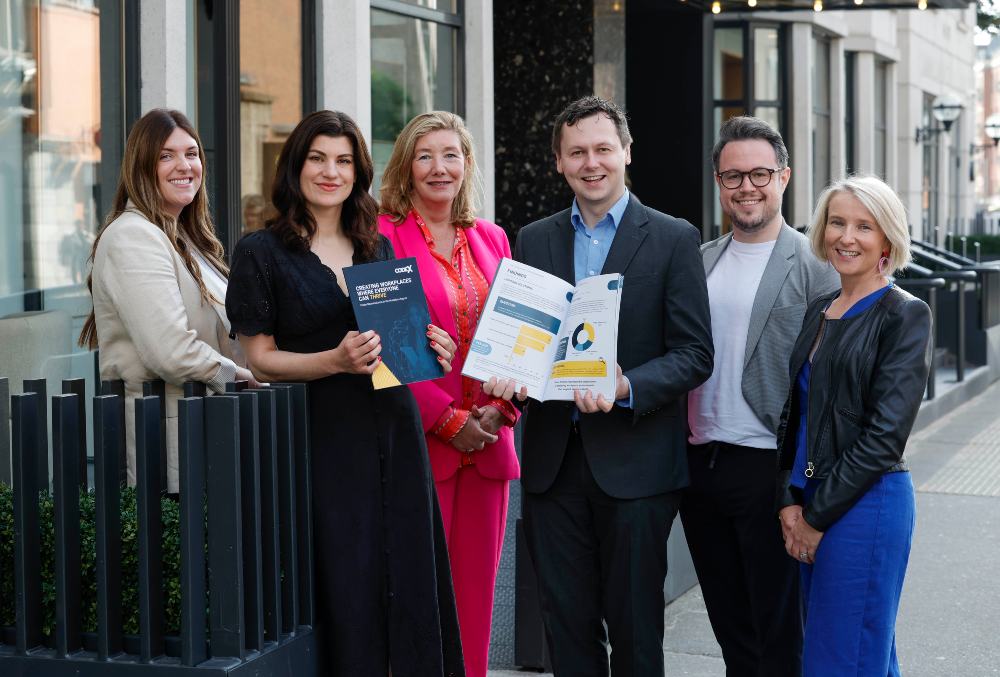
Codex’s research, surveying 220 neurodivergent employees across Ireland and the UK, revealed that 61% identified noise as their biggest workplace barrier, while 56% cited lighting issues and 55% struggled with social interactions.
The business case for inclusion
“If you get the balance right between technology and human connection, I think magic can happen. That’s where we see the opportunity”
-
Listen to the ThinkBusiness Podcast for business insights and inspiration. All episodes are here. You can also listen to the Podcast on:
-
Spotify
-
SoundCloud
-
Apple
Murphy’s approach reflects a broader shift in corporate thinking about workplace design. Where once companies focused primarily on cost per square foot, they now grapple with employee engagement, productivity, and retention in an era where skilled workers have unprecedented choice.
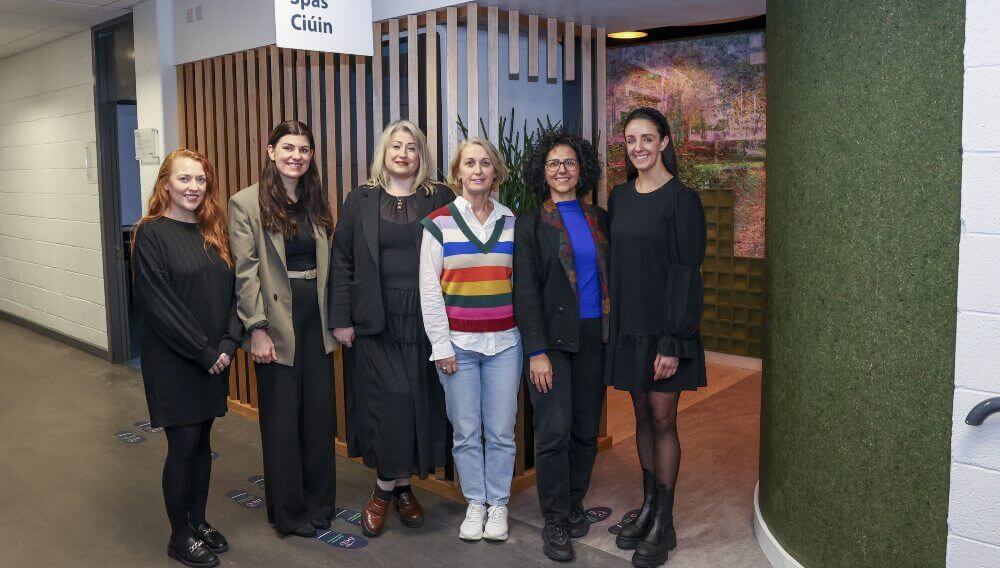
“It’s about engagement,” Murphy explained from Codex’s redesigned Dublin headquarters, which now features five sensory pods installed over the past year. “Any business leader would agree that engaged staff is productive staff, and that’s good for business.”
The company’s research supports this view. Four out of five neurodivergent respondents said they didn’t believe their employers’ policies adequately supported them, while 94% agreed that greater neurodiversity awareness would improve their workplace experience.
For Murphy, whose background in biochemistry drives his preference for data-led decisions, these findings provided compelling evidence for investment.
“I perform much better when there’s movement worked into my days,” he says. “If you take that individual experience and multiply it across all your staff, you’d have to think it’s good for business.”
From office supplies to workplace solutions
The evolution reflects Codex’s broader transformation under Murphy’s leadership. Since becoming CEO in 2019 and taking ownership in 2023, he has expanded the company beyond its traditional office supplies base into furniture, workspace design, and now neuroinclusive products.
The timing proved fortuitous. As companies brought workers back to offices, they faced new questions about space utilisation and employee needs. Many of Codex’s clients began requesting quiet spaces, collaborative areas, and flexible working environments – often without explicitly mentioning neurodiversity.
“They weren’t talking about neuroinclusive design, but they were asking how to get more engagement, how to accommodate focused work, how to incorporate collaborative work,” Murphy recalls. “All these requests were coming in around the same time we had AsIAm in to do training with our staff.”
Two-pronged product strategy
Codex’s neuroinclusive range addresses what Murphy describes as two distinct needs: sensory avoidance and sensory seeking. The first category includes acoustic pods with adjustable lighting and textile considerations designed to reduce stimulation. The second encompasses sit-stand desks, movement seating, and fidget accessories that accommodate employees who benefit from physical activity during work.
“In Scandinavia, it’s compulsory to have sit-stand desks in any office design,” Murphy notes, suggesting regulatory requirements could eventually drive adoption beyond voluntary initiatives.
The products arrived as post-pandemic offices grapple with unprecedented noise levels. “You can have six people at six desks on six different video calls – that naturally creates a noisy workplace,” Murphy observes. “I think acoustic design is going to be a big trend in 2026.”
Hybrid work as a catalyst
Murphy credits hybrid working patterns with accelerating conversations about workplace purpose and design. At Codex, most employees work three to four days from home, but when they do come in, the expectation is meaningful collaboration.
“The question is: when you’re in the office, what do we want to happen?” Murphy says. “If it’s about connection, are we creating the environment for that? Or are we bringing in someone who’s effective at home and making them less effective because the workplace isn’t set up properly?”
This philosophy has driven Codex’s office redesign, which includes not just the sensory pods but also an innovation hub and a gym. Murphy sees the approach as essential for small and medium-sized businesses competing for talent against larger corporations.
“We want people to know each other, to have that connection,” he explains. “That’s a real strength for us as a business, but we can only achieve it by being in person and connecting in the office.”
Technology and human connection
Looking ahead, Murphy expects artificial intelligence to reshape workplace dynamics, though not necessarily in the dystopian ways some predict. A recent Codex survey found 66% of employees already use AI in their daily work, suggesting the technology’s integration is well underway.
“You’re not going to put that cork back in the bottle,” Murphy says. “It’s about accepting that, building policy around it, and getting it to work the way we want from a business point of view.”
Rather than replacing human interaction, Murphy believes AI will make face-to-face connection more valuable. “Over the next five years, there’ll be more questions about the need for personal connection and face-to-face interaction,” he predicts.
The pods Codex is developing reflect this technology-human balance, incorporating sensors to track usage patterns and optimize future iterations while providing spaces for the very human need for quiet focus.
Lessons from education
Murphy’s confidence in the neuroinclusive market stems partly from Codex’s earlier work with Dublin City University, where the company helped create quiet spaces for neurodivergent students and staff four years ago. That project, he says, provided valuable lessons about designing for diverse needs.
“Universities and education are generally leaders in inclusion,” Murphy observes, noting that primary and secondary schools increasingly implement research-based supports for neurodivergent students. “As people go through the education process and the next generation comes through, it’s going to become more prevalent in workplace conversations.”
Murphy’s scientific background shapes his view of this shift as evolution rather than revolution. “We’re trying to evolve ahead of the curve,” he says, contrasting Codex’s approach with competitors who assume everyone will simply return to pre-pandemic office patterns.
“Hybrid is here to stay. Technology is going to get more embedded in how we work,” he argues. “We’ve supported businesses for 40-plus years in what they needed at the time. Now we’re evolving to support them for the next 40 years, knowing the products and services will be dramatically different.”
The transformation extends beyond Codex. Murphy reports that Bank of Ireland has expressed interest in the neuroinclusive products for its branch network, while the company has attracted employees specifically because of its inclusion initiatives.
“We’ve brought on staff who joined Codex because of seeing what we’re doing,” Murphy says. “It might not be their personal experience, but they have a loved one, or they see that we’re trying to make a difference in this space.”
As workplace design continues evolving, Murphy’s bet on neuroinclusion reflects a broader recognition that the future office must work for everyone – not just the majority. With hybrid work reshaping employee expectations and skills shortages giving workers more choice, companies that fail to adapt risk being left behind.
“If you get the balance right between technology and human connection, I think magic can happen,” Murphy concludes. “That’s where we see the opportunity.”
-
Bank of Ireland is welcoming new customers every day – funding investments, working capital and expansions across multiple sectors. To learn more, click here
-
For support in challenging times, click here
-
Listen to the ThinkBusiness Podcast for business insights and inspiration. All episodes are here. You can also listen to the Podcast on:
-
Spotify
-
SoundCloud
-
Apple