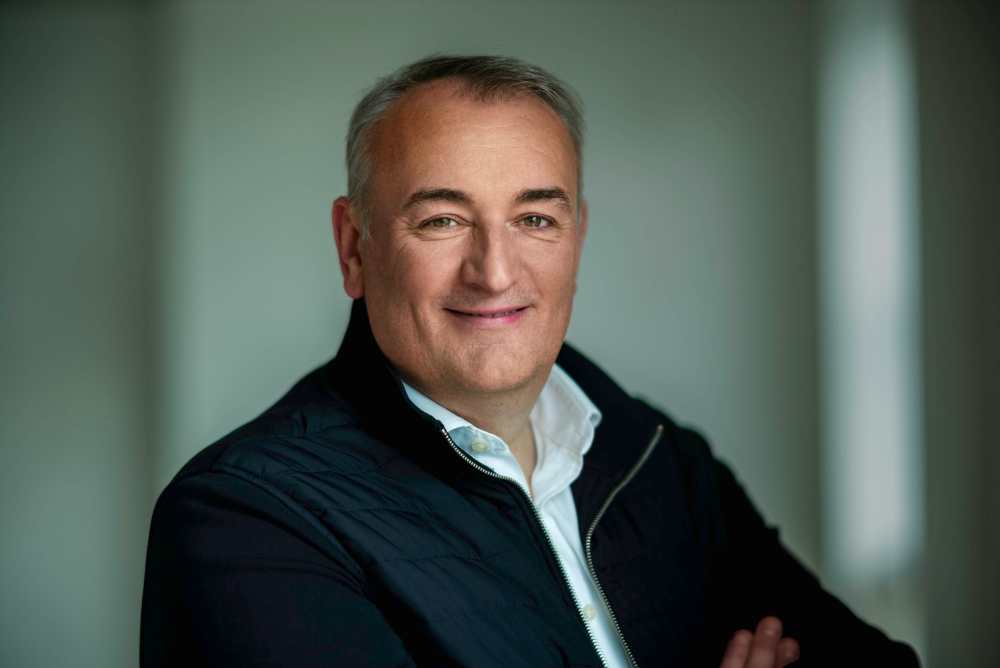
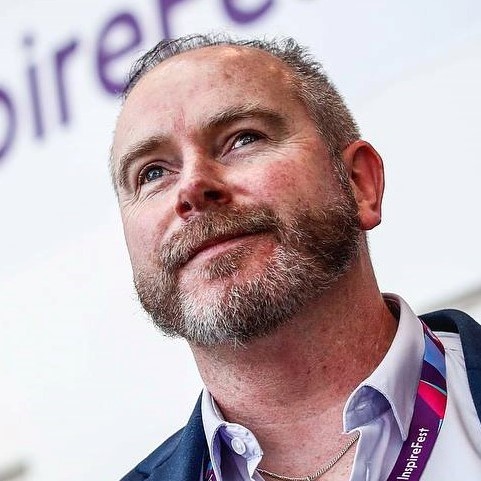
Shane Bourke, co-founder and managing director of Clearspace, shares his life and business lessons.
When Shane Bourke moved to London in 2008 with a degree in sports science, he had no plans to enter the property world.
But a chance introduction to a few people in the emerging flexible office sector changed everything. Fast forward to today, and Shane is the co-founder and managing director of Clearspace.
“A lot of our own clients inspire me; young teams with strong ideas who’ve found gaps in their markets, raised funding and expanded internationally”
The Dublin-based company is redefining flexible workspace by offering unbranded, fully serviced private offices in prime city locations where clients can truly make the space their own.
Founded in 2019 with partners David Clarke and architect Michelle Hetherington, Clearspace has grown to 18 locations in six years.
Tell us about your background and the journey that led you to Clearspace?
My background is in sports science. I did a degree in that and shortly after graduating I moved to London in 2008 to start my career. By chance, I fell into the world of property.
The flexible office sector, which was just starting to grow rapidly in London so I blagged my way into a job, started my property career there, all in flex office space sector, and that’s where I learned everything, including how businesses rapidly grow and how markets change.
I moved back to Dublin in 2018 and tried to bring the good ideas home and leave the bad ones behind. I started Clearspace in March 2019.
Why are you doing what you’re doing? What need are you meeting? And what’s your USP?
There was a need in Dublin for flexible, transparent office space in core city-centre locations, close to major transport links. We offer all-inclusive pricing. This means one monthly licence fee, so tenants can budget for a year or two and know exactly what’s on the balance sheet. No fit-out costs, no dilapidations, no maintenance, all wrapped up monthly.
“I’m an optimist and I go after nearly every opportunity, but the advice is: don’t rush, don’t panic, don’t make rash decisions. Take a step back and think through the consequences in three, six or nine months”
We don’t brand our buildings; we push clients to brand their own, so it feels like their floor and their office. We only do private offices, no co-working or hot desks, and we provide quality breakout space and meeting rooms. Clients, I feel, shouldn’t have to pay extra for meeting rooms or phone booths.. We’re very much in the background, acting as an extension of their business, so they can focus on their work while we take care of property.
How did you fund and start the business and what are your growth plans?
There were three original founders: myself, David Clarke and Michelle Hetherington. We self-funded and did the first two buildings organically. We cash-flowed the fit-outs and paid them down quickly as rent came in. By the fourth building we brought in new investment from corporate finance partners to grow further. In 2025 the business is now completely debt-free. It’s a very cash-intensive model. Just like a hotel, everything must be in place before tenants arrive, which is very heavy on cash flow but you can model properties correctly and cash-flow it properly to make it all work.
Who or what has helped you most? Any mentor or inspiration?
I wouldn’t say I have a specific mentor. I watch what others do well and adapt it. Michael O’Leary is a bit Marmite, but his drive, ambition and success with Ryanair, well, those traits are inspiring. I take the bits that work.
“Opening business centres is heavy on cash, so ‘cash is king’ definitely applies. You never know what’s around the corner, therefore growth has to avoid putting too much strain on the business”
A lot of our own clients inspire me; young teams with strong ideas who’ve found gaps in their markets, raised funding and expanded internationally.
What was the best piece of business advice you’ve ever received?
I’m an optimist and I go after nearly every opportunity, but the advice is: don’t rush, don’t panic, don’t make rash decisions. Take a step back and think through the consequences in three, six or nine months. Slow and steady can win.
“It’s about creating places people want to come to work.”
We’ve all seen rapid growth stories that hit a wall. I’m still optimistic and opportunistic, but more cautious and long-term in strategy now.
What circumstances mark the difference between success and failure?
Personally, success is wanting to get up every Monday and go to work and I do. I’m driven to grow.
Corporately: we’re totally debt-free; we’ve grown to 18 buildings in six years, we run high occupancy with strong retention, clients stay and expand, and we’re profitable. That’s what success looks like.
What’s been the most challenging aspect of starting and growing?
We started in March 2019 and the lockdown hit 12 months later. No one knew what would happen. We traded through the first six months and asked our tenants what the future looked like. They still wanted an office in town to collaborate. That gave us the confidence to keep taking sites.
“Slow down a little and take stock. Think how decisions look in six, nine, twelve months”
The other constant challenge is cash flow. Opening business centres is heavy on cash, so ‘cash is king’ definitely applies. You never know what’s around the corner, therefore growth has to avoid putting too much strain on the business.
How did you navigate Covid? And what lessons did you learn?
You might think you know what people want, but you have to listen to clients. Pre-Covid, we thought everyone wanted just private offices and private meeting rooms. Post-Covid, they also want breakout spaces, collaboration areas and call booths.
It’s about creating places people want to come to work.
Our latest building on Westland Row has a gym, a large canteen, showers, towel service, great end-of-trip facilities and bike storage. Employers can now tell their own employees: everything you need is here at this office. Come to the office more regularly. Five years ago a gym felt like a nice-to-have; now it’s a real draw.
How has digital transformation influenced your scaling? And are Irish firms using tech to its potential?
We’re a property company, so tech wasn’t always front-of-mind, but it is now. Access control is digital; no keys. Clients can see who’s coming in and how often. We’ve partnered with Phaser Maintenance on AI for utility usage, measuring our own and our clients carbon footprint building-wide, reducing waste and getting greener. IT is critical: enterprise-level Wi-Fi, Cat6 cabling, redundant and backup lines. We’re aiming for ‘bulletproof’.
Are Irish firms using tech fully? Probably not. There’s huge room to do more, especially with AI. It’s getting easier if people are shown and trained.
If you were doing it all over again, what would you do differently?
Slow down a little and take stock. Think how decisions look in six, nine, twelve months. We’ve 18 buildings; most perform really well, there’ll always be the odd one that doesn’t. Hindsight is great. We’ve adapted a lot over the years. From day one the plan was 20 buildings, but 20 really good ones. It’s not about accumulating; it’s about quality.
How do you nurture talent in your organisation?
We listen. Manage up, not just down. The team brings client feedback and ideas and we implement the best ones. We promote from within; ops managers up to area managers and area managers to operations directors. We keep the structure flat, work from the same office, and there’s nothing I’d ask the team to do that I wouldn’t do myself. That builds buy-in and retention.
A business book, podcast or resource you recommend?
I don’t really read business books. I do listen to David McWilliams’ podcast. Sometimes it’s sensational, but it makes you think, especially about how other countries do things and what we could apply in Ireland”
What tools or tech help you stay on track?
We’re quite basic: a giant whiteboard the length of the wall with all our buildings and a daily planner everyone can see. We use some systems but the key is communication. We talk every day. A flat structure, no silos.
What social platforms do you prefer and why?
LinkedIn and Instagram. When we post, the question we want people to ask is: do I want to work there? It’s brand and design, new centres, quirky fit-outs, kitchens, breakout and wellness facilities all come into play. It’s about showing the kind of place people want to come to.
Finally, what advice would you give to your 21-year-old self?
Go for it. You can be what you want to be. Don’t be afraid to open doors, ask, and push yourself out of your comfort zone. Maybe I’d have done it sooner; I went out on my own in my thirties and wondered if I could’ve in my twenties. And be very cautious about who you work with. Find really good partners.
-
Bank of Ireland is welcoming new customers every day – funding investments, working capital and expansions across multiple sectors. To learn more, click here
-
For support in challenging times, click here
-
Listen to the ThinkBusiness Podcast for business insights and inspiration. All episodes are here. You can also listen to the Podcast on:
-
Spotify
-
SoundCloud
-
Apple