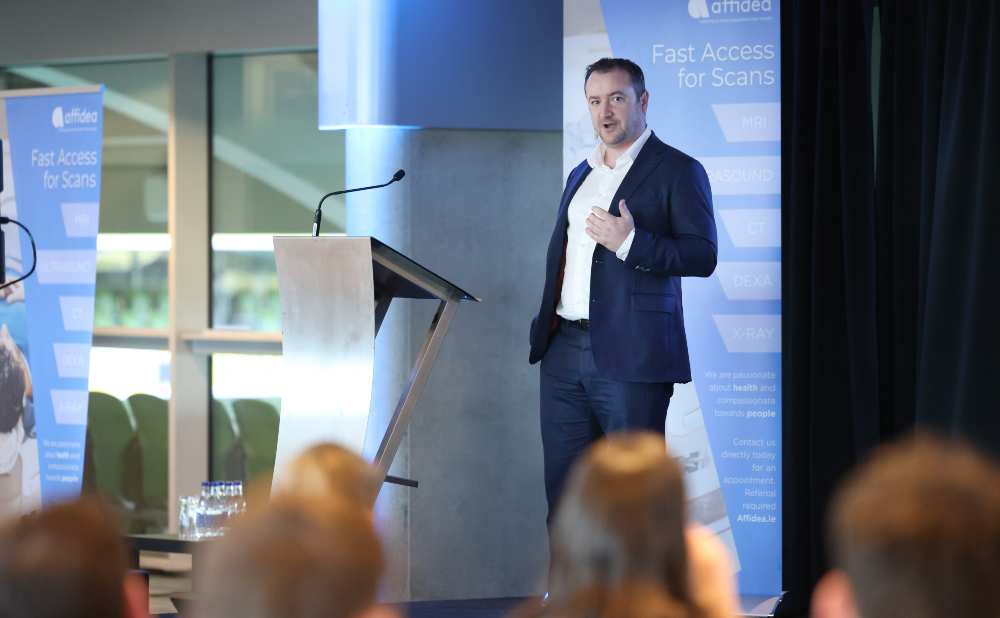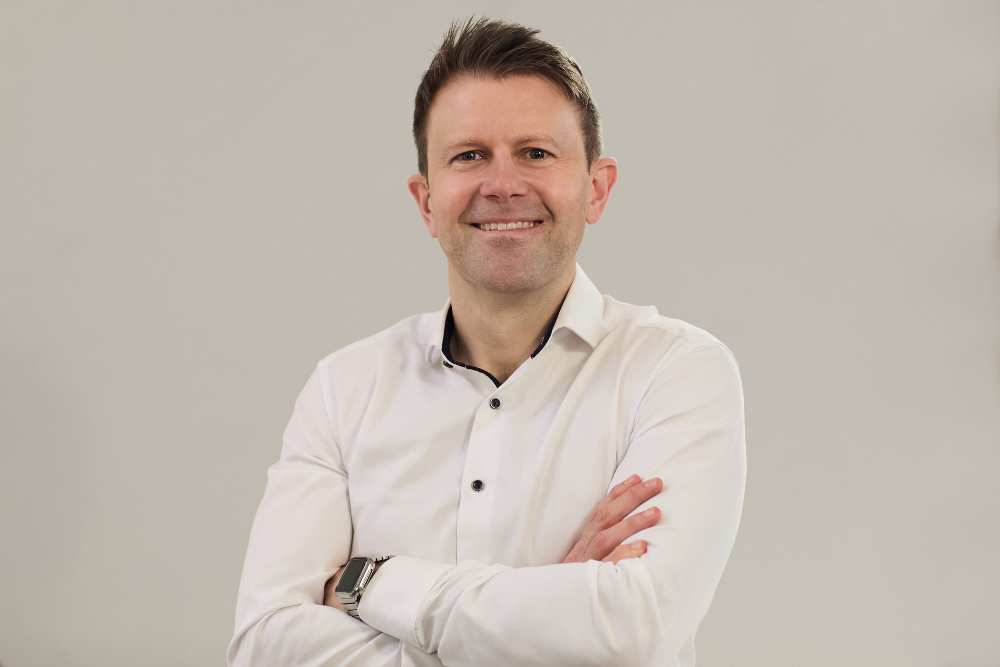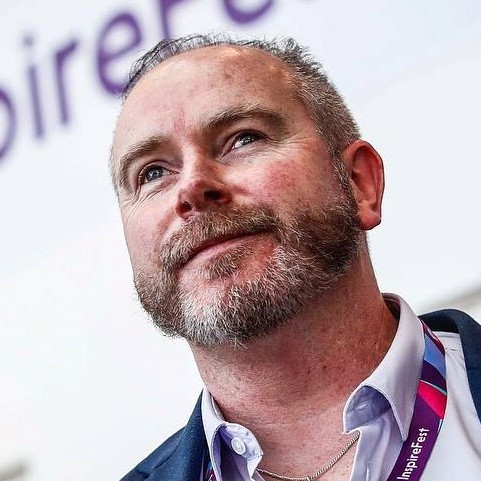
BAM commercial manager Karl Maxwell shares lessons from his career and work on the €100m Narrow Water Bridge connecting Louth and Down.
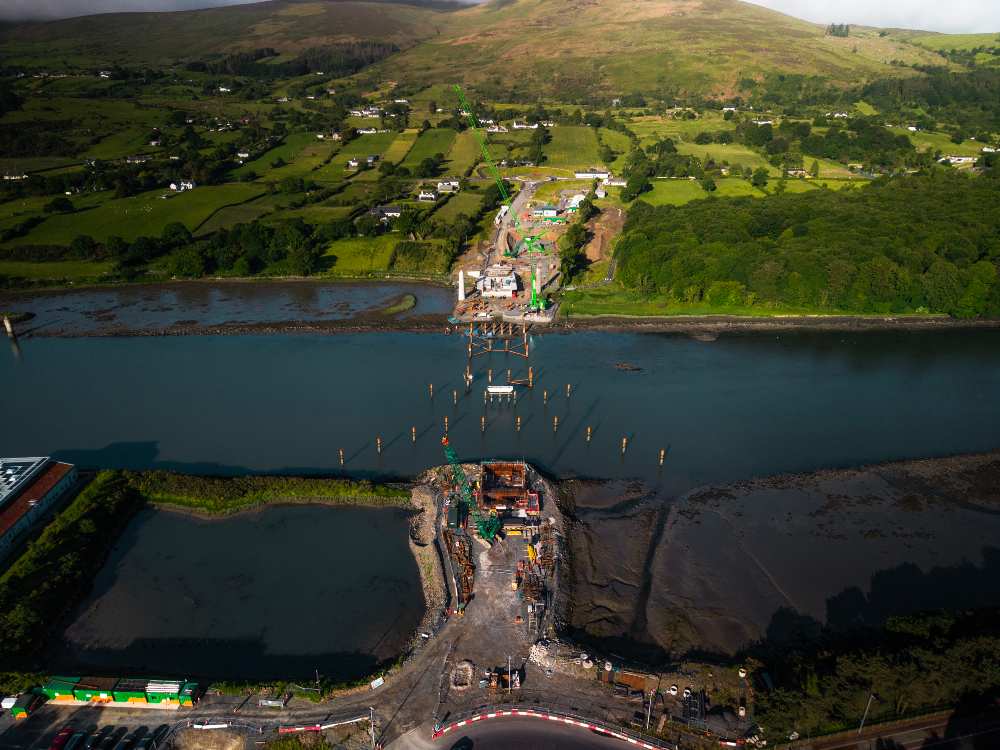
Karl Maxwell is BAM’s commercial manager on on the €100 million Narrow Water Bridge Project which will connect County Louth and County Down. His responsibilities include preparing budgets, tracking expenses and identifying and mitigating risks to make sure that the project stays on track. Karl can discuss the challenges and lessons he’s learnt managing such a big project.
He grew up in Warrenpoint less than a mile from where the Bridge is now being constructed and he remembers the project being talked about when he was a child.
“What continues to motivate me is the opportunity to work on projects that leave a lasting legacy”
He studied quantity surveying at Ulster University and graduated in 2011 when jobs were scarce in Ireland. He went to Holland to work as a quantity surveyor for BAM which was a real turning point in his career. He then went on to work all over the world for BAM including in Tanzania, Sierra Leone and Aruba on projects including airports, major roads and water supply systems.
Tell us about your background, what journey did you take to arrive at where you are?
I’ve always been fascinated by how things are built.
Growing up, I was drawn to projects that transformed communities, whether that was a bridge connecting two places, a port driving economic activity, or infrastructure that people rely on every day without ever really thinking about it. I recall the Narrow Water Bridge being discussed when I was a child so it’s a real thrill to be working on it today.
“The best commercial outcomes are usually achieved through preparation rather than reaction”
What I didn’t appreciate then was the immense amount of planning, commercial management and teamwork required behind the scenes to make those projects successful.
I completed my BSc in Quantity Surveying & Commercial Management 2011 in at Ulster University at a time when jobs were scarce due to the recession. I moved to Holland straight after college to work as a quantity surveyor for BAM, which was a huge change for me.
👉 No tech background needed to bring your business into the AI age! Secure your Google AI Professional Certificate to complete the certification at no cost. Apply now and get started!
I began my career in quantity surveying, developing a strong grounding in cost management, procurement and contract administration. Over time, I became increasingly interested in the commercial and contractual elements of project delivery, particularly how decisions made at the outset of a project can influence outcomes years later.
My career has now spanned more than 14 years across Ireland, the UK, Europe and Africa, working on major civil engineering, marine, transport and energy projects. These include:
- Narrow Water Bridge, Ireland / Northern Ireland, a landmark cross-border infrastructure project connecting County Louth and County Down.
- Terminal 3, Julius Nyerere International Airport (JNIA), Tanzania, a major international airport development.
- Cross Tay Link Road, Scotland, one of the largest infrastructure projects undertaken by Perth & Kinross Council, including the construction of a new three-span bridge over the River Tay.
- London City Airport Expansion, United Kingdom, a major airside expansion project supporting increased passenger capacity and operational efficiency.
- Freetown Water Supply Rehabilitation Project, Sierra Leone, enhancing water resilience and service provision for a rapidly expanding urban population.
Along the way, I’ve had the opportunity to work with different contractors, clients and cultures, which taught me very quickly that successful projects are built as much on relationships and collaboration as they are on engineering excellence.
What continues to motivate me is the opportunity to work on projects that leave a lasting legacy. There is a real sense of satisfaction in standing back and seeing something tangible that you’ve helped deliver, knowing it will serve communities and businesses for decades to come.
Today, as a Commercial Manager, I help navigate the commercial, contractual and financial challenges associated with delivering major infrastructure projects, ensuring that projects remain commercially successful while fostering strong relationships between all stakeholders.
Why are you doing what you are doing? What need are you meeting? What’s your USP?
I’ve always enjoyed solving problems.
Construction projects are becoming increasingly complex, with tighter budgets, more demanding programmes and increasingly sophisticated contractual requirements. My role is often to bring clarity and direction when projects encounter commercial challenges.
What differentiates me is the combination of three disciplines:
- Quantity Surveying
- Commercial Management
- Construction Law
Understanding cost is important, but understanding the contractual implications behind commercial decisions is equally important. The ability to bridge both worlds allows me to provide practical solutions rather than simply identifying problems.
What are your key skills and qualities that set you apart?
I would probably say three things:
- Commercial awareness. Understanding not just today’s costs but tomorrow’s risks.
- Contractual expertise. Having worked extensively with NEC and FIDIC contracts, I understand how commercial decisions can influence project outcomes months or even years later.
- Relationship management. Construction remains a people business. Projects succeed when people work collaboratively, particularly when challenges arise.
I also believe resilience is important. Infrastructure projects rarely go exactly to plan and being able to remain calm while working through difficult issues is often one of the most valuable skills you can possess.
What (or whom) has helped you most along the way? Who was your greatest mentor/inspiration?
I’ve been fortunate to work alongside some exceptional commercial leaders, project directors and mentors throughout my career.
“The people who succeed are generally those who continue moving forward when things become difficult”
Rather than one single individual, I’ve learned something from nearly everyone I’ve worked with, both good and bad. Some taught me technical excellence, others taught leadership, while some taught me how important communication and empathy are when managing teams.
Outside work, my family have always been my greatest support network and have played a significant role in shaping my work ethic and values.
What was the greatest piece of business advice you ever received?
“Understand the contract before the problem arises.”
Many disputes occur because organisations only start reading contractual obligations when difficulties emerge.
The best commercial outcomes are usually achieved through preparation rather than reaction.
Understanding risks early allows you to manage them before they become problems.
What circumstances, qualities or events can mark the difference between success or failure in life or business?
I believe success is rarely determined by one defining moment.
More often, it comes down to consistency, resilience and attitude.
The people who succeed are generally those who continue moving forward when things become difficult. Every business, project and career will encounter setbacks. The difference is often how individuals respond to those setbacks.
Resilience, integrity and accountability are qualities that tend to stand the test of time.
How did you navigate your business through the pandemic and what lessons did you learn?
Like many businesses, we had to adapt quickly to remote collaboration, digital document management and virtual meetings. What surprised many people was how effective some of these changes proved to be.
“The best leaders I’ve encountered have never been the loudest people in the room. They are the ones who listen, empower others, remain approachable and create an environment where people can perform at their best”
The biggest lesson was that adaptability matters more than perfection. Organisations that were willing to embrace change generally emerged stronger and more efficient.
How has digital transformation been a factor in your scaling journey and do you believe Irish firms are utilising digital technologies sufficiently?
The pandemic accelerated digital transformation across the industry and has fundamentally changed project delivery. These platforms provide real-time visibility of cost, programme, productivity and risk data, enabling project teams to identify issues earlier, make informed decisions faster and improve forecasting and overall project performance.
Irish firms have made significant progress, but I still believe there is considerable opportunity to leverage data analytics, automation and artificial intelligence more effectively. The future competitive advantage will come from businesses that use data to make better decisions rather than simply collecting more information
If you were to do it all over again, what would you do differently?
I would probably focus on contractual and legal knowledge much earlier in my career.
Technical skills are essential, but a deeper understanding of commercial strategy, procurement and contract administration can significantly influence project success.
That said, every experience has contributed to where I am today, so I wouldn’t change much.
Who inspires you in business today?
I’ve been fortunate throughout my career to work alongside a number of exceptional leaders, but one individual who had a lasting impression on me was George Mazloumian, the chief executive of BAM International when I joined the business in 2011.
What stood out was not just his technical knowledge or business acumen, but his leadership style. Despite leading a large international organisation, he had an ability to connect with people at every level. He knew individuals on a first-name basis, took a genuine interest in the people around him, and treated everyone with respect regardless of their role or position.
For me, that demonstrated that leadership is not about hierarchy, it’s about influence, trust and authenticity. He combined humility with innovation and had the ability to challenge conventional thinking while keeping people aligned behind a common goal.
Those are qualities I have tried to carry forward in my own career. The best leaders I’ve encountered have never been the loudest people in the room. They are the ones who listen, empower others, remain approachable and create an environment where people can perform at their best.
Major infrastructure projects require vision, collaboration and resilience over many years, and I have enormous respect for those who continue to drive our industry forward through innovation, teamwork and strong leadership.
What advice or guidance do you give new hires and how do you nurture talent in your organisation?
My advice is simple:
- Learn the contract.
- Learn the numbers.
- Ask questions.
No one expects graduates or young professionals to know everything. Curiosity is often more valuable than experience.
I believe talent develops fastest when people are trusted with real responsibility while still being supported by experienced mentors.
What business books do you read or would recommend?
Some of my favourites include:
- Atomic Habits by James Clear
- Good to Great by Jim Collins
- Thinking, Fast and Slow by Daniel Kahneman
- Never Split the Difference by Chris Voss
- The 7 Habits of Highly Effective People by Stephen Covey
All offer valuable lessons that apply equally to business and life.
What technologies and tools do you use personally to keep you on track?
Microsoft Outlook remains the backbone of my organisation.
Alongside that I regularly use:
- Microsoft Teams
- OneNote
- SharePoint
- Power BI
- Autodesk Construction Cloud
- Copilot AI
The objective isn’t to use more technology, but to use technology more effectively. On major infrastructure projects, these tools help teams manage commercial information, improve collaboration, monitor project performance and provide real-time visibility over cost, programme and risk.
What social media platforms do you prefer and why?
LinkedIn remains my preferred platform for professional networking, industry insights and engaging with developments across construction, infrastructure and commercial management.
It provides access to industry insights, professional networks and emerging trends while facilitating meaningful business relationships.
In my view, it’s the most valuable platform for professionals within construction and infrastructure.
What are your thoughts on where technology overall is heading and how it will apply to business generally and your business particularly?
Artificial intelligence is transforming every sector, including construction.
We’re only beginning to understand how Artificial Intelligence will reshape business decision-making. Tools such as Microsoft Copilot are already helping professionals in the construction industry automate routine tasks and focus more time on strategic thinking and value creation.
I don’t believe technology will replace experienced professionals. Instead, I believe it will make good professionals even more effective by automating repetitive activities and improving decision-making.
In commercial management we are likely to see significant advancements in:
- Contract analysis
- Cost forecasting
- Risk management
- Reporting automation
- Data-driven decision making
Those who embrace these technologies early will have a significant advantage.
Finally, if you had advice for your 21-year-old self, knowing what you know now, what would it be?
Back yourself more.
Spend less time worrying about whether you’re ready and more time taking opportunities when they arise. Most people are far more capable than they give themselves credit for.
Invest in learning before earning. Travel where possible, listen more than you speak, seek out good mentors and don’t be afraid of making mistakes. Some of the best lessons that have shaped my career came from projects that didn’t go according to plan.
I would also remind myself that careers are marathons, not sprints. Success rarely arrives overnight. It is usually the product of small, consistent efforts over a long period of time.
Most importantly, enjoy the journey. The projects, qualifications and achievements are important, but the people you meet and relationships you build along the way are often what matter most in the end.
👉 No tech background needed to bring your business into the AI age! Secure your Google AI Professional Certificate to complete the certification at no cost. Apply now and get started!
-
Bank of Ireland is welcoming new customers every day – funding investments, working capital and expansions across multiple sectors. To learn more, click here
-
For support in challenging times, click here
-
Listen to the ThinkBusiness Podcast for business insights and inspiration. All episodes are here. You can also listen to the Podcast on:
-
Spotify
-
SoundCloud
-
Apple