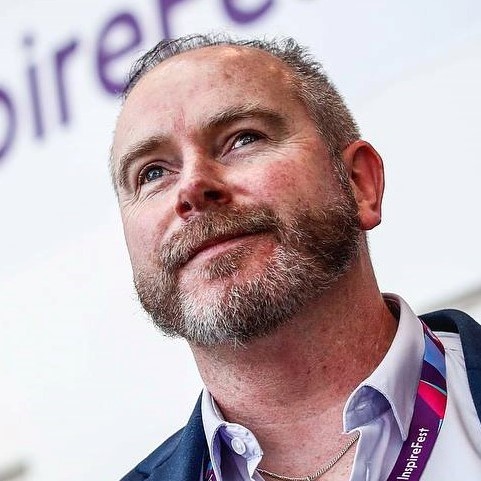
As Microsoft achieves 100% renewable energy matching milestone ahead of carbon negative goal, the tech giant’s Irish operations are driving its green ambitions.
Microsoft, which has been in Ireland for close to 40 years from the days of disk manufacturing to cloud and AI today, chose Dublin as the location to reveal its latest milestone.
The software giant has revealed it is now matching 100% of its annual global electricity consumption with renewable energy.
“Renewable energy feeds the grid, and then the grid feeds us all. There is no special grid for data centres only dedicated for us”
The achievement represents the culmination of more than a decade of clean energy procurement that began with a single 110 megawatt power purchase agreement in Texas in 2013. Since announcing its carbon negative commitment in 2020, Microsoft has contracted 40 gigawatts of new renewable energy supply across 26 countries.
“Every kilowatt of electricity we have used has been matched with renewable energy,” said Melanie Nakagawa, Microsoft’s chief sustainability officer, speaking at the company’s Dublin data centre campus. “Reaching this point is a significant step toward our 2030 carbon negative goal. We also know it’s just a marker on this journey.”
Massive clean energy portfolio expansion
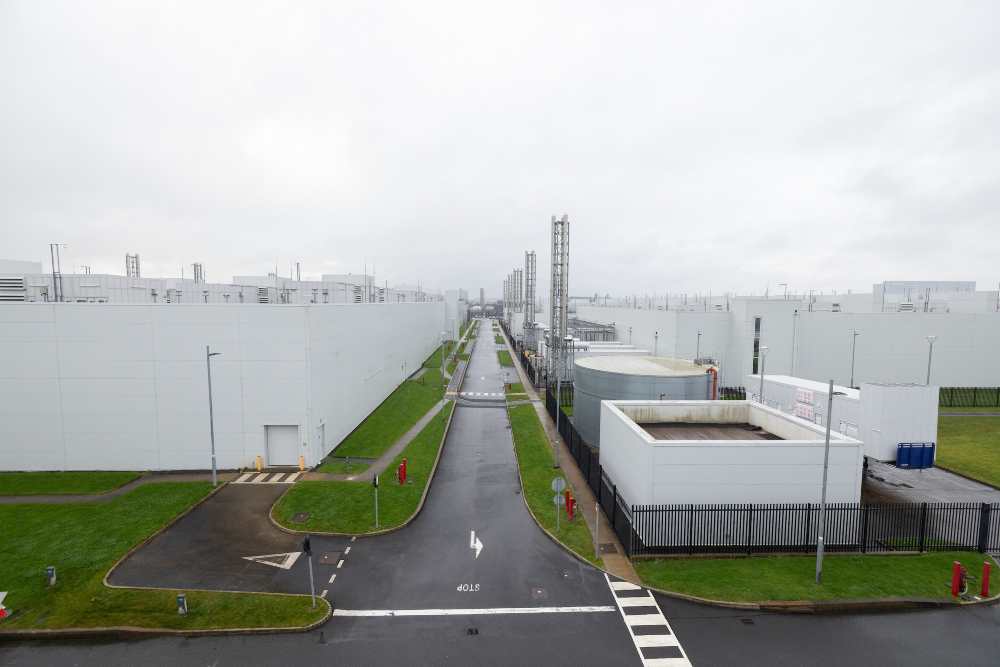
Aerial view of Microsoft’s Grange Castle data centre campus in west Dublin. Photo: Naoise Culhane
Of the 40GW contracted, 19GW are now operational and delivering clean energy to power grids globally, while the remainder are scheduled to come online over the next five years. The portfolio represents enough energy to power approximately 10 million US homes and has mobilised billions of dollars in private investment.
Microsoft’s approach centers on long-term power purchase agreements that provide price certainty to renewable energy developers, making projects more financially viable and enabling bank financing. The company now works with more than 95 utilities and developers across 400+ contracts.
A landmark agreement with Brookfield Asset Management for 10.5GW demonstrates the scale of Microsoft’s commitments. “From 2013 with 110 megawatts for one project in Texas, to about a year ago, signing a 10.5 gigawatt agreement with Brookfield – it’s a massive ramp up,” Nakagawa explained.
The renewable energy procurement has delivered significant environmental benefits, reducing Microsoft’s reported Scope 2 carbon dioxide emissions by an estimated 25 million tons compared to relying solely on grid electricity.
Data centre expansion challenges
The milestone comes as Microsoft faces unprecedented demand for cloud and AI services, driving rapid expansion of its data centre infrastructure. Noelle Walsh, a Kildare native and global head of data centres at Microsoft, revealed the company plans to double its capacity across 200 data centres in Europe by 2027.
The tech titan’s very first data centre opened its doors in Ireland in 2009 and the sprawling data centre campus continues to spearhead its hyperscale cloud journey.
“90% of Fortune 500 companies are on Microsoft Cloud,” Walsh noted. “We are growing at an unprecedented rate” across 16 European countries where Microsoft has publicly announced investments.
The expansion faces significant challenges, particularly in Europe where concerns about data centres’ energy consumption and impact on renewable energy supply have emerged.
In Ireland, where Microsoft operates one of its largest European campuses, questions arose about whether new renewable energy projects primarily serve data centers rather than residential consumers.
“Renewable energy feeds the grid, and then the grid feeds us all,” Walsh responded to concerns. “There is no special grid for data centres only dedicated for us.”
Community partnerships and local benefits
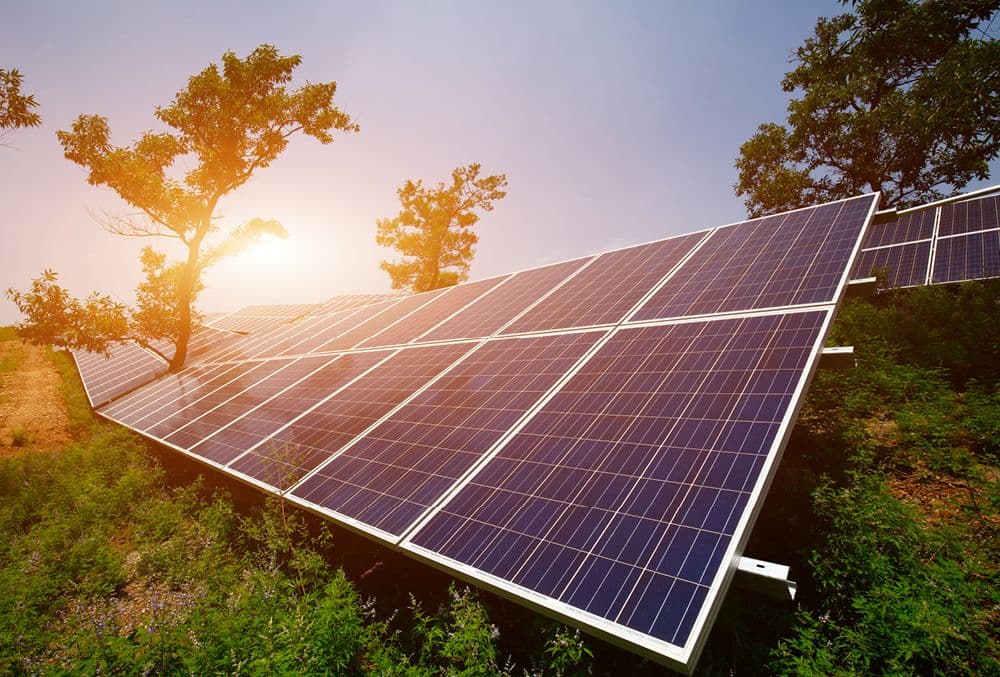
Microsoft’s renewable energy strategy emphasizes community benefits and local partnerships. The company has signed over 1.5GW of distributed solar projects, bringing clean energy directly into hundreds of communities worldwide.
In Ireland, Microsoft works with developer Statkraft on renewable energy projects and has established community funds supporting residents near its operations.
The company operates 19 data centre academies across Europe, training almost 2,000 students over five years for IT sector careers.
“We build data centres to operate for decades in our communities,” Walsh said. “It’s about long-term stewardship and growing together and strengthening local well-being.”
Innovation drives next phase
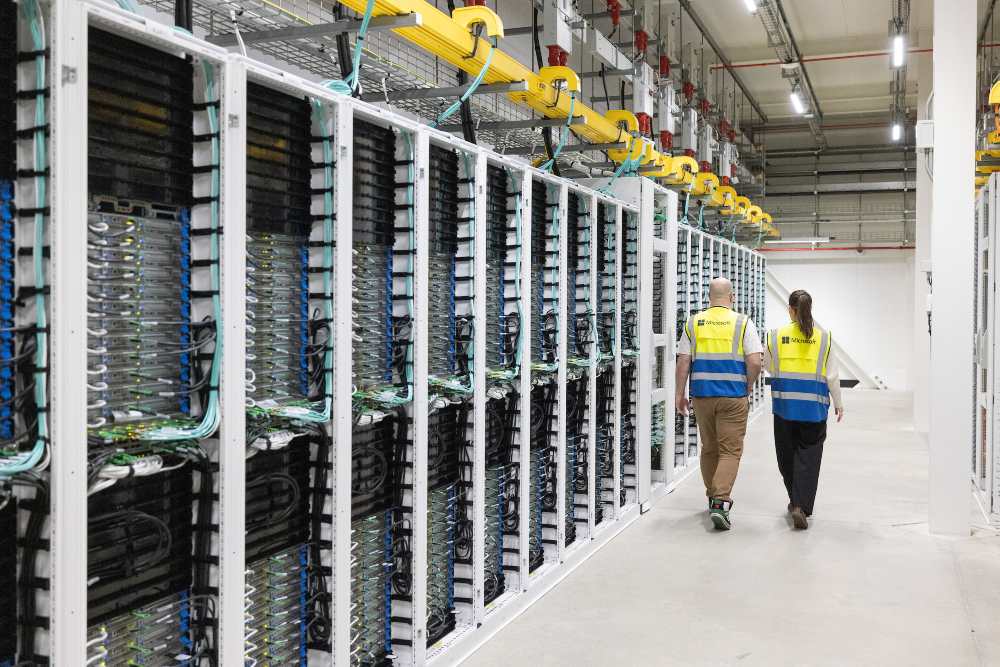
Inside the giant Microsoft data centre facility at Grange Castle in Dublin.
Looking beyond 2030, Microsoft is investing in emerging technologies including nuclear energy and carbon capture. The company’s Climate Innovation Fund has allocated $806 million across 67 investments, with 38% directed toward energy systems.
Microsoft has partnered with Helion on a 50MW fusion project in Washington state and is working with Constellation Energy to restart an 835MW nuclear facility in Pennsylvania. The company is also developing AI-driven tools to design, permit and deploy new power technologies more efficiently.
“As the global economy needs to electrify, it needs more affordable, reliable and clean electricity,” Nakagawa said, referencing the International Energy Agency’s designation of the current period as the “Age of Electricity.”
She said the company’s data centres serve as “living laboratories” where innovations are tested and refined. A battery-powered backup system pioneered at the Dublin facility is being exported to three Nordic countries, while AI applications help optimise electricity grid operations.
Balancing growth with sustainability
Microsoft’s achievement comes as the tech sector faces scrutiny over the environmental impact of AI and cloud computing expansion. The company maintains that its approach demonstrates how rapid digital growth can align with sustainability goals.
“We’re not doing digitisation at the expense of decarbonisation – we’re doing both together,” Walsh emphasised. “I think here in Ireland, it’s a great example of working collaboratively with the government to provide the guard rails that will be necessary to allow data centres continue to grow.”
The renewable energy milestone supports Microsoft’s broader sustainability commitments to be carbon negative, water positive, and achieve zero waste by 2030.
The company has also pledged to remove from the atmosphere the equivalent of all operational emissions since its 1975 founding by 2050.
Top image: Melanie Nakagawa, Chief Sustainability Officer, Microsoft and Noelle Walsh, President, Microsoft Cloud Operations + Innovation. Photo Leon Farrell/Photocall Ireland
-
Bank of Ireland is welcoming new customers every day – funding investments, working capital and expansions across multiple sectors. To learn more, click here
-
For support in challenging times, click here
-
Listen to the ThinkBusiness Podcast for business insights and inspiration. Latest episodes here. You can also listen to the Podcast on:
-
Spotify
-
SoundCloud
-
Apple