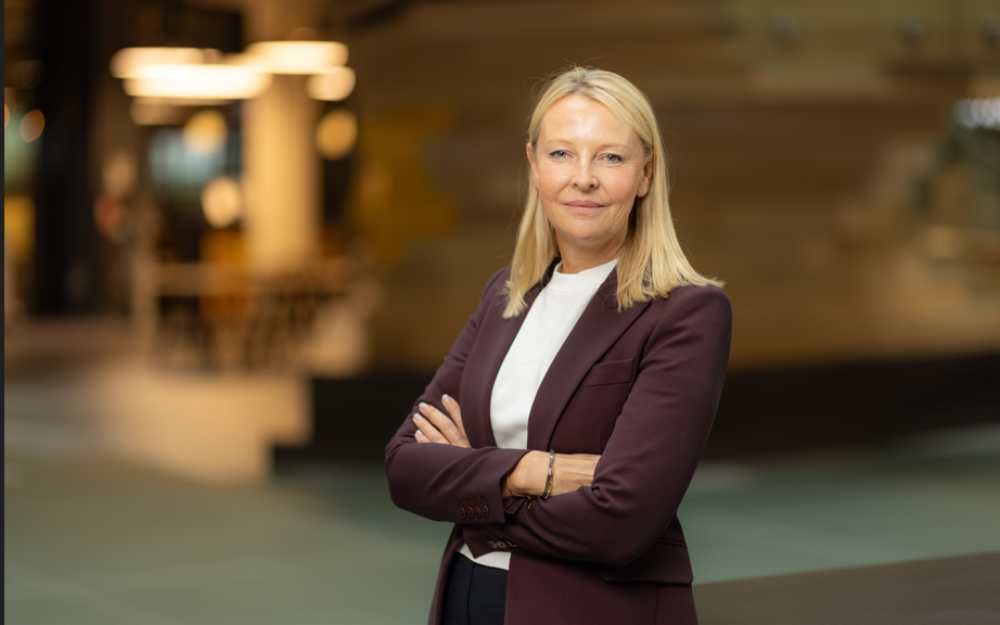
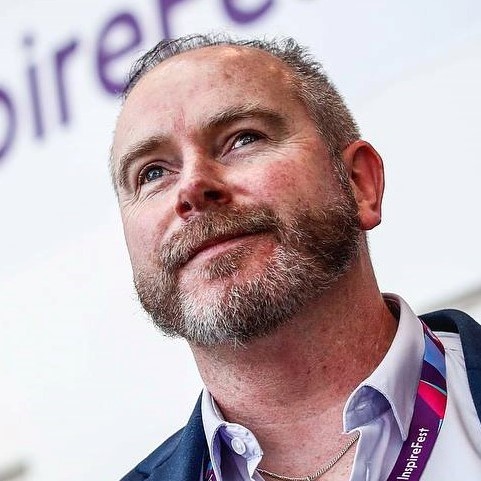
Podcast Ep 299: Microsoft’s chief medical information officer for the UK and Ireland Simon Wallace says AI could potentially be the panacea for the administrative bottlenecks that are impacting health systems in Ireland and across the world.
The scenario sounds futuristic but is pretty much possible right now: In a small consultation room at an Irish hospital, a doctor speaks naturally to her patient about symptoms and treatment options. What she doesn’t need to do anymore is frantically type notes or worry about completing paperwork later that evening. An AI assistant is listening, automatically generating accurate clinical documentation that integrates seamlessly with the hospital’s electronic records.
This scene is becoming increasingly real as tech giant Microsoft rolls out Dragon Copilot, an AI clinical assistant designed specifically to combat what Simon Wallace, Microsoft’s Chief Medical Information Officer for UK and Ireland, calls “the battle against clinician burnout.”
“I think the real problem with healthcare delivery in Ireland and the UK is these information bottlenecks. There’s no shortage of money being thrown at healthcare, but the problem seems to be information flow and frustration with that”
The technology launched in Ireland in October, arriving at a critical moment for the country’s healthcare system. Like its counterpart in the UK, Ireland’s health service faces mounting pressures from an aging population, staff shortages, and administrative burdens that push doctors and nurses to their breaking point.
“Clinicians, not just doctors but nurses and allied health professionals, are under immense strain at the moment,” Wallace explains. The numbers paint a stark picture: a recent study found that healthcare professionals spend a third of their working week just creating clinical documentation, a figure that has increased by 25% over the past decade. Many complete this work outside their contracted hours.
Dragon Copilot represents Microsoft’s attempt to address this crisis through what Wallace describes as “a single platform for voice” that combines natural language processing with ambient voice technology. Unlike generic AI tools, this system has been trained on 15 million real clinical consultations, with each interaction assessed for medical accuracy and workflow integration.
“It’s not an off-the-shelf large language model,” Wallace emphasises. “We’ve built our Dragon Copilot with years of experience in voice technology to address the real challenges clinicians face.”
The technology works by listening to natural conversations between doctors and patients, automatically generating transcripts and clinical notes without requiring specific commands or structured input.
More importantly, it integrates directly with electronic patient record systems through what Microsoft calls “connectors,” allowing voice commands to replace manual data entry and eliminate what Wallace terms “the clicks” that burden healthcare professionals.
20/20 vision on clinical accuracy
You can also listen to the Podcast on:
Early results from the US, where the system has processed 3 million conversations across 600 healthcare organisations in a single month, suggest significant impact. On average, each consultation saves about five minutes of administrative time, allowing clinicians to maintain better eye contact with patients and focus on care delivery rather than note-taking.
The patient response has been overwhelmingly positive. “They love it, but they just want to be involved,” Wallace notes. Healthcare providers always ask permission before recording, and 93% of patients reported feeling they received better consultations as a result of the technology.
For healthcare professionals, the benefits extend beyond time savings. The data shows 70% felt the technology reduced feelings of burnout and fatigue, while 62% said it made them less likely to leave their organization. Perhaps most significantly, 77% reported improved documentation quality, addressing one of the most critical aspects of patient safety.
The technology’s sophistication lies in its ability to avoid what AI researchers call “hallucinations” – instances where the system generates text that was never actually spoken. “That’s the last thing clinicians want,” Wallace explains. “They don’t want to have to correct errors in critical medical documentation.”
Dragon Copilot’s deployment extends beyond traditional hospital settings. District nurses, community midwives, and psychiatric nurses who work in patients’ homes can use the system even when internet connectivity is poor. The technology stores voice files locally on mobile devices, creating documentation once the healthcare professional returns to a stable connection.
The system also points toward a future of what Wallace calls “agentic AI” – autonomous systems that can coordinate complex healthcare processes. Imagine a doctor deciding to discharge a patient: the AI could automatically order medications, arrange transport, prepare discharge summaries, and schedule follow-up referrals, all coordinated seamlessly in the correct sequence.
“There are lots of processes, for example, discharging a patient from hospital,” Wallace explains. “You’ve got to order medicines to go home, arrange transport, get the discharge summary done, maybe get a referral done. There need to be agents coordinating all that, with a conductor over the top making sure it’s done in the correct order.”
This vision addresses what many see as the fundamental problem plaguing healthcare systems: information bottlenecks rather than resource shortages.
“I think the real problem with healthcare delivery in Ireland and the UK is these information bottlenecks,” Wallace observes. “There’s no shortage of money being thrown at healthcare, but the problem seems to be information flow and frustration with that.”
Privacy is paramount
Privacy concerns, particularly acute in Ireland given its strong data protection culture, have been central to Microsoft’s approach. The company has built the system with end-to-end encryption, access controls, and compliance with all clinical safety and regulatory requirements. “Data security is our number one priority,” Wallace states, acknowledging that healthcare remains a prime target for cyberattacks.
Looking ahead, Wallace sees AI transforming healthcare delivery in Ireland over the next five years through three key areas. Diagnostic AI will become mainstream, detecting conditions like lung cancer and diabetic retinopathy earlier while reducing pressure on specialists. Personalized medicine will move center stage, using genetic profiles, tumor markers, and lifestyle factors for earlier risk detection.
Most importantly, healthcare will shift from reactive to proactive care. “Instead of someone coming in with chest pain having a heart attack,” Wallace explains, “we can be much more proactive, picking up someone who may be months away from that acute episode and actually preventing it from happening.”
This transformation depends on quality data, which Wallace believes voice-enabled consultations will help generate. “Having consultations using voice will allow that richer database of clinical knowledge to feed those developments that will become prominent over the next five years.”
The timing of Dragon Copilot’s arrival in Ireland may prove fortuitous. The healthcare system has reached what Wallace describes as “a crunch point,” but this coincides with the emergence of generative AI capabilities. “In a strange way, we’re quite fortunate in that sense,” he reflects.
After two decades working in digital healthcare, Wallace sees AI as transformative. “I really do see this as a pivotal point to try and address these problems,” he says. “I’m really optimistic about it, but we need to work together to get to that goal.”
The technology represents more than efficiency gains. For Wallace, it’s about allowing healthcare professionals to rediscover why they entered their profession.
“Money’s been thrown at healthcare, but it’s a tired workforce,” he explains. “The workforce needs tools like this to take the pressure and strain off them and allow them to go home on time and enjoy their job without the other worries.”
In consultation rooms across the country, that conversation between doctor and patient may finally be able to take centre stage once again.
-
Bank of Ireland is welcoming new customers every day – funding investments, working capital and expansions across multiple sectors. To learn more, click here
-
For support in challenging times, click here
-
Listen to the ThinkBusiness Podcast for business insights and inspiration. All episodes are here. You can also listen to the Podcast on:
-
Spotify
-
SoundCloud
-
Apple