
As new era in logistics takes flight, the sky is the limit on Manna CEO Bobby Healy’s ambitions writes Mark Cullen.
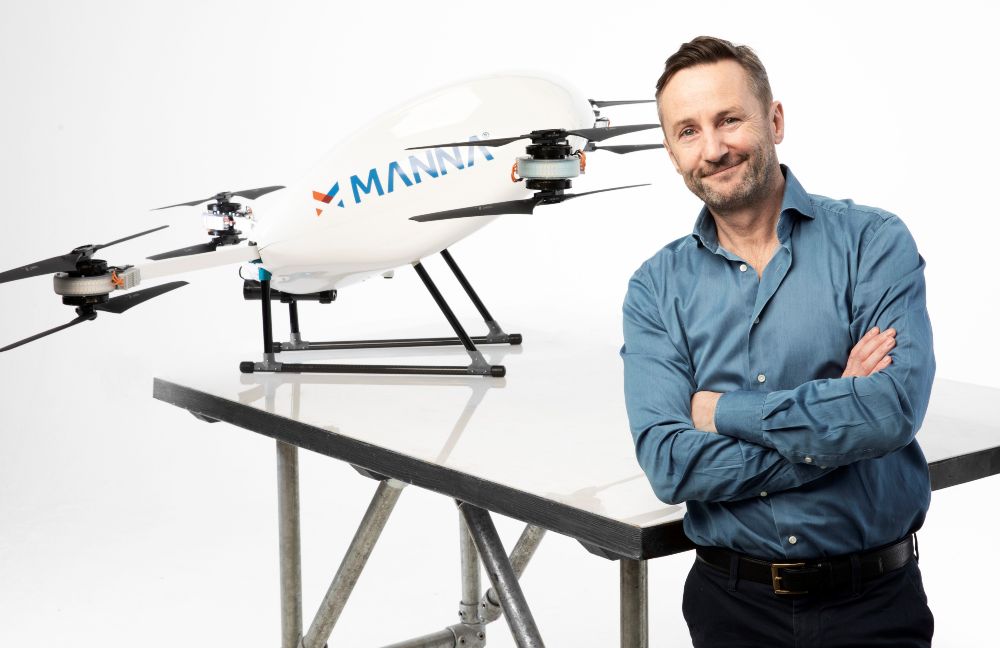
Bobby Healy, best known for being the founder of Manna Air Delivery in 2018 which is now Europe’s largest drone‑delivery operator, initially began his tech career with Nintendo at the age of 16 and since then has gone on to build many different companies.
From what may have seemed like an audacious idea with a lot of barriers has turned into a quickly growing concept that is taken the area of Dublin by storm. Manna being one of the top 100 Irish start-ups to watch in 2026, highlighted in a recent article by ThinkBusiness, has huge potential with Bobby at the front and centre of the direction in which this company is going.
“I think the next wave will be less about hype and more about fundamentals. Start-ups that deeply understand unit economics, real customer pain, and sustainable growth will outperform those chasing scale too early”
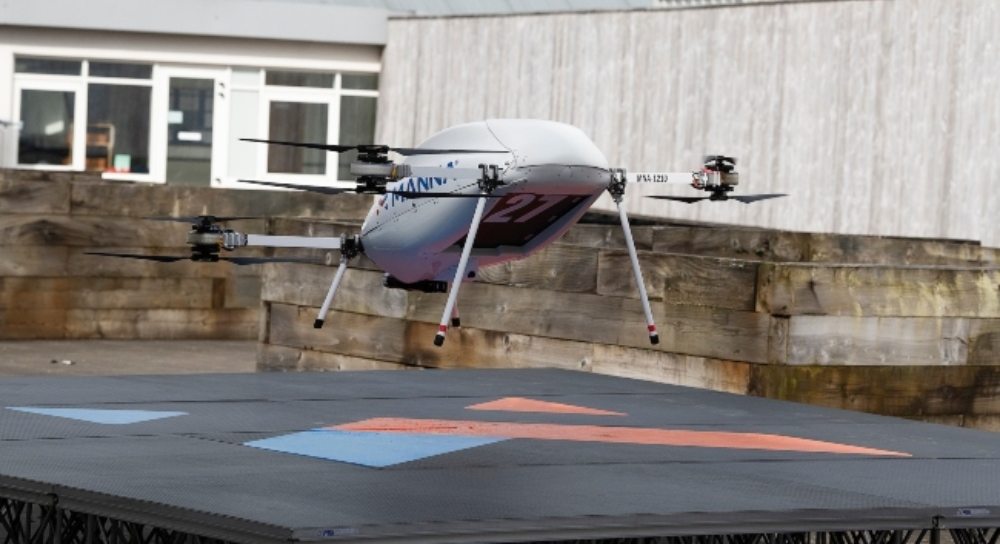
Funded to the tune of $30 million by early 2025, the trajectory of Manna Aero is growing wings as it revolutionises the world of airborne delivery – from food today to perhaps prescription drugs and more tomorrow.
Healy doesn’t lack ambition. In Manna’s 2025 recap, a stat that caught my eye was “6,629 flying coffees” and although at first glance it is a great marketing strategy for the brand by relating to everyday items, it does underline how the future will be revolutionised. Getting your coffee delivered through the air could not only be more efficient but possibly the new norm!
Scaling responsibly
Having had the opportunity to ask the founder Bobby Healy a few questions, it gave me a much better understanding in terms of the direction that the company is heading.
“In the near term, it’s about scaling responsibly –expanding operations, strengthening partnerships, and continuing to prove that autonomy at scale is both safe and commercially viable.”
With the funding in place the opportunity for growth continues and 2025 was a great year for Manna overall with some very impressive statistics. Short term goals are important but as a serial entrepreneur having built CarTrawler, Eland and Meili, from my perspective he is looking long term when it comes to Manna.
“Long term, Manna’s ambition is to become a core layer of urban logistics globally. If we do our job right, we’ll fade into the background while cities simply work better.”
This is great advice for companies that want to grow but often scaling can be one of the most difficult challenges and often firms can fail if they force it or scale too early. His point here on scaling responsibly is one of the best takeaways I got from his responses.
When talking to entrepreneurs it always fascinates me how they decided that the standard route may not have been for them and they wanted to try something different.
Bobby’s perspective on this didn’t surprise as I could tell from his previous projects and companies that he always seemed to be intrigued by the idea of building something new.
“From early on I was more comfortable with ambiguity than structure. The ‘standard route’ assumes fairly linear progress and predictable outcomes, but I was always more curious about creating something from nothing and solving problems that didn’t yet have clear answers”.
He also realised something that is important when starting out. “I realised pretty quickly that I learned fastest by doing, by failing, and iterating rather than following a predefined path.”
This underlines the fact that when building something new without guidance on which direction to go there will always be mistakes. But it is the adaptation and response to these mistakes that really defines the idea or project.
I am always curious to see how minds like Bobby’s work as they naturally are problem solvers at heart. His role in building different projects over the years led me to ask him what he thinks will be the next trend or direction that start ups will lean towards.
Why the next wave of start-ups will soar
“AI will obviously underpin many businesses, but the real winners will be companies that use technology quietly and effectively rather than loudly. I also see a strong shift toward infrastructure and platform businesses that enable others to move faster,” Healy said.
“Mentorship doesn’t have to be formal. Often it’s just being available, honest, and willing to share both the wins and the mistakes”
The AI element to this answer did not shock me and I imagine a lot of people may have seen this coming but he made a wise addition to this.
“I think the next wave will be less about hype and more about fundamentals. Start-ups that deeply understand unit economics, real customer pain, and sustainable growth will outperform those chasing scale too early.”
I hear a lot about the percentage of those that are actually successful when it comes to startups and one of the core issues can be that they try and scale the idea before the foundations are in place.
His top three tips for anyone who believes that they may have an idea or are contemplating the entrepreneurial route were:
- Start before you feel ready – clarity comes from action, not thinking
- Learn to be comfortable being wrong quickly; feedback is a gift if you use it properly
- Obsess over the problem, not the idea – the best ideas emerge from deep problem understanding
The final one underpins Bobby’s mindset as he builds things that are solving a problem and this is where his success comes from. There is no point in having a brilliant idea and execute it perfectly if the underlying issue that it is solving there is no demand for.
As an entrepreneur looking to first solidify the idea in practice and then scale from there, there was always going to be challenges and as I had the opportunity to ask Bobby a few questions I was not going to let this one get away.
His response when questioned over the challenges that arose during his journey was something that with such a new product and business like Manna would be an interesting take no doubt
“Trust. Not just regulatory trust, but public trust, operational trust, and internal trust in the system itself. Autonomous technology only works if every stakeholder believes it’s safer, more reliable, and more useful than existing solutions. Building that trust took far longer – and mattered far more – than any single technical challenge.”
As someone who has built things for as long as he can remember any technical challenge would be a welcome one. But the consideration when it came to trust with the way in which Manna operates as a product brought in a slightly new challenge that may not have had to have been considered in previous companies that Bobby has built and been involved in.
The entrepreneur scene in Ireland is known for its success stories in recent years and the supports that can be accessed through a number of different routes, but Bobby made a point about the importance of mentorship.
“Mentorship doesn’t have to be formal. Often it’s just being available, honest, and willing to share both the wins and the mistakes.”
Learning from both your own mistakes but also others before you may save both time and costs along the way.
Manna has its sights set on expansion into the US which will be a major market in terms of capturing demand for the product globally so it will be extremely interesting and exciting to see the progression of both Bobby Healy and Manna Air Delivery in the months and years ahead.
-
Bank of Ireland is welcoming new customers every day – funding investments, working capital and expansions across multiple sectors. To learn more, click here
-
For support in challenging times, click here
-
Listen to the ThinkBusiness Podcast for business insights and inspiration. All episodes are here. You can also listen to the Podcast on:
-
Spotify
-
SoundCloud
-
Apple