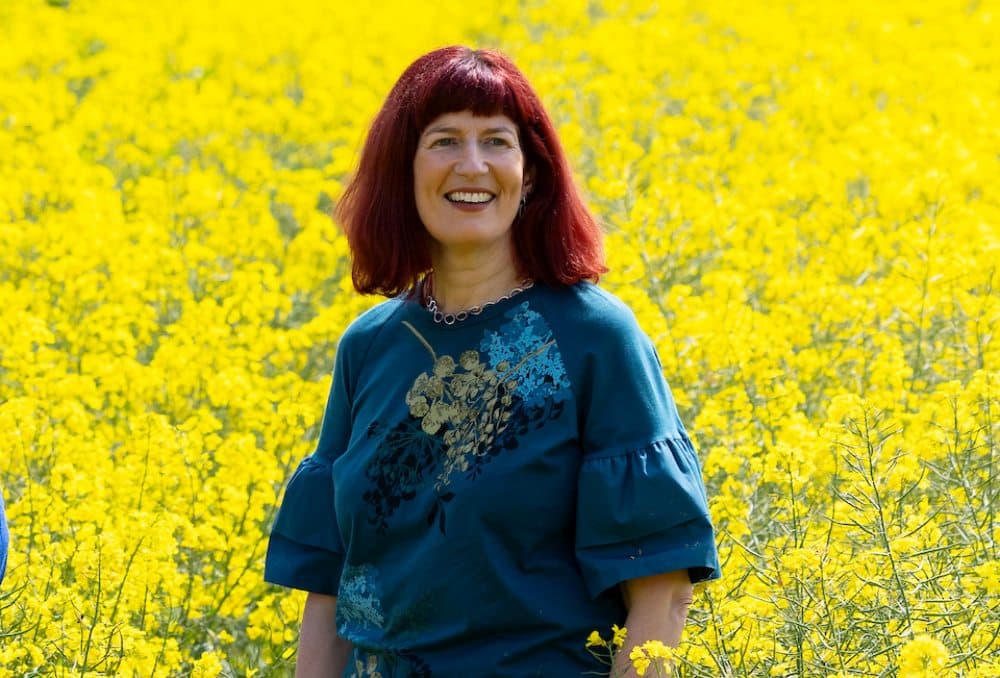

Lucy Ryan, head of Food & Drinks Sector at Bank of Ireland, shares insights on the resilience of the sector.
Ireland’s food and drink industry is navigating a landscape shaped by global uncertainty, regulatory tightening and evolving consumer expectations.
Exports remain strong, but operators face mounting compliance demands and persistent inflationary pressures.
“Irish food and drink businesses have a track record of adapting. The next phase will require agility, investment and a commitment to sustainability. Those who embrace change will be best placed to thrive”
Food and beverage exports rose 13% in the first nine months of 2025 to €14.27 billion, up from €12.62 billion a year earlier.
Structural challenges
Yet, according to Lucy Ryan, head of the Food & Drink Sector at Bank of Ireland, the headline growth masks deeper structural challenges.
“Producers are contending with high input costs, geopolitical instability and new EU rules that require significant investment in technology and processes,” she says.
One of the most significant changes is the EU’s enhanced food safety regulation, which came into effect in March. Known as Regulation 2025/351, it imposes stricter standards on plastics in contact with food, including recycled materials.
“This is not just a paperwork exercise,” Ryan explains. “It means rethinking materials, manufacturing and documentation. Businesses have until September 2026 to transition, but the work starts now.”
Traceability is another area undergoing transformation. QR and data matrix codes are becoming standard as global bodies such as GS1 push for richer product information.
“Consumers want transparency, and regulators demand it,” Ryan notes. “Digital codes allow producers to share origin and quality details instantly, and they help manage recalls more effectively.”
Environmental compliance
Environmental compliance is also tightening. The EU Deforestation Regulation, delayed until this month, will require proof that products sold in or exported to the bloc are not linked to land cleared after December 2020. Larger businesses must comply by the end of 2026, with smaller operators following in 2027.
“This is a major shift for supply chains,” Ryan says. “It’s about sustainability, but it’s also about data integrity and verification.”
Meanwhile, consumer trends are reshaping product categories. A recent European Court of Justice ruling means non-alcoholic drinks can no longer be marketed as gin, and plant-based foods may soon lose meat-related names. “Language matters in food marketing,” Ryan observes. “These changes will force brands to rethink positioning at a time when demand for low-alcohol and plant-based options is growing.”
Inflation remains a pressing concern. Food prices in Ireland were up 4.7% in September, compared with 4.5% in the UK and 3.5% across the EU. “The drivers are complex—climate impacts, tariffs, energy costs and geopolitical risk all play a role,” Ryan says. “Producers are focusing on controllable costs, and automation is a key lever for efficiency.”
Global commodity markets offer mixed signals. Cocoa prices have fallen sharply to around $5,200 per tonne from highs of $12,200 last year, thanks to improved harvest prospects in West Africa.
Coffee prices, however, remain elevated at $4 per pound amid tariff uncertainty and supply concerns. Shipping costs have stabilised after two years of disruption, but carriers are unlikely to resume Red Sea routes soon.
Despite these challenges, Ryan sees resilience in the sector.
“Irish food and drink businesses have a track record of adapting,” she says. “The next phase will require agility, investment and a commitment to sustainability. Those who embrace change will be best placed to thrive.”
As Irish businesses navigate a trading environment impacted by global geopolitical uncertainty, the opportunities associated with artificial intelligence (AI) and fluctuating consumer sentiment, the Bank of Ireland Sectors team examine the developments, challenges and opportunities across seven key elements of the Irish economy; Agriculture, Healthcare, Hospitality, Manufacturing, Food & Drink, Retail and Technology-media-telecoms (TMT).
Read the full report:
-
Bank of Ireland is welcoming new customers every day – funding investments, working capital and expansions across multiple sectors. To learn more, click here
-
For support in challenging times, click here
-
Listen to the ThinkBusiness Podcast for business insights and inspiration. All episodes are here. You can also listen to the Podcast on:
-
Spotify
-
SoundCloud
-
Apple