
Irish businesses warn of rising trade disruption and protests, urging dialogue, stability and support to protect jobs, exports and Ireland’s reputation.
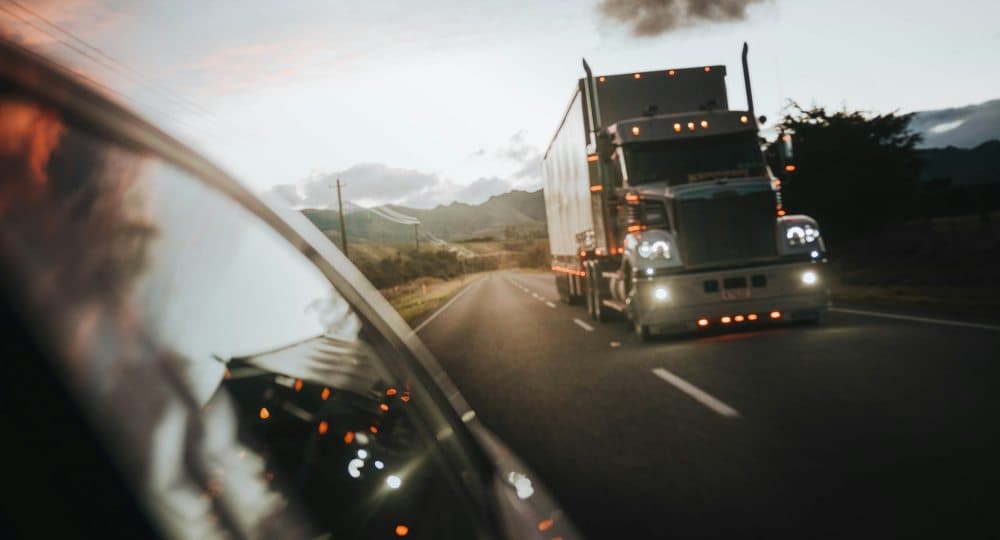
From the blockades of major cities and port facilities by hauliers and agriculture contractors over the cost of fuel that have caused widespread disruption across Ireland to international trade disruption, it is clear that Irish businesses are now facing a period of mounting pressure.
Business leaders warn that without constructive engagement and coordinated support, the cost to jobs, exports and Ireland’s reputation as a reliable place to do business could be impacted.
“The current level of disruption is placing an unfair burden on businesses and workers who have no direct influence over the issues being raised”
It is understood that the Irish Government will today meet representative bodies to discuss fuel protests.
But after a week of road closures and the onset of talks it is clear at the time of writing (10 April) that road closures are still affecting major arteries like the M50, the M1, the M8 and M18 and forecourts and emergency services are warning of fuel running out. Some already have.
Impact on domestic economy
The backdrop to this is the US-Israeli war with Iran that has caused the Straits of Hormuz to be blocked, which currently hanging on a very fragile cease fire, and hauliers and agriculture contractors’ concern at the high cost of excise on diesel and petrol in Ireland.
But the impact from supplies to businesses, shoppers buying goods, to workers simply getting to work is very likely a knock-on effect on the domestic economy if the situation rumbles on.
Mary Rose Burke, chief executive of Dublin Chamber, said businesses are struggling with delays, disrupted deliveries and reduced customer footfall.
“The current level of disruption is placing an unfair burden on businesses and workers who have no direct influence over the issues being raised. It is neither sustainable nor proportionate.”
The Chamber has urged protestors to engage through established channels, stressing that dialogue is the most effective path to progress.
“The most effective way to achieve meaningful progress is through constructive dialogue. We are urging protestors to engage with policymakers and relevant stakeholders through established channels, where their concerns can be properly heard,” Ms Burke said.
Business leaders warn that prolonged disruption risks undermining economic activity at a time when stability is already under pressure from global events.
Dublin Chamber noted that the capital’s role as the economic heart of the country means the impact extends far beyond individual firms.
“Prolonged disruption not only affects individual businesses but also damages the city’s reputation as a place to work, invest and visit,” Ms Burke said.
Impact on exports
Many Irish exporters, including small businesses, are already paying the price for the far-reaching and costly consequences of conflict in the Arab World, according to the Arab Irish Chamber of Commerce (AICC).
Ahmad Younis, CEO of the AICC, cautioned the Irish government and business community against underestimating the cost to the economy, noting that Irish businesses exporting to the Arab region need support from them now more than ever.
“The ongoing rise in fuel prices alone indicates just how much costs have surged in recent weeks: the supply chains that once moved smoothly between Ireland and the Gulf are dealing with significant transport delays and attacks. The stakes are too high to ignore.”
The Gulf region, encompassing Saudi Arabia, the United Arab Emirates, Qatar, Kuwait, Oman and Bahrain, has become a cornerstone market for Irish exporters across agri-food, pharmaceuticals, technology and aviation.
Irish butter, dairy powders, meat and confectionery are now supermarket staples across the region, while Irish engineering and construction expertise is embedded in major infrastructure projects, particularly in cities such as Dubai.
Younis said the current challenges underline the need for sustained engagement rather than retreat.
“We have to commit to maintaining strong commercial ties with the Gulf. Backing off now damages both our economic prospects and our strong reputation as a reliable trading partner. Trust is earned in this region. It takes time, commitment and dedication.”
Agriculture is among the sectors under immediate strain. Irish farmers are facing fertiliser shortages as shipments from Iran, Qatar and Saudi Arabia are disrupted and diversion costs continue to rise.
For smaller exporters, the financial shock is especially acute. An estimated 400 Irish owned companies export to the Arab region, many of them small and medium sized enterprises with limited capacity to absorb delays or prolonged uncertainty.
“These hubs are invaluable for Irish businesses looking to expand,” Younis said, referring to logistics and commercial centres such as Dubai, Doha and Abu Dhabi. “Without trade support, it could result in them losing ground in key markets that has taken them years to build up.”
-
Bank of Ireland is welcoming new customers every day – funding investments, working capital and expansions across multiple sectors. To learn more, click here
-
For support in challenging times, click here
-
Listen to the ThinkBusiness Podcast for business insights and inspiration. All episodes are here. You can also listen to the Podcast on:
-
Spotify
-
SoundCloud
-
Apple