
Could the Republic of Ireland’s tightest labour market in years choke economic growth?
Ireland is grappling with a widening mismatch between employer demand and available expertise, a phenomenon being described as a “skills wall” that threatens to dampen the country’s economic momentum.
Despite a robust appetite for hiring across the technology, healthcare, and financial services sectors, the pool of qualified candidates is failing to keep pace.
“Finding people with the right experience and qualifications is getting harder, and that is now starting to hold businesses back”
According to the latest Irish Labour Monthly Monitor, commissioned by the Employment and Recruitment Federation (ERF) and supported by ICON Accounting, more than 50% of recruiters reported a rise in permanent vacancies during the most recent survey period.
Demand for flexible work remains similarly high, with 43% of firms seeking contract staff and 41% reporting an increase in temporary roles.
Supply of talent versus demand
The outlook for the coming quarter remains expansionary, as over half of recruiters anticipate vacancy levels will continue to climb. However, the optimism is tempered by a lack of supply. Two thirds of those surveyed expect no improvement in the availability of suitably skilled candidates in the near term.
Siobhán Kinsella, President of the ERF, suggested that the narrative of the Irish economy has shifted. “What this data shows very clearly is that Ireland does not have a jobs problem,” she said. “It has a skills problem. Employers are still hiring. Recruiters are still filling roles. But finding people with the right experience and qualifications is getting harder, and that is now starting to hold businesses back.”
The friction in the market is driving up costs for Irish firms. With the national unemployment rate sitting at 4.6% as of February, companies are engaged in a costly tug of war for a limited number of experienced professionals.
Kinsella noted that while the jobs market remains fundamentally strong, it is becoming increasingly expensive to navigate. “Businesses are dealing with higher costs, continued uncertainty, and fast-changing requirements at the same time,” she said.
The data also highlights a stark generational divide. While the broader market is tight, youth unemployment stands at 12.4% for those aged 15 to 24. This discrepancy suggests that while roles are available, those entering the workforce lack the specific technical qualifications required for modern roles in engineering, logistics, and artificial intelligence.
“If Ireland wants to maintain momentum, we need to get much more serious about training, reskilling, and workforce readiness,” Kinsella said. “We cannot keep talking about strong employment numbers if employers cannot find the people they need to fill the roles that are there.”
The trend is not unique to Dublin. Advanced economies globally are shifting their focus from job creation to capacity building. The issue is set to take centre stage at the World Employment Conference in Toronto this May, where Irish delegates will join international policy discussions on how to align workforce planning with rapid technological shifts.
Kinsella believes the solution lies in targeted investment. “We have adapted before as technology changed the way we work, and we will adapt again. But this next phase will depend on whether we invest properly in skills, support people to retrain and make it easier for employers to access the talent they need in areas such as AI, machine learning, engineering, and healthcare.”
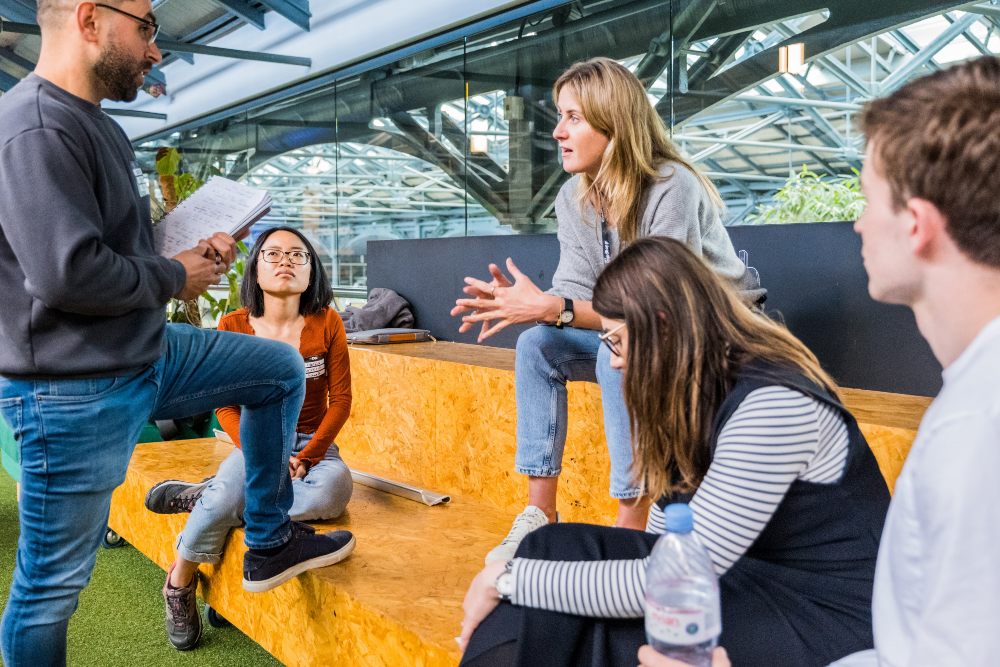
Top image: Siobhán Kinsella, President of the ERF
-
Bank of Ireland is welcoming new customers every day – funding investments, working capital and expansions across multiple sectors. To learn more, click here
-
For support in challenging times, click here
-
Listen to the ThinkBusiness Podcast for business insights and inspiration. Latest episodes are here. You can also listen to the Podcast on:
-
Spotify
-
SoundCloud
-
Apple