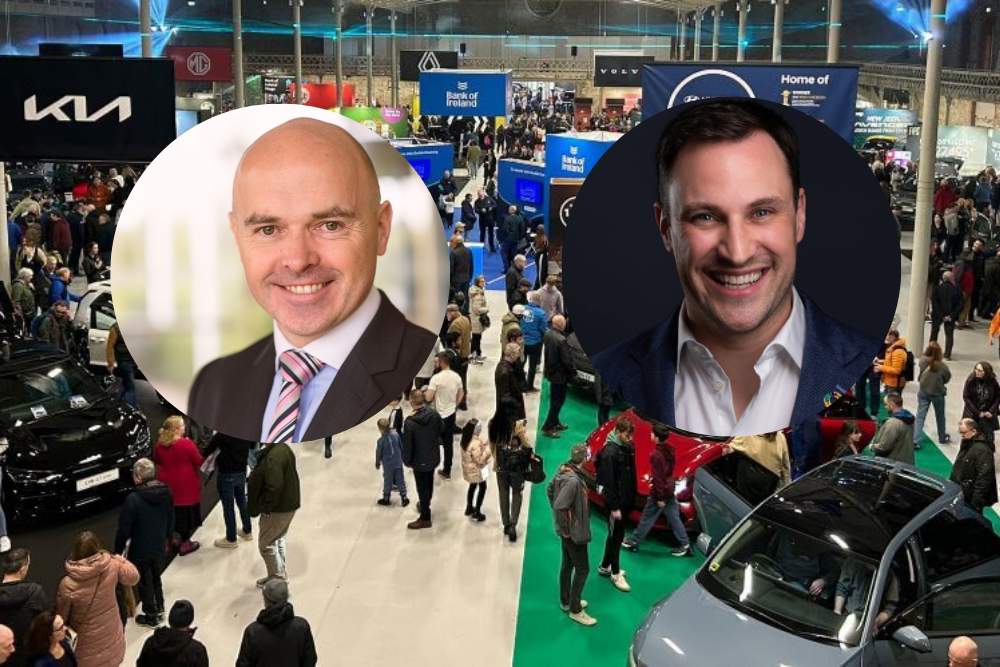
Podcast Ep 295: As Ireland’s EV market accelerates, we caught up with Bank of Ireland’s head of Motor Finance Derek Kavanagh at the recent Nevo Electric Vehicle Show to see what the road ahead looks like.
At the Nevo Electric Vehicle Show in Dublin last month, the conversation was less about whether electric vehicles are viable and more about how quickly businesses can scale their transition.
Derek Kavanagh, head of Motor Finance of Bank of Ireland, captured the mood.
“Continuous improvement in charging infrastructure and increased range in vehicles mean the whole thing is coming together and making it easier for customers to make that decision”
“We work closely with all our customers and have dedicated finance specialists who liaise with companies on their fleet and charging infrastructure needs. We’re able to put credit facilities in place to make that journey as easy as possible.”
Time to transition your fleet
-
You can also listen to the Podcast on:
-
Spotify
-
SoundCloud
-
Apple
Kavanagh described a shift in priorities among corporate buyers. “Affordability is one aspect, education is another, and then effectively range anxiety,” he said. “We’re the key provider of funding to the motor industry and work closely with 16 franchise brands by putting in low-rate finance campaigns that assist companies and consumers in making the transition.”
Improvements in battery range and charging infrastructure are helping to ease concerns. “There are commercial vehicles here today with a battery range of in excess of 500 kilometres. That’s a game changer for anybody looking to transition their fleet.”
The Nevo Show, which drew more than 21,500 attendees across two days, reflected this momentum. Friday’s Business Day attracted senior decision-makers focused on net-zero strategies, with workshops on fleet management and energy integration. Orders placed ranged from 50 to 100 vehicles, underlining the appetite for electrification.
“This year’s show was about helping people and businesses move from interest to action,” said Simon Andreucetti, managing director at Nevo.
Policy and climate targets driving the shift
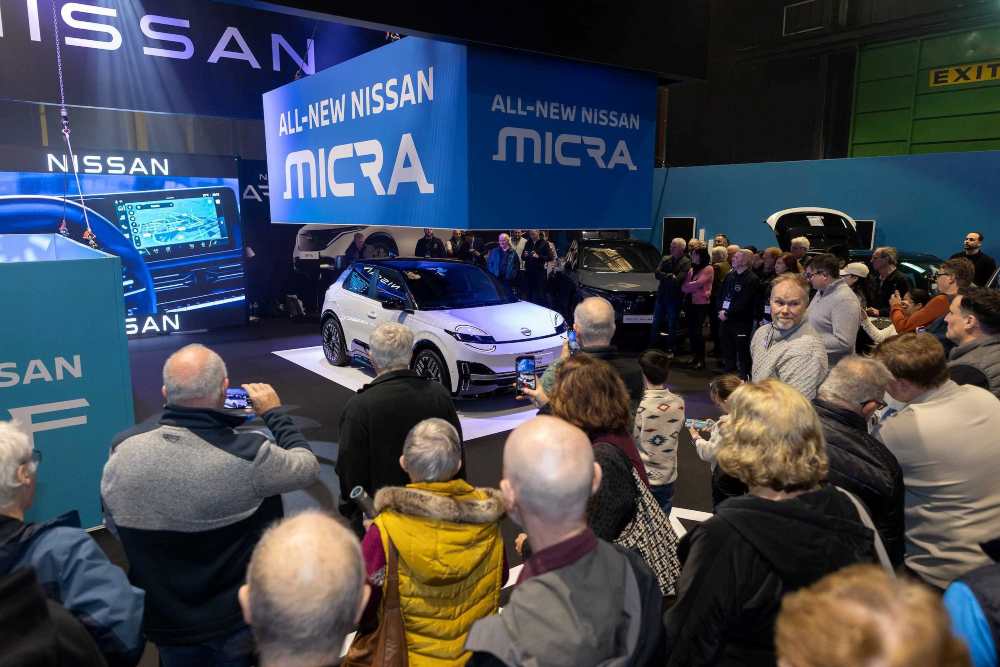
Ireland’s push toward electrification is underpinned by ambitious climate commitments. The Climate Action Plan sets a target of nearly one million electric vehicles on Irish roads by 2030, alongside a 51% reduction in greenhouse gas emissions across the economy. Transport accounts for roughly one-fifth of national emissions, making the decarbonisation of road travel a critical priority.
Government incentives have played a central role in accelerating adoption. Grants for private and commercial EV purchases, reduced tolls, and home charger installation supports have helped offset upfront costs.
For businesses, the Accelerated Capital Allowance scheme offers tax relief on investments in electric vehicles and charging infrastructure. These measures, combined with EU emissions regulations and corporate sustainability mandates, are reshaping procurement strategies across sectors.
Infrastructure development is another pillar of policy. The National EV Charging Network Strategy aims to deliver 30,000 public charging points by 2030, with a focus on high-speed hubs along motorways and urban centres. Recent upgrades by ESB and private operators have already improved reliability and coverage, addressing one of the main barriers to adoption.
Market momentum and outlook
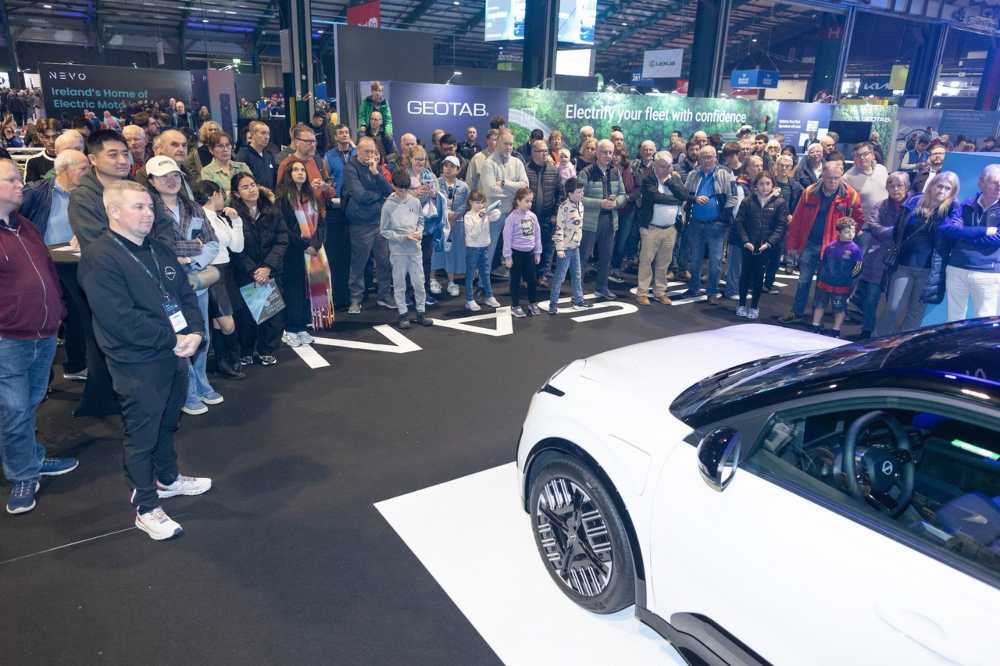
The policy backdrop aligns with strong market performance. Figures from the Society of the Irish Motor Industry (SIMI) show that battery electric vehicle (BEV) registrations have reached a record high in 2025. Despite a 31.9% drop in November to 348 units, cumulative registrations stand at 23,431, up 36.5% on 2024 and 3% ahead of the previous record year in 2023.
Electric cars now account for 18.79% of the new car market, behind petrol at 25.14% and hybrid petrol-electric at 22.51%, but ahead of diesel at 17.1% and plug-in hybrids at 14.84%.
Overall, new car registrations for November fell 25.2% to 838 units, but year-to-date totals are up 3.1% at 124,680. Commercial vehicles delivered strong growth: light commercial vehicle registrations surged 94.9% to 1,035 units, while heavy goods vehicles rose 16.6% to 112 units. Imported used cars climbed 28.4% to 6,373 units for the month.
Brian Cooke, SIMI Director General, said the November decline was expected in a traditionally quiet month. “Year-to-date new car sales remain 3% ahead of 2024,” he noted. “New battery-electric car registrations declined by 32% in November, but this has not undermined the overall BEV market. In fact, in 2025, we have now surpassed the previous record year of 2023 for BEV registrations.”
Cooke added that growth in BEV registrations has been evident across every county, supported by improvements in charging infrastructure and a broader range of models.
“In the commercial vehicle sector, both light and heavy commercial vehicles experienced strong activity in November. Light Commercial Vehicle registrations are showing a 95% increase for the month and a 6% increase year-to-date. Heavy Goods Vehicle registrations saw a 17% increase in November, although registrations are 7% down on last year.
“With the end of the year fast approaching, the industry’s focus will firmly be set towards its key selling period at the start of 2026, with generous new car incentives for customers across all brands and market segments on offer.”
For Kavanagh, the transition is no longer theoretical. “Education is key,” he said. “Events like this show allow companies and individuals to see over 120 vehicles, talk to experts and learn more. Continuous improvement in charging infrastructure and increased range in vehicles mean the whole thing is coming together and making it easier for customers to make that decision.”
-
Bank of Ireland is welcoming new customers every day – funding investments, working capital and expansions across multiple sectors. To learn more, click here
-
For support in challenging times, click here
-
Listen to the ThinkBusiness Podcast for business insights and inspiration. All episodes are here. You can also listen to the Podcast on:
-
Spotify
-
SoundCloud
-
Apple