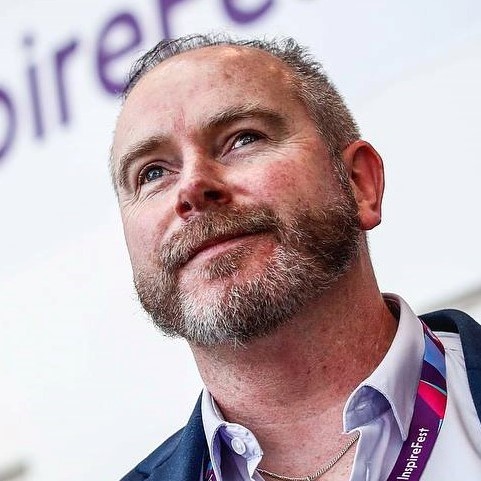
Podcast Ep 320: Dublin medtech start-up HealthBeacon’s co-founder Kieran Daly on how the business returned to profitability just two years after exiting examinership.
“There are many chapters in the HealthBeacon story,” general manager and co-founder Kieran Daly smiles wryly in response to my recollection of first becoming aware of the business around a decade ago during a fact-finding mission to Nasdaq in Stockholm. At that stage it was just a three-year-old start-up that was focused on the vitally important issue of medical adherence.
The latest chapter sees a business that has seen the highs and lows of entrepreneurship and is now on the right track after some bruising experiences. HealthBeacon recently reported that it increased its revenues by 71.7% just two years after it exited an examinership after losses of €13m had been racked up.
“Many medications we support were once only administered in hospitals. Today patients can use them at home, but clinicians still want oversight. Our connected devices bridge that gap”
Now the business is plotting an ambitious expansion into oral medications and establishes itself as a digital health platform as it rides a wave of growth in the home healthcare market.
The Dublin firm, which makes sharps bins for patients self-administering injections at home, was acquired by US medical appliance maker Hamilton Beach for €6.9m in 2024,and Daly, who co-founded the company has spearheaded a dramatic turnaround.
In its recent financials, the Irish medtech firm saw its revenues grow to $7.3 million (€6.22 million), from $4.28 million in 2024.
“We’ve had an excellent two years since being acquired,” Daly says. “Year one was stabilising; year two was profitability; now we’re ready for expansion again.”
The transformation marks a striking reversal for a business that had to delist from public markets after struggling to demonstrate the revenue streams that investors demanded.
From hospital to kitchen counter
-
Listen to the ThinkBusiness Podcast for business insights and inspiration. Latest episodes are here. You can also listen to the Podcast on:
-
Spotify
-
SoundCloud
-
Apple
The Dublin business’s core innovation addresses a growing challenge in healthcare systems worldwide: how to safely manage the shift of medical care from hospitals into patients’ homes. HealthBeacon’s connected devices bridge the gap between patient self-management and clinical oversight.
“Many medications we support were once only administered in hospitals. Today patients can use them at home, but clinicians still want oversight,” Daly explains. “Our connected devices bridge that gap.”
HealthBeacon’s flagship product, billed the world’s first smart sharps bin, emerged from extensive research into patient behaviour. The issue it was addressing was that traditional medical waste containers, usually festooned with prominent biohazard warnings, were designed for clinical settings rather than homes.
“We spent a year living with patients and understanding that pain point,” Daly recalls. “Traditional sharps bins weren’t designed for homes – patients hid them away, and the biohazard warnings sent the wrong psychological signal.”
The latest device features cellular connectivity, a screen and a camera system that can track disposal patterns and support medication adherence.
More than 40% of HealthBeacon’s devices now sit on kitchen counters, which are prime household real estate that the company says its products have “earned” through careful design.
The human touch in tech
At the heart of HealthBeacon’s approach is its “tech plus touch” philosophy that combines digital monitoring with human clinical support.
The sharps bins effectively act as a proxy for medication consumption, timestamping and photographing used injectors when patients dispose of them.
If injections are missed the system sends reminders or can escalate alerts to pharmacists or caregivers, depending on the specific patient support programme.
According to Daly the company has recorded more than 1m injections and can be seen as a sophisticated classification system.
“Adherence is a huge global problem – half of patients don’t stay on regimen,” Ciarán notes. The approach addresses a persistent challenge in healthcare, where non-adherence to prescribed treatments is estimated to cost health systems billions annually.
The secret sauce in HealthBeacon’s approach is that its physical device maintains relevance throughout a patient’s treatment journey, unlike smartphone apps or other digital health tools that often see engagement fade over time.
“The sharps bin matters just as much on injection #1 as it does on injection #101,” Daly says.
Route to market
HealthBeacon’s business model sees it operate through established healthcare channels rather than selling directly to consumers. In Europe it works through patient support programmes that are run by pharma companies or healthcare providers. Referrals are triggered when patients are prescribed specific injection treatments.
In the US HealthBeacon partners with specialty pharmacies such as Evernorth that specialise in support for complex medications. Ultimately pharma companies fund these services as part of broader patient support initiatives.
The acquisition of HealthBeacon by Hamilton Beach brought distribution strength in the vital US market along with financial stability.
Battle scars
Despite its return to health, there are a lot of lessons in the HealthBeacon journey to unpack, especially its bruising stock market experience, which can serve as a cautionary tale for other ambitious Irish businesses considering flotation.
Daly says the team are immensely proud of having gotten to IPO stage but acknowledge the company struggled with the demands of public market reporting.
“We were a young business with about €2 million in revenue, and we couldn’t demonstrate the level of repeatable, forecastable revenue public markets expect,” he reflects. “That lack of predictability contributed to us delisting and entering examinership.”
The subsequent restructure saw HealthBeacon’s headcount fall from 80 to 40 before growing again under new ownership.
Daly attributes the business’s turnaround to two key factors: a trusted working relationship with Hamilton Beach and “back to basics” discipline that focused on streamlining operations and leveraging Hamilton Beach’s logistics infrastructure.
The next frontier
HealthBeacon has also expanded beyond its traditional core sharps disposal product, rolling out regulated software software that is used in Irish andUK hospitals as well as a communications tool it calls Harmony.
The diversification journey marks the Irish firm’s evolution from a focused medtech into a broader digital health platform.
HealthBeacon’s journey from near collapse to profitable growth shows that examinership doesn’t have to mean the end of a business, but more the closure of one chapter and the opening of another.
Returning to growth has given HealthBeacon the confidence to target new markets and new technologies and Daly says the business is focused on a new frontier of oral medications, including pills and tablets.
Pilot programmes have begun with US partners and plans are underway to launch a comprehensive oral dose monitoring system.
“Once that launches, we’ll cover the full spectrum of medication adherence,” he says, pointing to a significantly larger addressable market than injectables alone.
As turnarounds go, it has been a healthy one.
-
Bank of Ireland is welcoming new customers every day – funding investments, working capital and expansions across multiple sectors. To learn more, click here
-
For support in challenging times, click here
-
Listen to the ThinkBusiness Podcast for business insights and inspiration. Latest episodes are here. You can also listen to the Podcast on:
-
Spotify
-
SoundCloud
-
Apple