Podcast Ep 302: With more than 1,500 start-ups and counting supported in just 25 years, the director of the Guinness Enterprise Centre Niamh Collins reveals how Ireland’s answer to France’s Station F became an entrepreneurial powerhouse.
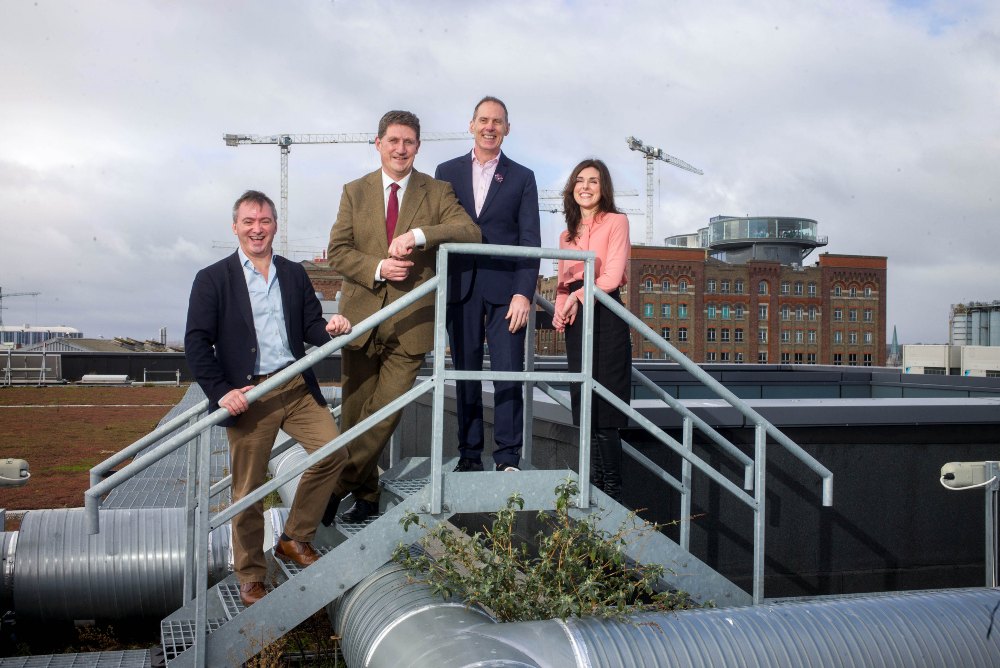
The modern expanses of the Guinness Enterprise Centre (GEC) in Dublin’s Liberties district, now filled with some of Ireland’s most promising young businesses, was once a crumbling warehouse belonging to the eponymous 260 year-old brewer is a reminder that things never stand still in business.
Ireland’s largest start-up campus has welcomed more than 1,500 companies and has earned international recognition as entrepreneurs make use of its collaborative workspaces.
“Everything we do here is founder-first focused. We have to support the founder at every stage of the development of their business”
Ireland’s answer to France’s Station F in Paris sees at least 450 people arrive each morning to pursue their business dreams. At present,160 start-up businesses are operating across 95,000 square feet of office space, making the GEC Ireland’s largest start-up campus.
The power of people
You can also listen to the Podcast on:
This year the GEC will celebrate its 25th anniversary having transformed from an abandoned industrial building into the world’s second-ranked private business incubator, according to UBI Global.
“We’ve welcomed our 1,500th company this year,” says Niamh Collins, the centre’s director who has spent 15 years working in Ireland’s start-up ecosystem. “That demonstrates there’s no shortage of entrepreneurial talent and entrepreneurial motivation in Ireland.”
The success comes at a time when many questioned the future of shared workspaces following the pandemic. Yet GEC operates at 84% capacity, with daily visitors doubling from 200 to over 450 since Covid restrictions lifted.
“The trend is changing,” Niamh explains. “We’ve seen companies bringing in new working policies, bringing people back into the office. Some of the larger companies have made it four days a week mandatory to be here. But sometimes it’s not even just the company making that happen – people like to get back and be in with people.”
The facility’s car park fills each morning, and there are queues for the shower facilities as entrepreneurs cycle to work. The physical proximity creates something that video calls cannot replicate.
“There is nothing like the one-to-one conversation in the cafe downstairs,” Collins notes. “You feel timed when you’re on Teams and Zoom and you have to go through that checklist. But sitting next to someone, you can accomplish a lot more by talking to them than setting up a Teams call.”
Collins said that GEC’s strength lies not just in its facilities but in fostering collaboration between companies. Regular “Meet The Neighbors” events encourage startups to share their challenges and expertise.
“What you find is that they all start to advise each other and mentor each other,” Collins says. “There’s power in that, and you can only get that if you’re part of a community.”
This collaborative spirit extends globally. The centre hosted 32 US universities last year alone, along with institutions from Spain, Germany, the UK, France, and the Czech Republic. These visits often result in MBA student projects that help Irish start-ups expand internationally.
“You can’t see the start-up ecosystem unless you’re in a space,” she explains.
From accountants to AI Innovators
The entrepreneurs choosing GEC reflect Ireland’s evolving startup landscape. QuizWizards, the centre’s 1,500th company, was founded by Rory McEvoy, an established accountant who left his steady job to create a fan engagement business.
“I really admire people who come out of a corporate world or their steady job where they’re getting their monthly salary,” says Collins. “He’s been on that very hard fundraising journey, and it’s something that I can’t put my finger on, but I see founders with really strong passion and drive for their product or service.”
The centre now focuses on three main clusters: artificial intelligence, sustainability, and health technology. Recent AI arrivals include companies working on gamification of the Irish language and CPD courses.
One medtech company exemplifies the long-term commitment required. The founder left the pharmaceutical industry to develop a product minimizing lung collapse during biopsies. After a decade-long journey with three young children to support, he recently received FDA approval.
“The businesses have been generated out of a need,” Niamh observes. “They’ve seen a better way of doing things, or something they can do better, hopefully making the world a better place.”
International ambitions
The Guinness Enterprise Centre’s success has attracted attention from global players. Station F, the Paris-based startup campus backed by the French government, visited in July to explore collaboration opportunities.
“It is a fabulous facility,” Niamh says of Station F, which she visited earlier this year. “They’ve definitely hit the ground running and are a fantastic example.”
While GEC operates differently – focusing on housing star-tups rather than running extensive programs – Collins sees opportunities for international partnerships. The centre already provides “soft landing” support for Irish companies expanding to markets including South Korea, the US, India, and the UK.
“Ireland is an amazing test bed for products and services, but to scale and grow bigger, you do have to look at international markets,” she explains.
Sustainable growth model
As a not-for-profit organisation, GEC reinvests its approximately €2m euros in annual rental income back into facilities and operations. Recent investments include a €150,000 upgrade to IT infrastructure and conference facilities.
“We’re making this a facility that attracts startups to be here, but also supports them while they’re here, so they don’t have to think about the office space,” Niamh explains.
The model supports companies through various stages. While some graduate after securing significant funding – like Urban Fox, which recently raised €8m and moved to larger premises after four and a half years – others remain longer as their journey unfolds.
“We support them to graduate from the GEC, but we also support others where the journey is longer,” she says. “We’re happy to support companies as long as we can add value to them.”
Twenty-five years after its founding, the converted warehouse continues attracting entrepreneurs willing to trade corporate security for the chance to build something meaningful. With applications arriving weekly and a waiting list for space, the centre shows no signs of slowing its growth.
“Everything we do here is founder-first focused,” Collins concludes. “We have to support the founder at every stage of the development of their business.”
-
Bank of Ireland is welcoming new customers every day – funding investments, working capital and expansions across multiple sectors. To learn more, click here
-
For support in challenging times, click here
-
Listen to the ThinkBusiness Podcast for business insights and inspiration. All episodes are here. You can also listen to the Podcast on:
-
Spotify
-
SoundCloud
-
Apple