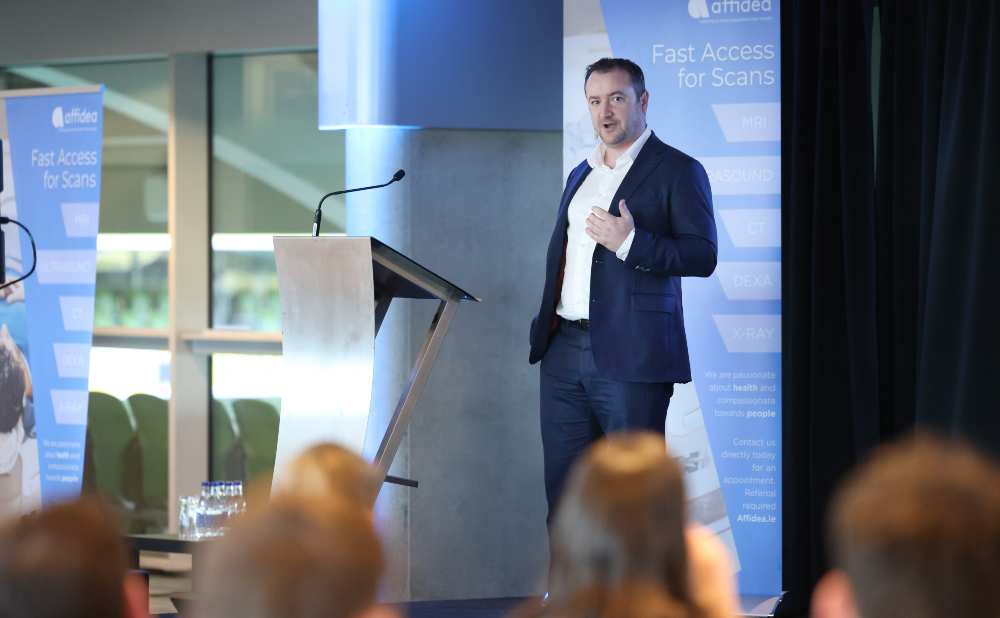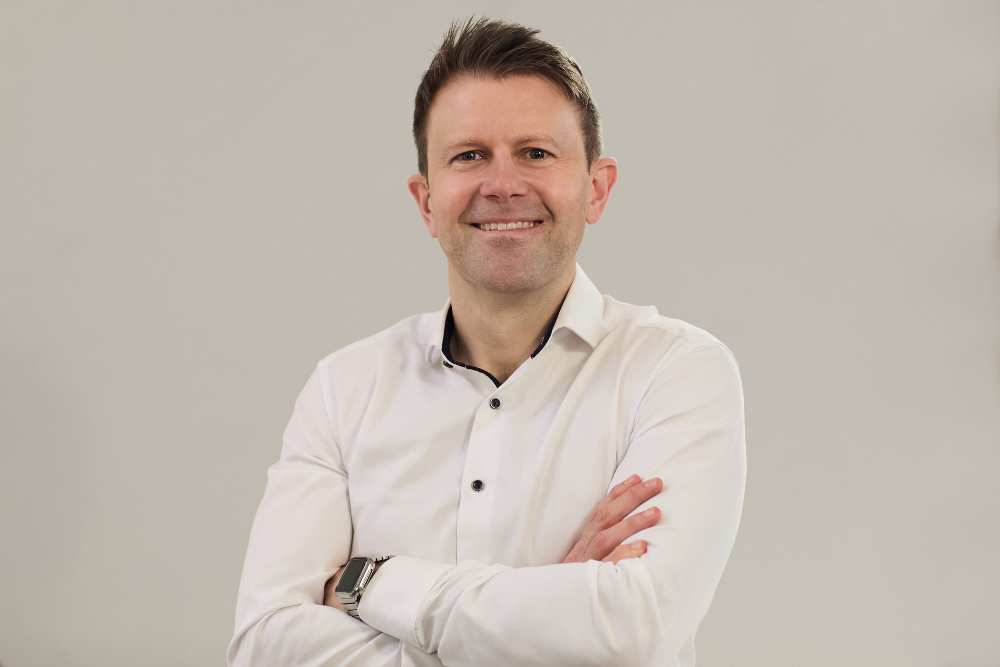
Work IQ’s Eoghan Powell shares lessons from entrepreneurship, business growth and digital transformation, including why founders need to make a start.
Eoghan Powell’s uncle owned an adventure centre, and it was there that he got his early introduction to business.
This early exposure has shaped Eoghan’s own career, which has spanned roles both in corporate and startup ventures.
“At its core, what we do is about economic development”
Today, Eoghan is the Innovations Centre director at Work IQ in Tallaght. Here, he shares a few of the lessons he’s learned along the way.
Tell us about your background and the journey that led you to where you are now?
I grew up surrounded by entrepreneurs. My uncle founded an adventure centre the same year I was born, so business was part of my life from day one.
I knew from a young age that I’d build something for myself. After university, I went to work for him.
From there, I moved into corporate roles in Ireland and the UK. Then I took a giant leap and began renovating a Georgian mansion in South Wales to open my own adventure centre. We raised funding, opened the business and ran it for seven years.
During Covid, I started an MBA, which led me to the startup world.
Why are you doing what you’re doing, what need are you meeting, and what is your USP?
At its core, what we do is about economic development.
Oxford Innovation (OI) runs Work IQ on behalf of South Dublin County Council, supporting areas like Tallaght that are undergoing economic transformation.
“We support our founders in planning for long-term growth or an exit. We do far more than provide office space”
Put simply, we help businesses grow. This could include everything from connecting founders with investors, helping them navigate the small print of contracts to ensuring they have a functioning workspace. At the other end of the spectrum, we support our founders in planning for long-term growth or an exit.
We do far more than provide office space.
How was Work IQ founded, and what are the growth plans?
The idea for Work IQ grew from a visit by SDCC to the OI run, Innovation Factory in Belfast. South Dublin County Council saw its potential and began working on bringing a similar concept to Tallaght.
It took around seven years to move from the idea stage to reality. Covid happened in the middle of it.
Today, Oxford Innovation runs centres across the UK and Ireland. Growth is deliberate and tailored. Each centre reflects the needs of its local area rather than applying a one-size-fits-all model.
Who or what has helped you the most?
There’s no doubt my uncle had a huge influence in my life. He was building a business while playing in an All-Ireland final. To me, he was a superhero. I saw everything, not just the highlights reel. Ultimately, he lost the business and that taught me as much as the success.
“The biggest difference is simply getting started. So many ideas never make it out of a document”
I’ve also had the great fortune to work with Don McCarthy, former Chairman of House of Fraser. He started out selling shoes and went on to build an extraordinary career. He taught me to figure things out as you go along. There isn’t always one clear right answer. Realising that was surprisingly liberating.
What is the best piece of business advice you’ve ever received?
Make a start.
You can’t map out everything in advance. There are too many moving parts. You need to take the first step and then work through the next one, and the next one, and the next one…
In your opinion, what circumstances mark the difference between success and failure?
The biggest difference is simply getting started. So many ideas never make it out of a document.
Then timing becomes critical. What looks like overnight success is often years of consistent effort.
What has been the most challenging aspect of running Work IQ?
I’m naturally impatient, so I’ve had to learn that many of the conversations you have and relationships you build take years to deliver results.
How did you navigate Covid-19 and what lessons did you learn?
Covid showed us how quickly organisations can move when they have to.
I was on the board of a college in the UK, which had a 10-year digital transformation plan. When Covid hit, that plan was delivered within 10 weeks.
The real barrier often isn’t technology, but coordination and mindset. When those shift, progress can be quick.
How has digital transformation influenced how you are scaling, and do you think Irish firms are using technology to its full potential?
No one is using technology to its full potential.
“I believe in giving people responsibility and room to learn. Not everything will go perfectly all the time, but that’s how development happens”
The real challenge isn’t building technology, it’s implementing it. This requires people, processes and change management.
AI has lowered the barrier to building tools. This means the real competitive advantage is no longer the toll itself, but how effectively organisations adopt and integrate it.
If you were to do it all over again, what would you do differently?
I’d go looking for a complimentary partner.
I’m good at lots of things (talking, connecting ideas, understanding the landscape), but a lot of self-reflection has helped me understand the areas I’m weak in (admin, having patience, taking on too many things). Rather than working with someone just like me, I’m better when I’m surrounded by people who are different to me.
How do you nurture talent in your organisation?
Honest conversations are where things start.
I believe in giving people responsibility and room to learn. Not everything will go perfectly all the time, but that’s how development happens.
Is there a business book or podcast you would recommend?
Masters of Scale podcast, particularly the early episodes, is a must listen for me for the real stories behind success stories.
Gary Fox’s podcast, The Entrepreneur Experiment, is also practical. He goes into detail about how things actually happen.
And in terms of books, anything by Michael Lewis is worth reading.
What tools or technologies do you use to stay on track?
AI has changed things for me. Tools like Claude help translate ideas into something real much faster than before.
I also use video communication a lot. It’s not a perfect substitute for in-person interaction, but it’s transformed how relationships can be built and maintained.
Is there any social media platform you prefer?
I probably spend too much time on LinkedIn. It’s become the main platform for business conversations.
If you were speaking to your 21-year-old self, what would you say?
It’ll be grand.
That doesn’t mean everything will go perfectly, but it does mean things tend to work out over time. The key is to keep doing things, stay open to opportunities and keep learning.
Frequently Asked Questions
What is Work IQ and what does it do?
Work IQ supports businesses in Tallaght and the surrounding area as part of a wider focus on economic development. Run by Oxford Innovation on behalf of South Dublin County Council, it helps founders with areas including investor connections, contracts, workspace, long-term growth and exit planning.
Who is Eoghan Powell?
Eoghan Powell is the Innovations Centre Director at Work IQ in Tallaght. His career has included corporate roles in Ireland and the UK, running his own adventure centre for seven years and moving into the startup world after beginning an MBA during Covid.
How was Work IQ established?
The idea grew from a South Dublin County Council visit to Oxford Innovation’s Innovation Factory in Belfast. The council saw its potential and began working to bring a similar concept to Tallaght. It took around seven years to progress from the initial idea to reality.
What business advice does Eoghan Powell recommend for entrepreneurs?
His key advice is to “Make a start.” He believes it is impossible to map everything out in advance because businesses have too many moving parts. Entrepreneurs should take the first step and work through each subsequent challenge as it comes.
How does Eoghan Powell believe AI is changing business?
Powell says AI has lowered the barrier to building tools, meaning the competitive advantage is increasingly about how effectively organisations adopt and integrate technology. He believes successful implementation requires people, processes and change management.
-
Bank of Ireland is welcoming new customers every day – funding investments, working capital and expansions across multiple sectors. To learn more, click here
-
For support in challenging times, click here
-
Listen to the ThinkBusiness Podcast for business insights and inspiration. All episodes are here. You can also listen to the Podcast on:
-
Spotify
-
SoundCloud
-
Apple