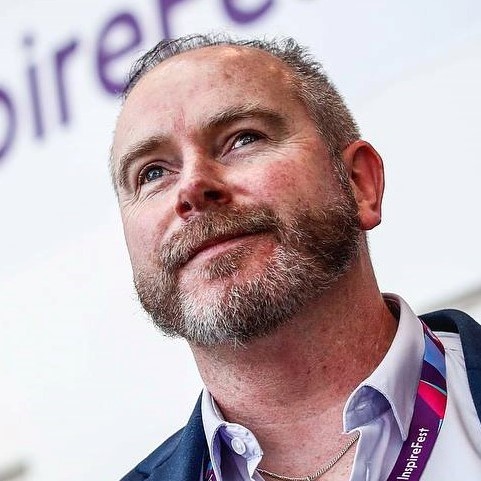
Podcast Ep 326: From Silicon Valley to the Armagh hills, Neil Sands is betting that Northern Ireland’s water table could anchor a new generation of functional drinks.
A BBC news report on an otherwise Wednesday evening that a longstanding water factory in Armagh was to close was the spark that moved Neil Sands into action.
The factory, which had been running since 1948 under the McKee family, had shut after a contamination scare in one of its older wells. Sands, who had recently drilled a source of his own with a purity rating that he reckons put big global brands in the shade, saw the timing as something more than coincidence.
“Everything good that comes from Ireland comes from its water. Its whiskey, its beef, its green grass, its horses. All of it comes from Irish water”
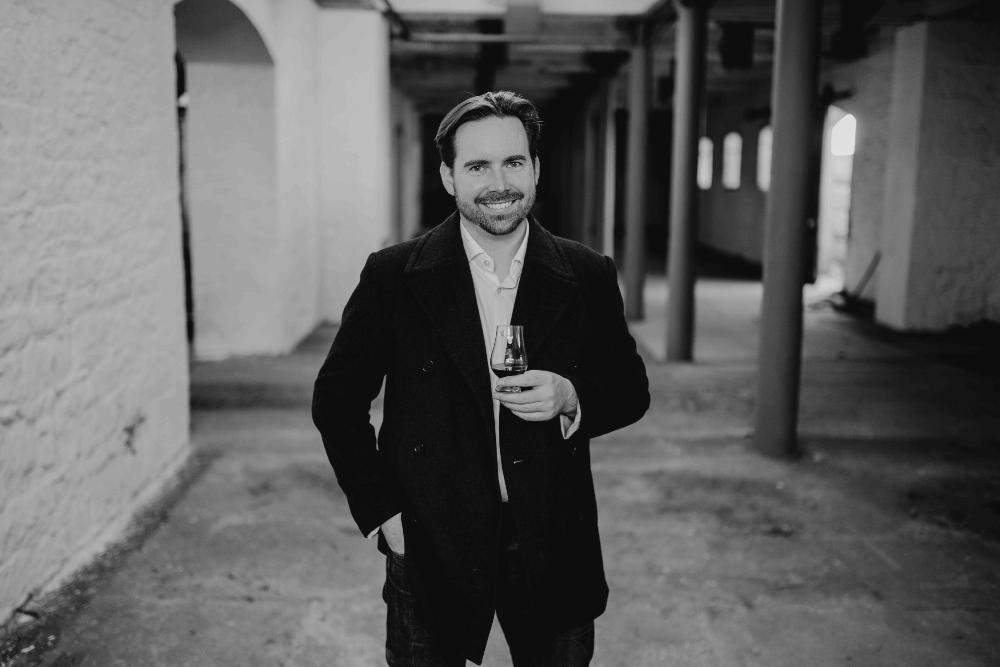
Sands has done it all – founded a whiskey brand now sold in 30+ countries, spent a decade advising Silicon Valley giants as well as organisations like Deloitte, Forbes, Booking.com and the NHS, and most recently launched Clír Water, a multi-million euro water production venture creating jobs in Co. Armagh.
With a multi-million euro investment in a production plant in Thornleigh, Co Armagh that will create initially create 14 jobs, this is expected to scale to 80 roles and more by the end of 2026.
In this episode, Neil shares the real story behind building and scaling a consumer brand internationally, what it’s like moving between the worlds of start-ups, consulting and manufacturing, and the hard-won lessons every entrepreneur needs to hear before launching their first venture.
“Everything good that comes from Ireland comes from its water,” he says. “Its whiskey, its beef, its green grass, its horses. All of it comes from Irish water.”
The spirit of Irish adventure
-
Listen to the ThinkBusiness Podcast for business insights and inspiration. All episodes are here. You can also listen to the Podcast on:
-
Spotify
-
SoundCloud
-
Apple
Sands is not an obvious candidate to be running a liquid manufacturing plant in rural Northern Ireland. His professional life has been spent in technology, principally in Silicon Valley, where he spent the best part of 12 years working for companies including Salesforce and Disney, advising on human-centred design.
But what he is betting on with Clír Water is more than just water. He sees it as a portal into a world of all kinds of liquid-based products from spring water to new fibre-based trends.
His discipline, which places the user’s needs and desires at the centre of any product development process, is more commonly applied to apps and digital platforms. Sands argues it translates just as well to a can of collagen soda.
It was this thinking that led to him co-founding and investing in Lost Whiskey, which is now sold in more than 30 countries worldwide.
“The basis of that approach to problem solving is ‘what does a human being want?’ What is the desired outcome that somebody wants? And for technology companies, that was always an application, or that was a platform, or that was a series of applications, maybe with the likes of Salesforce, where I worked for many years, and the likes of Disney, where, you know, you’re always trying to imbue a certain experience, but it’s knitted together with both online and offline applications or processes or services or products.
“So it’s not all that big a leap, from a product development standpoint, to then move into other passions where that same approach can be taken towards the customer.
This is how his foray into whiskey began. “A buddy of mine that I was in primary school came to me about a decade ago now and said, ‘Look, I’m interested in creating this product. And we think that there’s a gap in the market for something new.”
They thought about it and realised that most prominent whiskey brands seem to be centred around the name of a dead person and that creating something conceptual around the spirit of the Irish outside of Ireland was a daring approach.
“We discovered over the course of several years that there was a real reception for Irish heritage in the world. We’re seeing that in bands like Kingfisher, for example. It’s a blend of traditional with modern. The theme of the ‘lost’ Irish occupied that space.”
Ambition is the water of life for entrepreneurs
As well as the success of Lost Irish Sands’ main business remains Halo, a technology consultancy that counts Deloitte, Forbes, Booking.com and the NHS among its clients.
“We’re being cognisant of scaling at the right pace and not getting over our skis. The pace is important, especially as we start up. This is a restart project as much as anything else”
The decision to embark on a new departure as the manufacturer of water and other liquids was the confluence of a number of key events.
First, a family story that originated with a guest to the family home in Tyrone being convinced that there was an exceptional water source beneath the land spurred Sands to drill to find out if there was a water source.
It didn’t look promising and after digging 180 feet they were about to give up when the drilling pipe was nearly pushed back out of the ground by the force of what was underneath.
The water tested at 96% purity, a figure Sands describes as extraordinary in an industry where the major European brands typically score in the 50s and 60s. “If it was a diamond,” he says of the water’s turbidity, “it would be flawless.”
It was within weeks of that test that he found himself at the gates of the closed Armagh factory, which sits within 12 miles from the newly discovered source, after hearing the news of its closure.
The contamination that had forced the previous owners out turned out to be a localised issue in one of the older wells. Sands acquired the site, brought in new equipment and began hiring staff, some of whom had worked at the plant under the McKee family, others recruited from Coca-Cola and other manufacturers.
The venture, operating under the name Clír Water, is targeting 80 jobs by the end of this year. But Sands is emphatic that the business is not primarily a water company. He describes the Armagh facility as a “liquid innovation platform”. If a cap goes on it, they will make it there.
The first product off the lines is a collagen soda called Holla: 48 calories, 10 grams of collagen protein in each can. Sands explains the rationale through the same data-led logic he uses in technology. A board adviser who monitors consumer search trends identified collagen rising on a curve similar to that of protein a few years before protein saturated the mainstream market.
“We would see that searches for collagen are rising at a rate, and collagen is good for your skin, teeth, hair, nails.”
The GLP-1 weight-loss drug category, which includes Ozempic and Wegovy, is also shaping the product roadmap. Sands notes that these medications accelerate muscle mass loss and require users to significantly increase protein intake, creating a functional need that drinks can partially address. A range of 60ml protein shots is in development, alongside gel sticks aimed at the sports nutrition market.
“For every pound that you want to lose in weight, you need to take a gram of protein into your diet every day. That’s a lot. One chicken breast is at least 120 grams. So we’re actively exploring how to get more protein into formats that people can actually consume.”
Sands is candid about the temptations facing any new manufacturer. Large retailers approach early-stage producers with offers to make own-brand products. The margins are thin, the volumes are reliable, and the machines are already there. He is resisting, for now.
“There’s a temptation to go and make a big retailer’s brand for them, whether it’s tonic, slim line tonic, ginger ale,” he explains. “And it’s very tempting because you’ve got the machinery sitting there. But you have to have a lot of confidence in your own brand to say no today and trust that the Irish consumer will believe in your brand the same way they believe in a new brand coming out.
His experience with Lost Irish sharpened his view on where consumer brands are actually won or lost. In that venture, Clír took on a strategic partner in Castillo Lombre, a major tequila group with significant distribution infrastructure. It was the single most important decision the business made.
“First time entrepreneurs worry about product, second time entrepreneurs worry about distribution. Once you’ve got your product right it’s all about distribution. If there are partners that make sense on an equity basis for distribution, we’re always an audience for that.”
Clír is currently being courted by potential partners on the US East and West Coasts as well as in Benelux and the Middle East. Sands, who was speaking from the United States, says the business is being careful about the pace of international expansion.
“We’re being cognisant of scaling at the right pace and not getting over our skis,” he says. “The pace is important, especially as we start up. This is a restart project as much as anything else.”
The Armagh plant is where Sands’ Silicon Valley experience most directly intersects with his newest venture. The newer equipment at the facility is being integrated with machine-learning systems that can predict mechanical failures hours before they occur.
“Our reporting can give you scores on machines where you’re going to have a failure in the next 17 or 18 hours. If you can get out in front of that, you’re saving yourself a lot of downtime. Every minute that machine is not working, that’s money out. You’re paying the people standing around it, and that product should be on a pallet on a truck and heading down the road.”
Sands draws a parallel with Formula One, describing the heartbreak of watching a race team arrive with everything in place, only for a mechanical failure to strand the car before the start. “I’m not saying manufacturing is the same as Formula One, but you see that heartbreak when a machine doesn’t work and everything else is ready to go.”
The business remains bootstrapped. Sands says manufacturing is, by nature, a slow-build model: high capital cost, low margin, high volume – which he describes as a “get rich slow” scheme.
Suppliers who had depended on the previous operation stepped in with support during the transition period. External investment, whether debt or equity, is likely as the company looks to expand, with Sands noting particular interest in backing for the Holla collagen brand as a standalone growth vehicle.
A thirst for innovation
Asked what drives him across ventures as different as whiskey, technology consulting and functional drinks, Sands returns to design thinking. The lens, he says, does not change. Only the answer it produces changes.
“I put the human at the centre of the process: what are the blind spots, the aspirations, the key concerns, the goals of that individual?” You build a profile of who you’re creating a product for. If the answer is technology, you wrap a technology service around it. If it’s a physical experience, like Disney, you combine technology and physical experiences. It’s not that huge a leap to then look at whiskey and say what are the design principles here.
In that spirit, he has resisted the obvious moves. Clír will not import water from elsewhere to supplement its Irish sources. It will not lead with private-label production for major retailers.
And Sands himself, by his own account, will step back from the product development detail when the science moves beyond his expertise, confining himself to opinions on bottle colour while leaving the protein formulation to specialists. “I know my limits.”
Sands described a ritual familiar to many founders: waking in the small hours with a solution to a problem that had been stuck and reaches for a pad of post-it notes.
A mentor of his, a board member at a Fortune 500 company who works regularly with leaders from the AI sector, once told him that when she asked senior executives where their best ideas came from, the answer was almost always the same: the shower, a long drive with the radio off, or a dream.
He keeps a pad of post-it notes next to the bed. He has lost count of how many times he has reached for it.
-
Bank of Ireland is welcoming new customers every day – funding investments, working capital and expansions across multiple sectors. To learn more, click here
-
For support in challenging times, click here
-
Listen to the ThinkBusiness Podcast for business insights and inspiration. All episodes are here. You can also listen to the Podcast on:
-
Spotify
-
SoundCloud
-
Apple