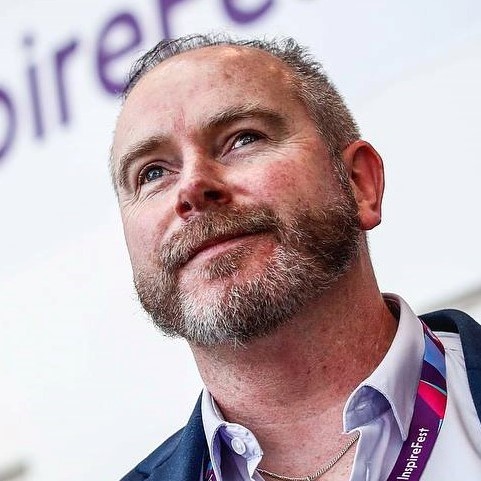
Podcast Ep 352: Community Foundation Ireland CEO Denise Charlton discusses purpose, generational wealth and why philanthropy is becoming part of Ireland’s future economic story.
Community Foundation Ireland has quietly reshaped Irish giving since 2000, channelling more than €200 million into communities and causes across the country while building a model built on data, trust and long-term partnership.
We spoke with CEO Denise Charlton about how strategic philanthropy works in practice, from backing causes like Pride before they find public support to helping a new generation of wealthy families think through purpose, legacy and impact.
“I think what’s unique is how philanthropy is played out in Ireland. It’s probably underdeveloped. It’s got huge potential for growth and for impact, and it’s quite anonymous”
In the latest ThinkBusiness Podcast we touch on Ireland’s unique culture of anonymous giving, the rise of donor-advised funds and wha pt policy changes are required to unlock the next chapter of Irish philanthropy.
Making a world of difference in Irish communities
-
Listen to the ThinkBusiness Podcast for business insights and inspiration. All episodes are here. You can also listen to the Podcast on:
-
Spotify
-
SoundCloud
-
Apple
Community Foundation Ireland sits inside a global network of around 1,800 Community Foundations that spread from Silicon Valley to Sydney.
Charlton stress that the Irish operation is no mere branch office but its own entity with a strong track record of supporting causes. Of the €200m that has been dispersed to worthy causes, €170 million has been done so through grants with the rest tasked with building an endowment for future needs.
While it has a lot in common with its sister entities, Ireland poses a unique set of challenges and opportunities.
“First and foremost, what’s common is how you can support donors, and we call it the head and the heart. The head is the due diligence, the quality assurance, making sure the money goes where it’s supposed to go, the monitoring, and that’s common to them all.
“The heart bit is where, as a donor, you might like to give, you might have a corporate strategy, you might have a family with different needs, so that diverse pool of donors is also common, and then the mechanisms like endowment and donor advised funds, all of those ways to support giving, are common. The other thing that’s very common is purpose, and that is distinct in different places.
“Here in Ireland, we talk about people, place and planet. We’ve a lot of expertise and connectivity to communities, and we’re thinking about equality all the time. And obviously, in this world, we’re thinking about climate and place. So the model is really established, and then it’s applied nationally, but all those common features are very helpful here in Ireland.
“I think what’s unique is how philanthropy is played out in Ireland. It’s probably underdeveloped. It’s got huge potential for growth and for impact, and it’s quite anonymous. Very often families come to us and they are completely anonymous. We offer complete confidentiality, but we amplify the impact of their giving. So that’s the kind of commonality and the differences.”
Stewarding a better future for Ireland
As mentioned, a considerable chunk of the sums channelled through the Foundation goes toward endowment. The idea being that while donors are supporting causes today, they are also putting aside an investment towards tomorrow.
“When we’re thinking about endowment, what we offer is flexibility – it can be directed to current priorities with some percentage of that endowment, but you’re also preserving the capital for future needs. We invest it, and we’ve done really well with our investment managers, and it’s giving a lasting legacy, so you’re solving the problems of today but leaving that legacy for the problems of tomorrow.
“It can be very interesting for families, where you might have parents who are involved in giving and philanthropy, but they want their children and the next generation to be involved, and they realise the problems of today might be different to the problems of tomorrow. So they want to leave capital that younger generations can work with, and try to solve the problems of tomorrow.”
This, Charlton emphasises, ensures that Community Foundation Ireland is here for the long haul, while keeping its eye on the needs of today.
“Different to endowment might be something like the Toy Show, where you’ve got a big public campaign, and we help make that strategic. Over a ten-year period, there will be millions raised for children all over Ireland, and our job is to look at where the demand is, what the issues are for children, how we design grant criteria, and then work with that. So they’re very different in the type of support and structure. The commonality is that they’re both about purpose and trying to affect impact, and I think they both offer donors a really great opportunity for giving.”
Ahead of the trends
What is perhaps fascinating about Community Foundation Ireland is the pioneering role it plays in supporting causes long before they find public backing. For example it has supported Ireland’s LGBT+ community for more than 26 years, backing equality movements and grassroots causes. Another powerful example is backing national research on consent that fed into Government policy.
“We all know impact is delivered by resilient communities and organisations, so they need core funding and multiannual funding to do that”
Charlton credits the organisation’s reach across every community in the country. “As a Foundation we have a helicopter view – we’re in every community in Ireland, and we have a whole lot of insights that come with grant-making, with research, and with that connectivity and convening role. So we’re hearing about things all the time, very early, and we’re also seeing how they interconnect.
“For example, we’ve worked on the issue of migration for many years, and we can see how many people migrate to Ireland, but also some of the changing issues that are arising at the moment – polarisation, spontaneous violence and rioting – and how that’s affecting communities. Our job is to all the time be thinking about what’s happening, what the trends are out there, and the other side is that communities and grantees come and tell us.”
That freedom to act early, she says, is what separates private giving from public money.
“The whole idea of philanthropy is that it can go where nobody else is going. It can fund causes that nobody else is interested in yet. It funds proof of concept, it can prove scalability – it has the flexibility to do what others can’t do, and that’s the absolute joy of it. It also has an opportunity to partner with government. Often that public-private partnership has more flexibility, or philanthropy has come in and proved a point of concept, and then a public-private partnership can scale it. So it’s really important – we see philanthropy as being absolutely crucial in creating a fairer and more inclusive Ireland, and certainly the donors who work with us are really convicted of that and really passionate about it.
“We have a diverse group of donors – women in philanthropy, entrepreneurs, family offices, next generation – and some of them have really high risk tolerance. They’re okay with failure, they just want to support organisations, as long as we learn from the failure. So there’s different risk tolerance within giving, and we’re very happy to accommodate that spectrum.”
For the first time Ireland is living through a moment of generational wealth creation, at a scale that Charlton admits she hasn’t seen before. Donors are clear that they want their giving to carry meaning and be more than just about money.
“Wealth, or often a liquidity event, can really get people thinking – can I apply these skills, this thinking, this purpose to my giving, can I make a difference with it, having been very successful in business or in tech. How can I help the world be a better world by applying those skills? So it’s not just about funding, it’s about partnership that makes a difference. It’s very exciting for us to work with a whole range of donors, and we accommodate whatever their motivation and their passions are.”
The impact of giving can be transformational. For example, one family’s endowment, Charlton recalls, was steered towards funding national research on consent after a donor’s daughter challenged her father directly about the levels of violence that women in Irish society experience. That conversation eventually helped to fund a national campaign that was taken up by the Irish Government.
Corporate partners are also transforming giving. For example, the Bank of Ireland Community Fund has moved from one-off annual grants towards multi-annual and core-cost funding, a change that Charlton describes as significant for the charities receiving it.
“Bank of Ireland is really a leading partner in corporate philanthropy and in community investment. They’ve given 331 grants with a pot of €3.5 million over a seven-year period, but what they’ve done is partner with ourselves and really think intentionally about their giving.
“The Community Fund is really making a massive difference – it links into what the Bank is trying to do, around social inclusiveness, mobility, access to economic participation, access to education, financial literacy and wellbeing. That’s the Bank’s intention – they look at the UN’s Sustainable Development Goals, and they’re committed to ethical principles of investment. What we do is look at that with them and say, this is where we’d suggest you work.
“We all know impact is delivered by resilient communities and organisations, so they need core funding and multiannual funding to do that. Bank of Ireland really listened, so they provide 15% of their funding which can go to core costs, and they also provide multiannual funding within certain parameters. It’s amazing, and it’s a sizeable shift for the sector. The feedback we get is that the groups and communities on the ground trying to deliver the work feel heard, they feel understood, and it’s really a leading example of quality corporate philanthropy and community investment.”
Europe’s first national policy on philanthropy
Ireland now has Europe’s first national policy on philanthropy. This is a development that Charlton wants to see amplified across all Government departments.
“We have a lot of social issues we’re trying to resolve, lots of things happening in communities, but Government is saying to donors and philanthropists, we are a willing partner, and I think that combination is dynamite. There are obviously infrastructural changes that can happen in terms of tax, and in terms of legacies and who gets the tax incentive, whether it’s the charity or the donor – there’s a committee under the policy looking at that, and they will make a difference.
“But for me, what’s really important is that philanthropy is understood to make a big contribution to the issues we’re resolving. We can’t do it alone, government can’t do it alone, civil society can’t do it alone, so it’s fantastic now to have an additional partner, or partners, at the table as we try to resolve some of these issues.”
Her advice to anyone sitting on undirected wealth is simple. “I would say just start.”
Community Foundation Ireland has trebled its giving over the past five years. Charlton’s ambition for the next five years is to do the same again.
“The biggest thing we hear from our donors is that they really feel they’re making a difference, that they’re very energised and engaged by that, no matter what the source of income is or what the profile is. You can make a difference, and you can have a very enjoyable time doing it.”
👉 No tech background needed to bring your business into the AI age! Secure your scholarship to complete the certification at no cost. Apply now and get started!
-
Bank of Ireland is welcoming new customers every day – funding investments, working capital and expansions across multiple sectors. To learn more, click here
-
For support in challenging times, click here
-
Listen to the ThinkBusiness Podcast for business insights and inspiration. All episodes are here. You can also listen to the Podcast on:
-
Spotify
-
SoundCloud
-
Apple