
Irish SMEs urged to accelerate climate action as supply chain programme expands.
Business in the Community Ireland (BITCI) has called on small and medium-sized enterprises (SMEs) to step up their decarbonisation efforts after concluding the second phase of its All-Ireland Climate Action Programme.
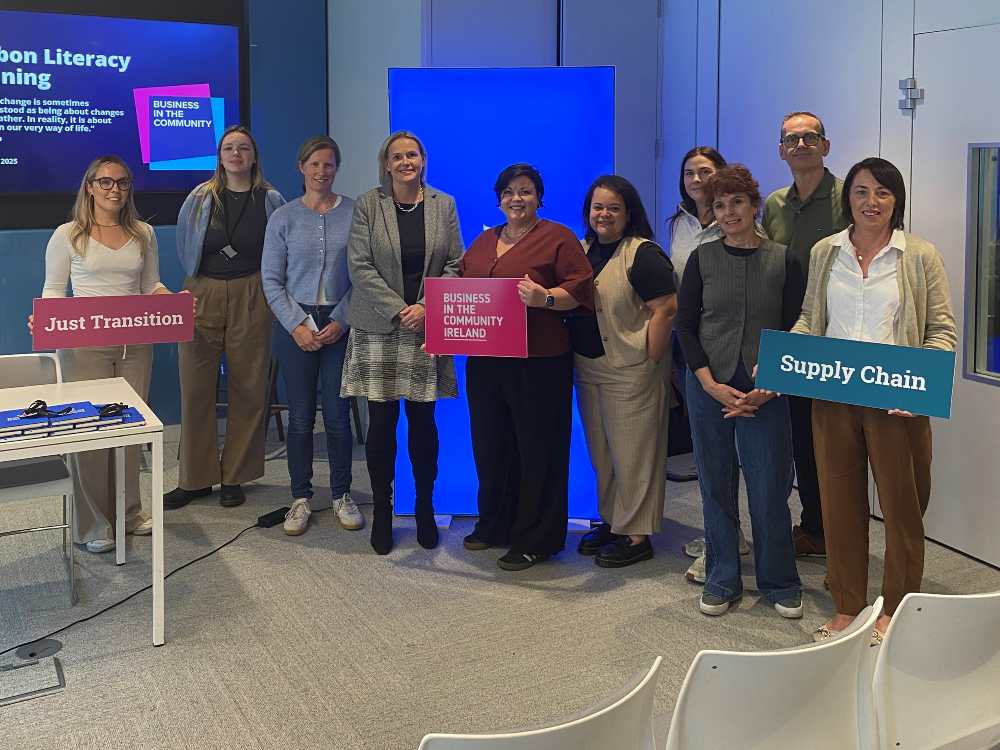
The initiative, delivered in partnership with Business in the Community Northern Ireland, brought together 40 SMEs with the support of major corporates including Bank of Ireland Group, ESB and SSE Airtricity.
“This year revealed just how much SMEs are already implementing sustainability measures and their keen ambition to do more”
The programme provided accredited carbon literacy training and help SMEs develop tailored climate action plans. It also encourages collaboration between large companies and their suppliers to cut emissions across value chains.
Growing momentum
Éadaoin Boyle Tobin, Sustainability Adviser at BITCI, said the latest round showed growing momentum among smaller firms.
“It was great to see an increase in participation this year and to see large corporates embracing their responsibility to support SME decarbonisation efforts,” Boyle Tobin said.
“This year revealed just how much SMEs are already implementing sustainability measures and their keen ambition to do more,” she said. “When large companies and SMEs unite, the potential for transformative climate action is significant. It is also a driver for future-proofing business operations and reducing risk. But there’s still plenty more to be done.”
Insights from the programme highlight the need for practical, collaborative approaches to climate action.
Recommendations include building on existing sustainability efforts, offering tailored guidance and financial support, and creating flexible frameworks that can adapt to different levels of readiness.
The report also urges companies to engage SMEs in discussions on Scope 3 emissions and avoid “carbon tunnel vision” by promoting broader sustainability goals.
SMEs involved in the programme reported steps such as adopting electric vehicles, installing solar panels and tracking energy usage.
However, economic constraints, information gaps and limited capacity remain significant barriers. With SMEs accounting for 99% of Irish enterprises, their role in meeting national climate targets is critical.
Boyle Tobin stressed that proactive engagement is essential as climate risks intensify.
“Increasing our collective understanding and collaboration through supply-chain engagement models is the key to ensuring businesses can adapt, respond and thrive,” she said. “The development of dedicated Climate Transition Plans by large corporates as well as SMEs will help drive progress forward and pivot business operations to be future proofed by utilising low carbon solutions.”
Practical actions add up to profitable actions
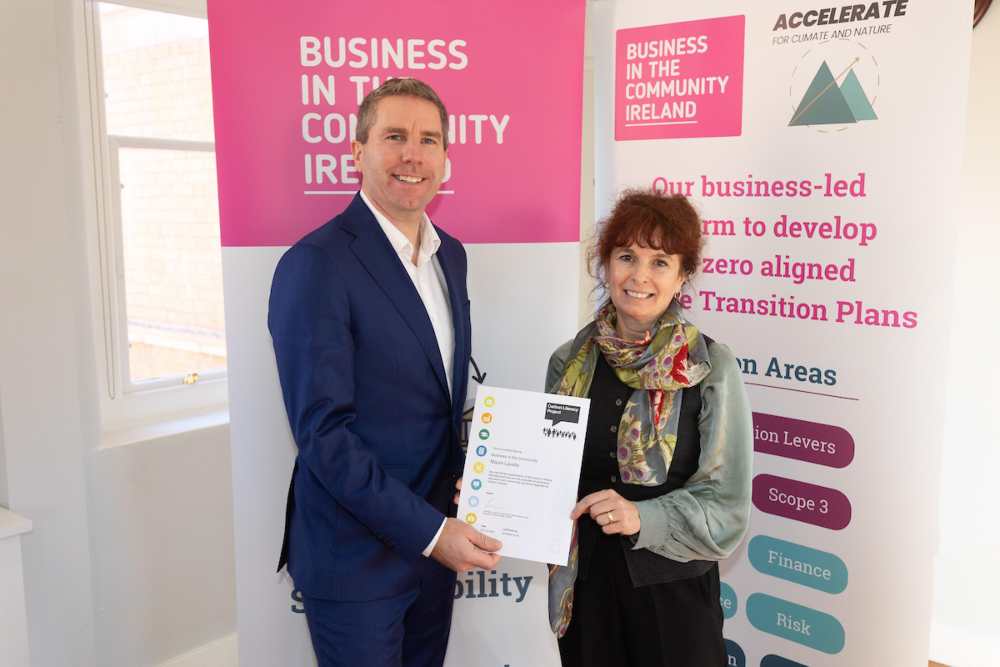
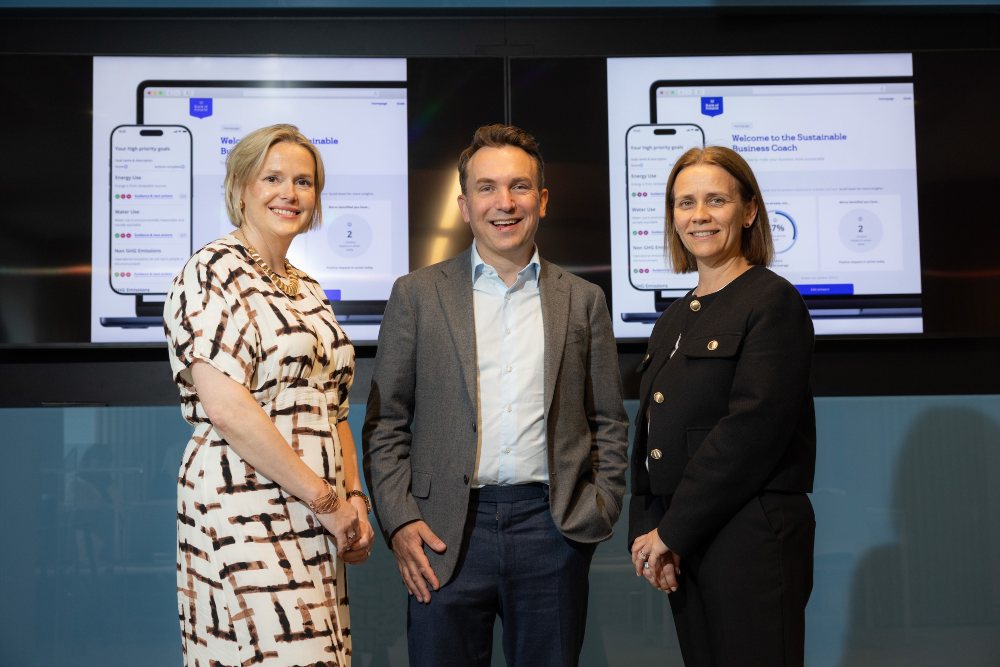
Kevin Baxter, interim head of Corporate and SME Lending at Bank of Ireland with Maura Lavelle, marketing manager, Willows Ingredients
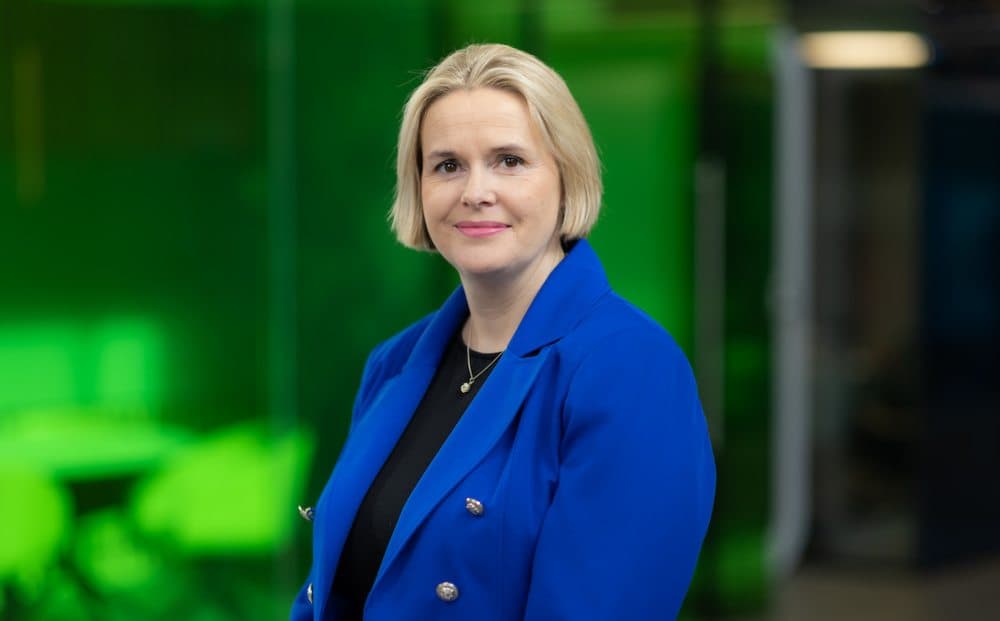
Colette Shirley, director of Sustainability with Bank of Ireland, emphasised the Bank’s commitment to supporting small businesses on their sustainability journey.
“We have a certain role in society in terms of making sure that we are bringing all of our SMEs on the journey with us as a large company.”
Shirley said that SMEs play a critical role, and practical steps can lead to both environmental and commercial benefits. The bank views its role as helping SMEs simplify sustainability and integrate it into everyday operations.
“One of our key pillars really is around being a simple business… This programme is really helpful because it breaks down sustainability into easy-to-understand topics and gives people practical knowledge to take action immediately.”
Shirley outlined some of the key Bank of Ireland sustainability initiatives for SMEs including the Sustainable Business Coach platform, a free digital planning tool for all Irish SMEs to identify actionable steps toward sustainability. Bank of Ireland also runs SME workshops and offers resources through its digital hub to demystify sustainability.
She said that with growing demand, Bank of Ireland plans to expand its support through more learning programmes and tools, ensuring SMEs can turn sustainability from a “noisy word” into practical, profitable actions.
“Think of sustainability as practical actions. Think of sustainability as efficiency in your business – both of those things will add up to decarbonisation,” Shirley urged.
-
Bank of Ireland is welcoming new customers every day – funding investments, working capital and expansions across multiple sectors. To learn more, click here
-
For support in challenging times, click here
-
Listen to the ThinkBusiness Podcast for business insights and inspiration. All episodes are here. You can also listen to the Podcast on:
-
Spotify
-
SoundCloud
-
Apple